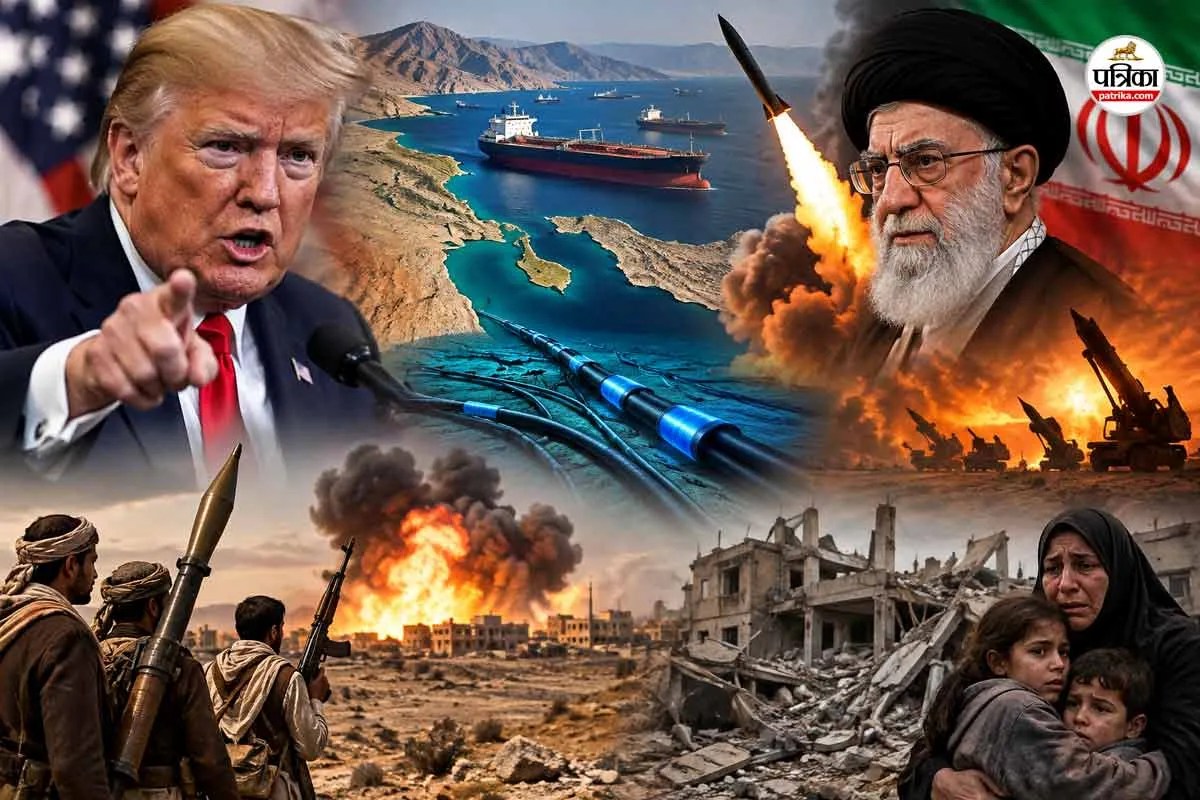
Let's get one thing straight. When Donald Trump claims a war is "militarily effectively over," you shouldn't mistake it for a permanent peace treaty. Geopolitics doesn't work that way, especially not when Tehran is firing back with demands that sound less like a compromise and more like an unconditional surrender from the West.
If you've been tracking the headlines, you know the rhetoric coming out of Washington and Tehran is completely mismatched. Trump insists that US forces are locked and loaded, holding regional dominance with three aircraft carriers stationed close enough to make anyone nervous, while simultaneously signaling that full-scale military strikes might not be immediately necessary. But Iran isn't blinking. Mohsen Rezaei, secretary of Iran's Supreme National Security Council, didn't mince words when he dismissed Washington's narrative as desperate posturing, putting forward a strict set of terms that Washington would have to accept to resolve the crisis.
The Seven Conditions That Have Washington Cornered
Tehran didn't just ask for a ceasefire. Through mediation channels involving Qatar and Pakistan, Iranian officials laid out seven non-negotiable points that effectively flip the script on American pressure.
What does Tehran actually want? The list covers several critical bottlenecks:
- A total cessation of hostilities across all active fronts.
- The immediate lifting of the choking US naval blockade along the Strait of Hormuz.
- Unrestricted reopening of vital commercial and military shipping lanes.
- The comprehensive removal of crippling economic sanctions.
- The unfreezing of billions in overseas Iranian assets.
- Guarantees of non-interference in internal sovereign affairs.
- Comprehensive compensation for extensive war damages.
From Tehran’s perspective, these conditions aren't an opening bid. They're a baseline. Iranian leadership is essentially telling the White House that if they want an exit strategy from a grinding regional quagmire, they need to fold their hand.
Why Trump Is Threading a Needle
Trump's balancing act is obvious if you look at the domestic and regional chessboard. On one hand, maintaining a massive military posture—complete with a naval blockade designed to crush Iranian oil exports—keeps pressure on the regime. On the other hand, avoiding messy, endless ground engagements remains a priority.
Trump claims that regional partners like Saudi Arabia, Qatar, the United Arab Emirates, Bahrain, and Kuwait are comfortable with this managed standoff because it suppresses major escalations while keeping the pressure on Tehran. Yet, the reality on the ground is fragile. Qatar’s Prime Minister, Sheikh Mohammed bin Abdulrahman bin Jassim Al Thani, has been running high-stakes shuttle diplomacy, carrying proposals back and forth to prevent the situation from boiling over.
The Nuclear Red Line That Won't Move
No matter how much diplomatic maneuvering happens behind closed doors, one immutable wall remains: the nuclear file. Trump has reiterated repeatedly that under no circumstances will Iran be allowed to build or acquire a nuclear weapon. It's a non-starter for Washington, and any grand bargain that doesn't lock this down is dead on arrival.
Meanwhile, Iranian officials continue to play hardball, warning that their own strategic doctrines, including their stance on the Non-Proliferation Treaty (NPT), remain flexible depending on how aggressively the US pushes.
Don't expect a neat, tidy resolution to this standoff anytime soon. Both sides are locked in a high-stakes psychological war where admitting weakness equals political suicide. Keep an eye on the Gulf shipping lanes and backchannel messages through Doha; that's where the real outcome of this conflict will be decided long before any public handshake takes place.
Trump sees positive signs for ending conflict with Iran
This news report provides a direct look at Donald Trump's latest remarks regarding the diplomatic signals and security measures surrounding the ongoing situation with Iran.



