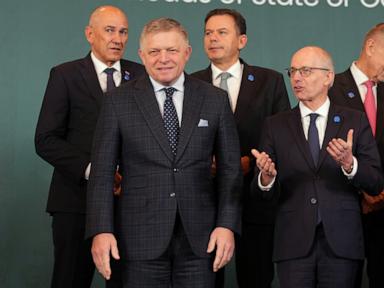
History has a funny way of repeating itself, especially when politicians try to rewrite it. On the anniversary of the 1989 Velvet Revolution—the monumental uprising that dismantled communist rule in former Czechoslovakia—thousands of angry demonstrators flooded the historic squares of Slovakia. They weren't just celebrating past freedoms. They were fighting to keep what's left of them.
At the center of this storm is Prime Minister Robert Fico, a polarizing populist whose pivot toward Moscow has alienated Western allies and infuriated a massive domestic opposition. If you've been wondering why Central European politics are suddenly boiling over, you have to look past the surface headlines and examine how a single foreign policy trip reignited a national identity crisis.
The Spark That Lit the Match
The streets of Bratislava filled with roughly 25,000 protesters chanting slogans that left little room for misinterpretation. Banners told the prime minister to step down, while crowds branded his administration a disgrace.
The immediate catalyst wasn't hard to find. Just hours before the rallies kicked off, Fico's cabinet held a meeting to review a report on Foreign Minister Juraj Blanár's recent visit to Russia. It marked the first high-level diplomatic outreach to Moscow for economic cooperation since the full-scale invasion of Ukraine began. For another perspective on this development, check out the latest update from Wikipedia.
To Fico's supporters, this is pragmatism—securing energy and trade ties. To the thousands marching in SNP Square, it's a direct betrayal of Slovakia's democratic trajectory and a thumb in the eye of the European mainstream.
A Fractured Opposition Finds Common Ground
Opposition parties in Slovakia have historically struggled to stay united. They argue constantly, split hairs over minor policy details, and let ego get in the way of strategy. But Fico has managed to do what no political strategist could: he forced them into an alliance of necessity.
Leaders from the liberal Progressive Slovakia party, conservative Christian Democrats, and pro-business factions stood shoulder-to-shoulder on stage. Michal Šimečka, head of Progressive Slovakia, captured the mood bluntly to the roaring crowd: "Just as in 1989, what unites us must be stronger than what divides us."
They're eyeing the upcoming parliamentary elections as an existential referendum. They know that fragmented opposition is a gift to an entrenched populist. Whether this fragile unity survives until election day remains an open question, but the sheer volume of the turnout proves the public appetite for resistance is real.
Defying the European Consensus
You can't understand the anger on the streets without looking at Fico's playbook over the last few years. Since returning to power, he's systematically dismantled policies that aligned Slovakia with Western consensus on security.
- Military aid to Ukraine was brought to a dead stop.
- European Union sanctions against Russia face constant rhetorical attacks and resistance.
- Membership bids for Ukraine regarding NATO and the EU are met with direct threats of blockage.
Fico frames this as a "sovereign" foreign policy that looks in all directions rather than blindly following Brussels or Washington. Critics counter that it isolates a nation that fought hard to escape the Soviet sphere of influence thirty years ago.
What Happens Next
The protests on the Velvet Revolution anniversary exposed a deep societal fracture. On one side stands a government willing to bend norms, reshape public broadcasting, and cozy up to the Kremlin to maintain its base. On the other side stands a mobilized urban populace that refuses to watch their democracy slip backward without a fight.
Elections are coming, and the stakes couldn't be higher. If the opposition wants to unseat an experienced political operator like Fico, catchy chants and cold-weather rallies won't be enough. They have to turn street-level outrage into a coherent, nationwide voting bloc that reaches far beyond the capital.
Until then, the pavement chalk messages and packed squares send an unmistakable warning. Slovakia's story isn't finished yet.



