You won't just see voters and poll workers at your local precinct this election cycle. Tens of thousands of trained observers from civic coalitions, political parties, and federal agencies are descending on polling stations across the United States.
If you're wondering why every major political faction is suddenly obsessed with putting bodies inside or outside your local voting precinct, you aren't alone. Let's break down the massive mobilization shaping this election.
The Scale of the Monitoring Machine
The numbers involved in this year's election monitoring effort are staggering. We aren't talking about a few dozen clipboard-wielding volunteers. We are looking at a sprawling, multi-layered apparatus spanning federal, state, and grassroots levels.
Take the civil rights and non-partisan side first. Groups like Common Cause have trained roughly 16,000 volunteers to stand watch at voting precincts. When you factor in the broader Election Protection coalition—which ropes in roughly 300 different organizations—the number of trained volunteers jumps into the tens of thousands.
On the other side of the aisle, the Republican National Committee (RNC) has deployed election integrity deputy state directors into 22 battleground states, including crucial areas like Arizona, Michigan, Georgia, and North Carolina. Add in nearly 22,000 recruited poll workers and thousands of volunteer watchers in competitive districts, and you have an unprecedented conservative ground operation. Meanwhile, Democratic state parties, Save America, Indivisible, and MoveOn are mobilizing their own massive networks of local community members, clergy, veterans, and teachers.
The Federal Footprint
It's not just partisan groups and nonprofits getting in on the action. The federal government is making its presence felt in a major way.
The U.S. Department of Justice is launching its largest voting observation program in history for the midterms. Roughly 1,000 DOJ employees are being sent out to monitor compliance with federal law across multiple states.
While federal monitors have been a fixture of American elections for decades, their expanded presence has sparked intense debate. Some state officials have bristled at the oversight. For instance, during a primary season deployment, Wyoming Governor Mark Gordon criticized the behavior of federal monitors as "a bit aggressive" after a county clerk blocked them from interviewing voters directly.
Critics on the left worry these federal deployments could verge on voter intimidation, while supporters argue that federal eyes and ears are necessary to guarantee equal access and civil rights enforcement.
Why Everyone Is Worried About Chaos
With so many overlapping groups trying to protect, watch, or police the vote, local election officials are facing a logistical nightmare.
The core issue is coordination—or the legal lack thereof. Many of these organizations are legally prohibited from coordinating with one another, yet their volunteers will occupy the exact same physical space outside or inside local precincts.
Precinct workers are bracing for potential confusion, long lines, and tense exchanges at the threshold of the ballot box. When you mix partisan poll watchers looking for infractions with progressive election protection volunteers monitoring the monitors, the margin for friction shrinks to zero.
What This Means for You on Election Day
If you're heading out to cast your ballot, you'll likely notice a crowded sidewalk outside your polling place. Here is how you can navigate it without losing your sanity:
- Know your rights: Every state has clear laws regarding how close poll watchers can get to voting booths and whether they are allowed to interact with voters.
- Ignore the noise: Volunteers are there to watch the process, not you. Cast your ballot and keep moving.
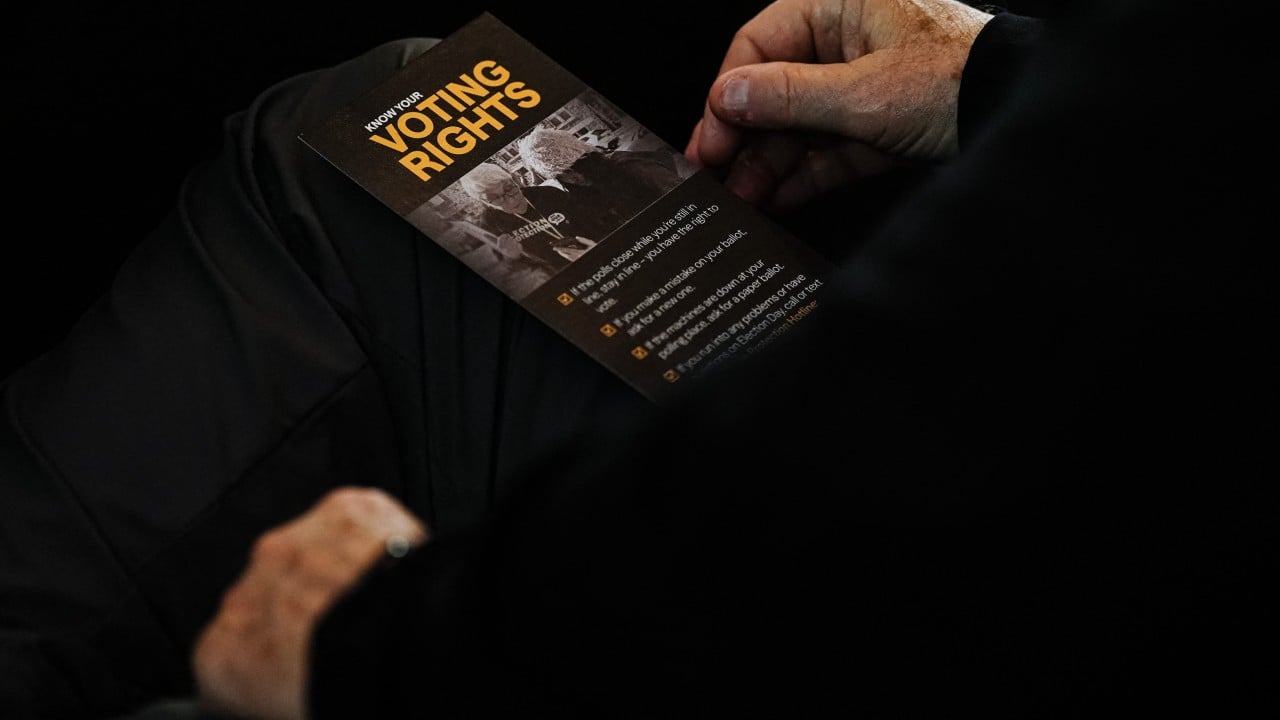
- Report problems immediately: If anyone crosses the line into actual voter intimidation or harassment, flag a poll worker or call your state's official election protection hotline right away.
The battle for control of Congress has turned polling places into heavily contested ground. Expect a crowded, watchful environment when you show up to vote.
Watch a breakdown of the DOJ election monitor deployment
This video provides an overview of the Department of Justice's plans to deploy over a thousand monitors to polling places on Election Day.
http://googleusercontent.com/youtube_content/1



