Property lines look permanent on paper, but on the ground, they are often dictated by rusted wire and decades of hard labor. For Greg and Leah Sempel, a rusted barbed-wire fence in Benewah County became the center of a grueling legal war that reached the Idaho Supreme Court. When the state tried to claim nearly six acres the couple had farmed since Jimmy Carter was in office, it kicked off a legal battle over adverse possession and boundary agreements that every rural landowner needs to watch closely.
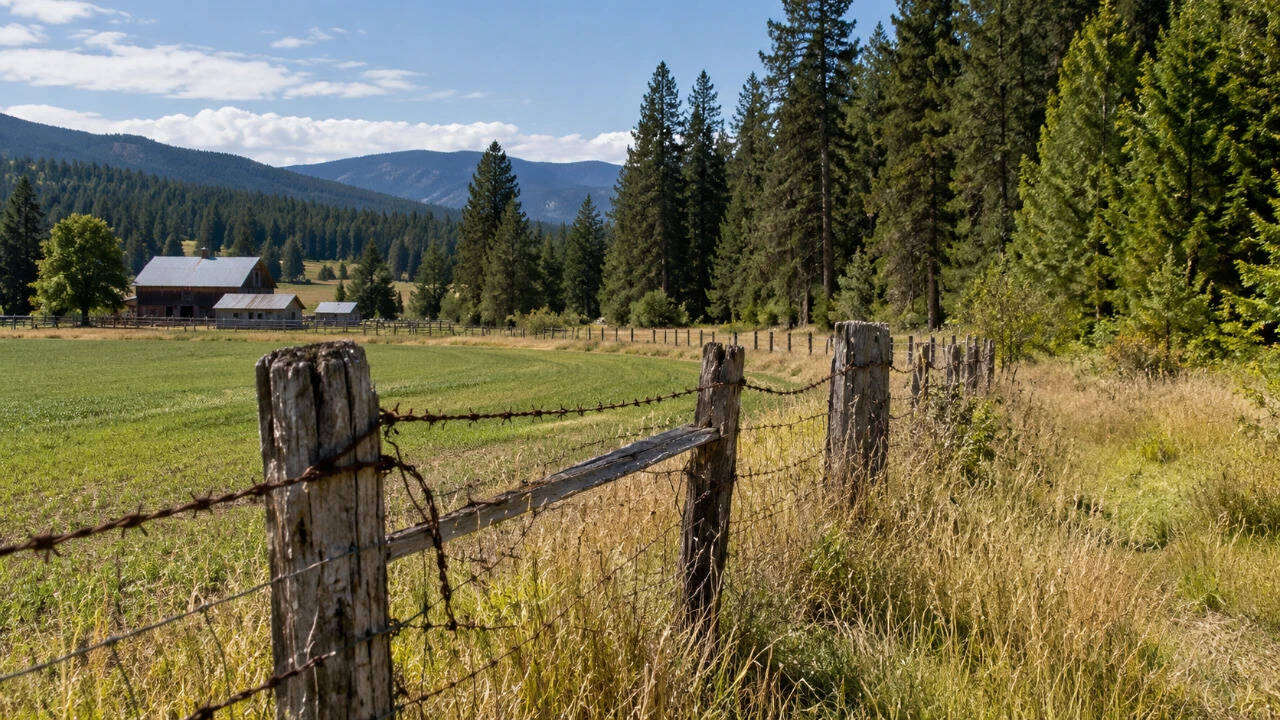
The story goes back to 1979. That was the year Greg's parents bought a parcel of land in northern Idaho for Greg and Leah to use and farm. Before money changed hands, Greg walked the property with a representative of the selling company. That representative pointed straight to an old barbed-wire fence, declaring it the northern boundary. Later, previous owners confirmed the fence had gone up in the 1960s following a mutual understanding between neighboring entities.
For the Sempels, that fence was gospel. They didn't just look at it; they lived by it. Over the next few decades, Pokey Creek Farm expanded right up to that rusted wire. They cleared timber, laid down a gravel access road, put up multiple structures, built a greenhouse, and raised livestock. Even state logging crews working nearby treated the fence as the clear dividing line between properties.
How the State Entered the Picture
Land changes hands, and records drift. The neighboring property shifted from the Milwaukee Land Company to the Potlatch Corporation in 1981. Then, in December 1996, Potlatch handed over more than 4,100 acres to the State of Idaho in a massive land exchange. Tucked inside that massive acreage transfer were the disputed 5.95 acres the Sempels had been farming for nearly two decades.
For years, nobody said a word. Then came a 2016 survey. Modern measurement tools clashed with old rural realities, and the state suddenly claimed the couple was squatting on public land without permission. In August 2022, Idaho sued the Sempels. The state wanted its title recognized, demanding financial compensation for unauthorized land use, timber removal, and alleged property damage.
A lower court initially handed the state a victory on the ownership issue. Judges leaned hard against the couple, ruling that they hadn't provided enough concrete evidence regarding property tax payments on the disputed strip. It looked like a classic case of a small-town family getting crushed by state legal machinery.
What the Supreme Court Ruled
The Sempels refused to fold, pushing their fight all the way to the Idaho Supreme Court. On October 27, the state's highest court threw out the lower court's decision, handing the couple a massive lifeline.
The Supreme Court pointed out a fundamental flaw in how the lower court handled the evidence. Greg had submitted a sworn statement testifying that they had paid their taxes. While older tax receipts were missing, the justices ruled that a sworn statement cannot simply be tossed aside as non-existent evidence. The court also highlighted long-standing Idaho legal principles regarding how adverse possessors can satisfy tax requirements through lot-enclosure exceptions, alongside doctrines of boundary by agreement.
Photos showed sections of the old wire fence literally swallowed by growing trees. While the state argued the fence was crooked, irregular, and neglected, the Supreme Court emphasized that its current state doesn't erase what it looked like in 1979 or how past landowners treated it. A crooked fence is not automatically a meaningless fence.
Why This Case Matters for Rural Property Owners
Most people assume legal deeds always trump physical reality. This case proves that decades of open, notorious use and established boundaries carry immense legal weight, even when government entities hold the master deed.
If you own rural property bordered by old fences, take notes. Walk your lines. Talk to your neighbors. Document every handshake agreement, old survey marker, and structural improvement. When a dispute arises decades down the road, memories fade, receipts disappear, and courts rely heavily on physical evidence like aging fence lines and historical usage.
The Sempels haven't won the war just yet. The Supreme Court sent the case back down for a proper, thorough review of the facts. But the October ruling changes the momentum entirely, proving that decades of working the land still count for something against state titles.