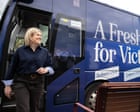
You can script every talking point, hire the best spin doctors, and book pristine photo ops, but you can't stop a massive vehicle from clipping an overhead storefront. When Victorian opposition leader Jess Wilson rolled out the shiny new campaign transport, it was supposed to project strength, mobility, and a clean slate. Instead, the maiden voyage of the Jess Express ground to an immediate, literal halt after colliding with a local shop awning.
Political optics rarely get that clumsy. Within hours, the mishap turned into social media fodder and a ready-made metaphor for a punishing week on the campaign trail. But obsessing over a scratched roof and a dented awning misses the bigger picture of what is actually happening in Victorian politics.
The Trap of the Campaign Bus Narrative
Every campaign manager loves a bus. It creates a moving backdrop for morning television, corrals the press pack into a captive environment, and offers a tangible symbol of momentum. It says, "We are going places."
When it goes wrong, however, it screams amateur hour. Opponents feast on the footage, and pundits write instant obituaries for the week's strategic goals.
Yet voters usually care far less about vehicular mishaps than political insiders think. When reporters descended on the shop whose awning had just been introduced to the Liberal transport, the local reaction wasn't pitchforks and outrage. The business owner remained remarkably sanguine, noting that as long as the damage was fixed, life—and voting choices—would move on. Plenty of everyday electors look past the circus of daily gaffes. They care about household budgets, crumbling public services, and whether a change in government will actually lower their cost of living.
What the Opposition Is Really Up Against
A minor traffic incident is a distraction. The real hurdle for the Victorian Liberals isn't a low-clearance shopfront; it is cutting through a deeply entrenched electorate during a period of economic anxiety. Jess Wilson took the helm at a critical juncture, trying to convince Victorians that the Coalition offers a viable alternative to a fatigued Labor government.
That task involves navigating competing populist pressures, union discontent, and shifting loyalties in traditional heartlands. While the major parties trade blows over policy execution, alternative movements and micro-parties are sniffing around working-class suburbs that once felt safely locked down.
Why a Rough Week Doesn't Equal a Lost Cause
Campaigns are marathons of attrition. Every party leader experiences weeks where nothing goes right. A poorly timed announcement gets buried, a candidate puts their foot in their mouth, or a bus bumps into stationary architecture.
If you judge political viability by daily Twitter outrage, every opposition is perpetually doomed. But elections are decided by underlying trends, economic sentiment, and trust. A bruised bus might dominate the news cycle for forty-eight hours, but it won't dictate how a voter fills out their ballot when they are staring down rising household expenses and local infrastructure strain.
The real test for the Victorian opposition isn't whether they can avoid physical obstacles on suburban streets. It is whether they can pivot past the noise, stop handing free ammunition to late-night comedy sketches, and convince a skeptical public that they are ready to govern from day one.



