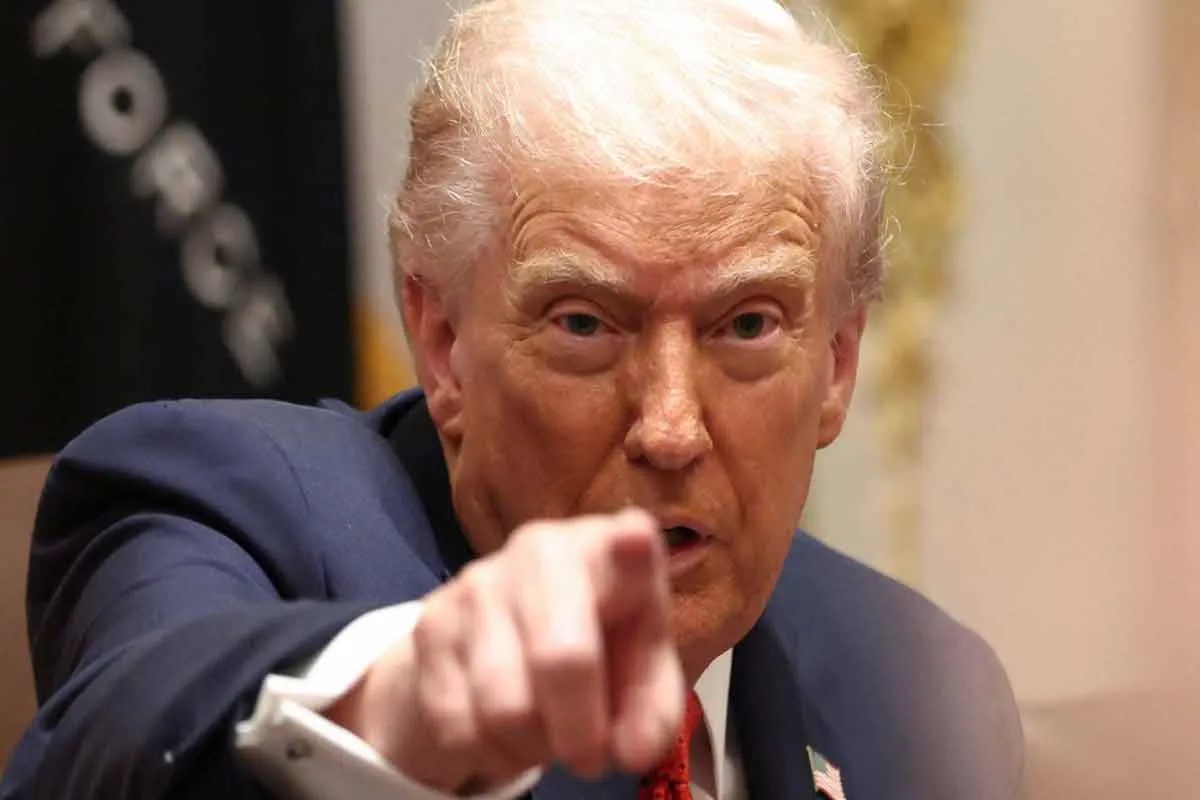
Voters sent a roaring message at the ballot box earlier this month, demanding an end to a messy foreign conflict that has sent gas prices through the roof. Yet, when push came to shove on Capitol Hill, the United States Senate slammed the brakes on its own constitutional authority. By a 51-48 vote, Republican senators rallied behind President Donald Trump to block a War Powers Resolution meant to halt military operations against Iran.
If you are wondering why lawmakers keep ignoring public sentiment while the cost of living spikes, you aren't alone. The gap between what everyday Americans want and how Washington votes has rarely felt wider.
The Math Behind the Block
The showdown centered on House Concurrent Resolution 93, a measure originally introduced by Democratic Representative Seth Moulton. The House of Representatives had already passed it back in September by a 220-204 margin. But the real battlefield was always going to be the Senate.
When the roll was called, the final tally broke down along familiar partisan trenches, with a few notable defections on both sides:
- Only three Republican senators broke ranks to vote with the opposition: Susan Collins of Maine, Lisa Murkowski of Alaska, and Rand Paul of Kentucky.
- On the other side, Democratic Senator John Fetterman of Pennsylvania sided with the Republicans to vote against the resolution.
- Democratic Senator Chris Murphy of Connecticut missed the vote entirely.
For a moment, look at the political reality. Just two weeks prior, the midterms delivered brutal losses for Republicans, driven largely by public anger over the economic fallout and fuel spikes tied to the US-Israel military campaign that kicked off back in February. Polls like those from Reuters/Ipsos showed roughly 71 percent of Americans wanted Congress to step in and stop the fighting. Despite those numbers, the Senate firewall held firm for the White House.
Ignoring the Constitution's Intent
The 1973 War Powers Resolution wasn't drafted on a whim. Lawmakers designed it in the wake of Vietnam specifically to stop presidents from dragging the country into endless, undeclared military entanglements without legislative sign-off. The framework is simple: the executive branch has 48 hours to notify Congress of military action, and after 60 to 90 days, continued involvement requires explicit congressional authorization.
Article I of the Constitution explicitly gives Congress the power to declare war. Yet, modern administrations routinely sidestep that requirement. Critics of the current strategy, like Virginia Democratic Senator Tim Kaine, pointed out before the vote that bypassing Congress leaves the public voiceless while munitions deplete and household budgets stretch thin.
"The American people want us to lower costs and make their lives better, not waste their taxpayer dollars on endless wars," Kaine argued on the Senate floor.
Why Party Loyalty Trumped Public Will
You might ask why senators facing angry constituents would still vote to protect an unpopular war. Party discipline in Washington is a powerful drug. For most Republican lawmakers, breaking with a sitting president on a core national security issue carries heavy political costs within their own party machinery. Even when district-level feedback screams for a change of course, institutional loyalty wins out.
Furthermore, this wasn't the first time the Senate played this game. Back in June, a similar resolution briefly cleared the upper chamber before angry blowback from the executive branch during a closed-door lunch caused several GOP members to rapidly reverse their positions. Lawmakers know that passing a concurrent resolution doesn't automatically force a president's signature—it acts as a powerful symbolic rebuke rather than an instant legal stop sign. That technicality gives reluctant politicians an easy escape hatch to vote "no" while claiming their hands were tied.
What Happens Next
The rejection means the current resolution is dead in the water, and military operations against Iran will continue without a new congressional mandate. But frustration among the opposition is mounting, not fading.
With public pressure refusing to dissolve and economic friction persisting at gas stations across the country, lawmakers pushing against the administration promise that this vote is far from the final chapter. Expect more legislative friction, tighter oversight battles, and relentless pressure as both parties look ahead to the political fallout of a conflict with no clear exit strategy.



