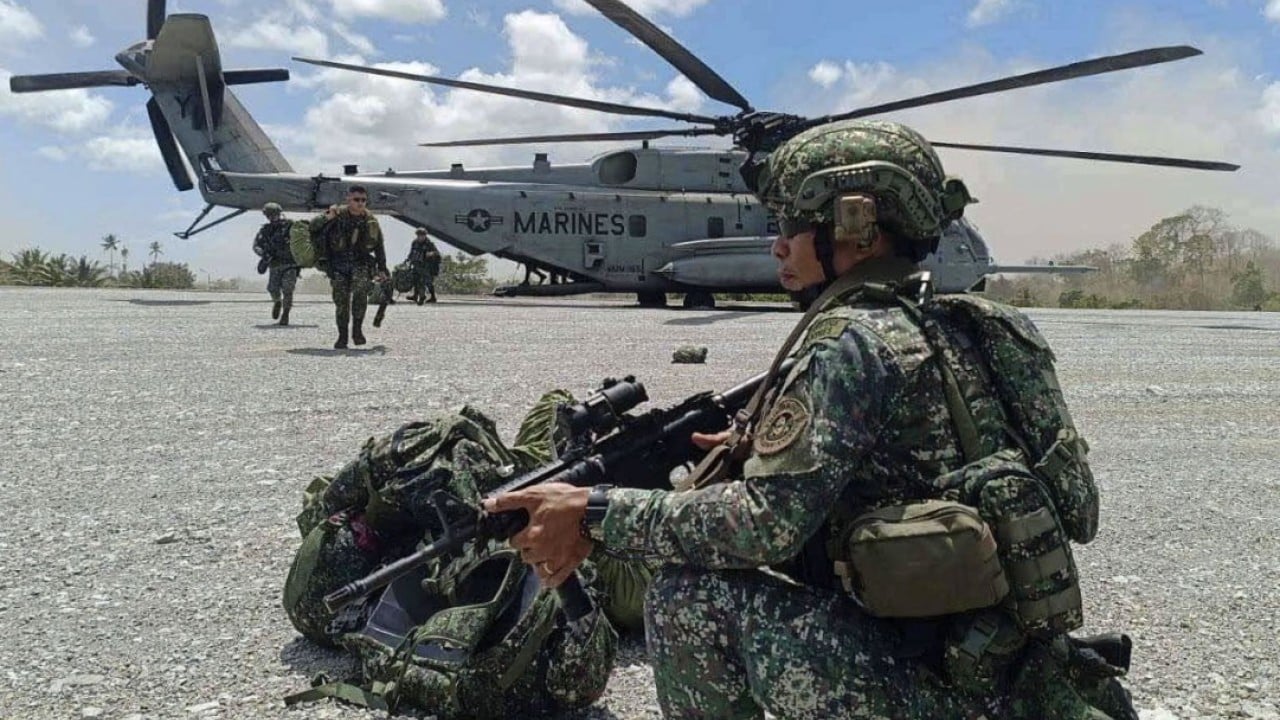
The modern US Marine Corps has spent years reinventing itself for a single purpose. It wants to scatter small, mobile missile units across the western Pacific to box in Chinese warships during a conflict. Sounds great on paper. But scratch the surface, and active military analysts and officers are sounding alarms about severe operational bottlenecks that planners refuse to acknowledge publicly.
If a major clash breaks out over Taiwan or the South China Sea, American Marines deployed to the region could find themselves cut off, short on logistics, and politically shackled by the very allies whose territory they need to use.
The Illusion of Easy Access in Allied Territory
The entire blueprint for Indo-Pacific deterrence rests on a dangerous assumption. Washington assumes regional partners will automatically roll out the red carpet during a crisis and grant permission for US forces to launch offensive strikes from their soil.
Reality is far messier. Japan and the Philippines have strict domestic political constraints, legal boundaries, and deep economic ties to Beijing. Neither government wants to become an immediate target for Chinese retaliation. When military planners war-game scenarios where US Marines move long-range anti-ship missile batteries onto allied islands, they often gloss over diplomatic friction.
If Tokyo or Manila hesitates to grant operational clearance out of fear of escalation, those mobile Marine units are stuck. They cannot move, they cannot shoot, and their forward-deployed posture becomes a liability rather than a deterrent.
Logistics and the Tyranny of Distance
You cannot fight a high-intensity peer conflict on empty stomachs and dry fuel tanks. Yet, the current Marine Corps pivot toward light, distributed expeditionary operations creates massive supply chain vulnerabilities.
Traditional large-scale amphibious shipping is deeply vulnerable to China's formidable anti-ship ballistic missile network. Meanwhile, lighter transport craft lack the armor, speed, and heavy cargo capacity required to sustain dispersed units under constant aerial surveillance.
Supplying isolated island outposts across thousands of miles of contested ocean requires an armada of logistics vessels that the US military simply does not have in sufficient numbers. When supply lines stretch this thin, units cut off from ammunition, spare parts, and medical evacuation become sitting ducks.
The Mismatch Between Doctrine and Attrition
The Corps has downsized heavy armor and artillery to focus on speed and electronic warfare. That works well for initial containment, but what happens when the conflict stretches into months or years?
Wars against industrial-scale competitors are won through industrial endurance, not just clever initial positioning. China’s shipbuilding capacity dwarfs American output, and its missile stockpiles are constantly replenished by a domestic defense industrial base operating at high capacity.
If US forces rely on small detachments hiding on remote islands, they are gambling that those positions can survive saturation missile strikes. Once discovered, small, lightly defended footprints lack the layered air defense required to withstand a sustained bombardment.
Fixing the Blind Spots Before It Is Too Late
Admitting these weaknesses doesn't mean abandoning the Indo-Pacific strategy entirely. It means acknowledging that mobile island-hopping units cannot stand alone without heavy joint force backing, secure logistics pipelines, and rock-solid diplomatic agreements that survive the opening hours of a crisis.
Washington needs to stop treating allied cooperation as a given and start investing heavily in redundant, autonomous resupply methods. Until planners solve the logistical puzzle of how to sustain thousands of Marines trapped inside an adversary's missile umbrella, the Pacific posture remains a high-stakes gamble built on fragile assumptions.