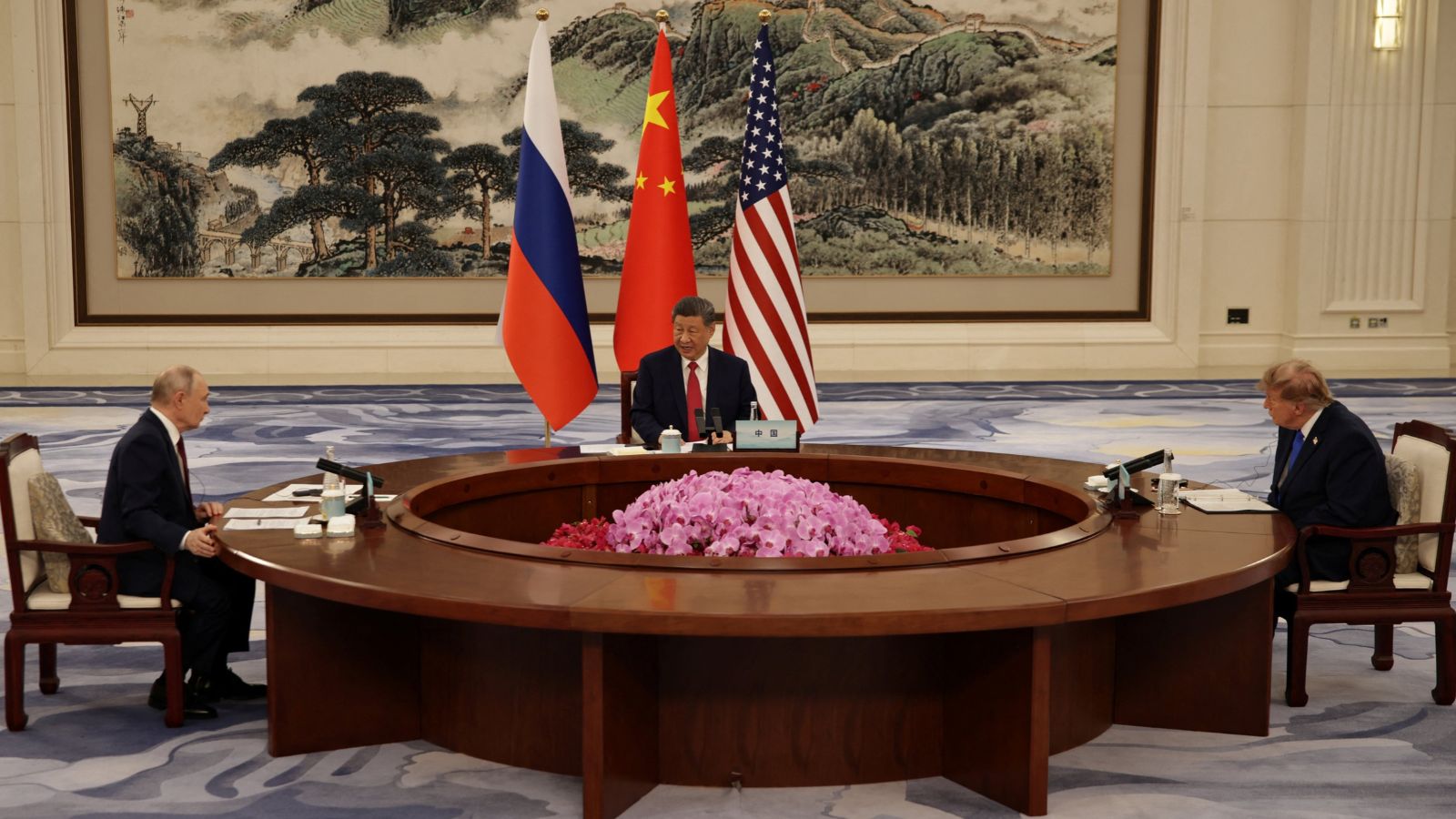
Ninety minutes behind closed doors at Shenzhen's lakeside Kylin Villa won't erase decades of nuclear math or geopolitical distrust. When Donald Trump, Xi Jinping, and Vladimir Putin sat down together on the sidelines of the 2026 APEC summit on November 19, they staged the first-ever three-way meeting between leaders of the United States, China, and Russia. Trump called it "really making history". Honestly, the optics were dramatic—three heavyweights trading talking points on nuclear weapons, war, and global security while the rest of the APEC crowd watched from afar. Yet the real story behind the Trump Xi Putin trilateral meet isn't a sudden peace deal or a shiny new arms treaty. It's a stark reality check about what happens when three superpowers try to reshape security rules after bilateral guardrails have already snapped.
Let's be blunt about what readers actually want to know when they search for this summit. First, did anything concrete change on nuclear warheads or global security? No. Second, why did all three leaders agree to talk now, and what did each one bring to the table? Washington pushed nuclear stockpile reductions and the conflict involving Iran. Moscow leaned into "converging interests," energy security, and the war in Ukraine. Beijing kept its cards tighter, preaching strategic stability, mutual respect, and preventing nuclear war while avoiding binding commitments.
If you only read surface-level wire summaries, you might think a handshake at Kylin Villa puts the genie back in the bottle. In practice, arms control doesn't work like a real estate handshake. Treaties take years of verification protocols, telemetry rules, and on-site inspections—none of which happen during an afternoon huddle in southern China.
What Happened at the Trump Xi Putin Trilateral Meet
The timing and setting of the Trump Xi Putin trilateral meet say almost as much as the speeches. Shenzhen, China's gleaming tech showcase, hosted the 33rd APEC Economic Leaders' Meeting on November 18–19, 2026. Trump arrived after stops that included ASEAN engagements and talks in Manila with Philippine President Ferdinand Marcos Jr., before touching down in Shenzhen where Xi greeted him on the tarmac—a warm reciprocation after Xi's September state visit to Washington.
Inside Kylin Villa, the three leaders spent roughly an hour and a half laying out competing visions of global order. Trump argued that the world's largest nuclear powers were "uniquely positioned" to talk about cutting stockpiles, while also taking aim at the International Criminal Court as "out of control"—a notable remark given the 2023 ICC arrest warrant hanging over Putin. Putin spoke of shared responsibility for international peace, energy security, and resolving regional conflicts including the war in Ukraine. Xi stressed that major-power cooperation is a "must" rather than an option, urging efforts to prevent nuclear war and pushing the long-term goal of comprehensive prohibition and complete destruction of nuclear weapons.
What didn't get settled? Almost everything operational. Before the meeting, U.S. officials had even sent mixed signals on whether Ukraine belonged on the trilateral agenda, noting a separate diplomatic track with Moscow and Kyiv while Trump publicly talked up prospects for ending the war. Sensitive export controls on advanced computer chips—a huge friction point between Washington and Beijing—were also kept off the table for this sit-down.
Why Nuclear Arms Control Is So Much Messier Now
To understand why experts temper their expectations, look at the calendar and the numbers. The last major nuclear arms control agreement between Washington and Moscow, New START, expired in February 2026. For the first time in decades, there are no binding bilateral caps keeping the two biggest nuclear arsenals in check.
Trump has repeatedly said he wants a "new, improved and modernized" nuclear deal that brings China into the fold. On paper, a three-way framework sounds neat and logical. In reality, the math is lopsided. Both the United States and Russia hold more than 5,000 nuclear warheads each, whereas China's arsenal—while expanding rapidly—is estimated at more than 600 warheads.
Ask yourself a simple question from Beijing's perspective. Why would Xi sign up to cap or freeze a force that is still a fraction of American and Russian totals, especially while Washington builds missile defenses and modernizes its triad? Beijing has long resisted trilateral numerical limits unless Washington and Moscow first slash their own stockpiles dramatically.
Daryl Kimball, executive director of the Arms Control Association, captured the gap between stagecraft and substance after the talks, warning that diplomatic theater and APEC photo ops won't produce instant breakthroughs without sustained negotiations. I've watched enough arms-control postmortems over the years to know he's right about the timeline—though I'll give Trump credit for forcing the three leaders into the same room to acknowledge the post-New START vacuum. Even getting China to talk openly about nuclear risk reduction in a three-way setting has value, provided nobody mistakes opening remarks for a treaty draft.
Global Security, Regional Wars, and the "Yalta" Worry
Nuclear math isn't the only fault line running through this meeting. Global security in late 2026 is tangled up in overlapping crises: Russia's grinding war in Ukraine, hostilities involving Iran, tensions around Taiwan, and fierce competition over AI chips and supply chains.
When three giant powers meet without smaller allies in the room, nervous capitals pay attention. Ukrainian President Volodymyr Zelenskyy warned last month against anything resembling a "Yalta 2, 3, 4" arrangement where big powers carve up spheres of influence over the heads of affected nations. That anxiety isn't hypothetical. Smaller countries across Europe and the Indo-Pacific worry that backroom great-power deals could trade away sovereignty or security guarantees for short-term calm.
At the same time, there are real areas where three-way communication could lower accidental escalation. Crisis hotlines, warnings against nuclear threats in regional wars, and basic predictability around strategic posture matter—even when leaders disagree sharply on who caused the instability in the first place. Still, assuming Washington, Moscow, and Beijing share the same definition of "global security" is a mistake. For Moscow, security often means a buffer zone and relief from pressure; for Beijing, it means regime stability, regional primacy, and resistance to U.S.-led alliances; for Washington, it blends deterrence, trade leverage, and dealmaking.
Common Mistakes People Make When Reading Summit Headlines
Whenever a headline pairs Trump, Xi, and Putin, commentary tends to swing wildly between doom and euphoria. Here are the traps to avoid if you want a clear-eyed read on what comes next.
- Treating a leader's quote as binding policy. Leaders say big things for domestic audiences and cameras—like calls to abolish nuclear weapons or claims that a war is close to ending. Look for follow-up working groups, verification talks, or concrete diplomatic moves in the weeks ahead, not just opening-statement rhetoric.
- Ignoring asymmetric incentives. A deal that looks fair to one side can look like a trap to another. Because warhead counts, conventional forces, and economic leverage aren't equal across the three capitals, any future agreement would require creative trade-offs rather than copy-pasting Cold War treaties.
- Separating security from tech and trade. Even when officials say chip controls aren't on the agenda for a specific session, semiconductor rules, energy flows, and supply chains shape how much leverage each leader brings to the security table.
- Forgetting that allies push back. Neither the U.S., China, nor Russia operates in a vacuum. European partners, Indo-Pacific neighbors, and regional states affected by conflicts in Eastern Europe or the Middle East all have ways to complicate—or reinforce—whatever the trio discusses.
Practical Next Steps for Tracking What Happens Next
If you follow foreign policy, markets, or defense strategy, don't stop at the summit recap. Watch a few concrete signals over the next month or two to see if Shenzhen was a one-off or a starting line.
- Check for follow-on arms-control channels. Watch whether U.S., Russian, and Chinese officials schedule technical talks on strategic stability or nuclear risk reduction after APEC wraps up. No follow-up meetings means the nuclear push stalled at the talking-points stage.
- Track parallel diplomatic tracks on Ukraine and Iran. Separate bilateral or multilateral negotiations—and any shifts in sanctions, weapons support, or regional ceasefire efforts—will tell you far more than trilateral platitudes.
- Read primary briefings alongside independent analysts. Pair official readouts from the White House, the Kremlin, and Beijing's foreign ministry with assessments from nonpartisan groups like the Arms Control Association or major wire dispatches from AP News to separate spin from substance.
- Watch allied reactions in Asia and Europe. Pay attention to statements from regional leaders in Tokyo, Seoul, Manila, Brussels, and Kyiv—their responses show whether they view the talks as reassuring crisis management or a threat to their security interests.



