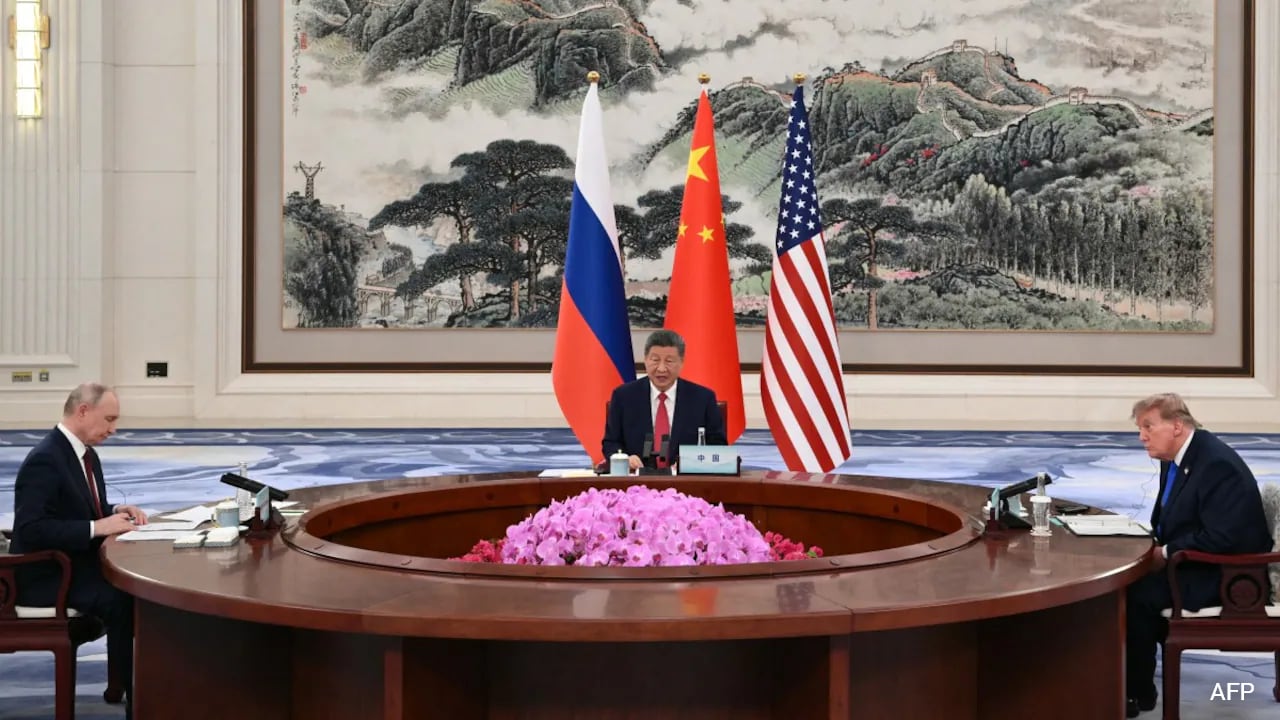
Donald Trump, Xi Jinping, and Vladimir Putin finally sat down at the same table in Shenzhen on November 19, 2026, and honestly, the optics were louder than the substance. Three leaders holding the world's largest nuclear stockpiles met for roughly 90 minutes at Kylin Villa during APEC week, trading big phrases about peace, global responsibility, and nuclear arms.
If you read quick wire recaps, it sounds like a turning point for world order. Look closer at the timing and the leverage in that room, though, and a different picture shows up. None of these three men walked into Shenzhen to hand the others a win. Each arrived with urgent domestic and geopolitical headaches, and each had his own reason to want a camera-ready sit-down without binding commitments.
When the world's three biggest nuclear powers meet for the first time in history, the real story isn't whether they shake hands or call it historic. The real story is what happens to nuclear guardrails, regional wars, and smaller allies when three heavyweights try to manage their own pressures at once.
Why the Shenzhen Summit Happened Now
Timing explains almost everything about this gathering. The three leaders didn't randomly pick mid-November 2026 in southern China out of sudden mutual trust. APEC gave them cover, a state-owned lakeside resort in Shenzhen gave them privacy, and each leader had pressing reasons to show up.
Trump arrived after a tough U.S. midterm election loss, a controversy over Nvidia spy allegations, and ongoing pressure tied to the war involving Iran. He talked up "making history," reducing nuclear weapons, and ending the Russia-Ukraine war. Putin came fresh off setbacks in Ukraine, including damage to a key bridge linking Crimea to Russia, while leaning on Beijing and Washington to see where room exists for a settlement that favors Moscow. Xi hosted on home turf, projecting calm authority and "strategic stability" while pushing back against Western trade pressure and sanctions.
Watch how they handled the room before and during the sit-down. Trump held separate meetings with Putin and Xi around the trilateral rather than treating the three-way table as a magic fix. Analysts at institutions like the Atlantic Council pointed out that Putin has long favored big-power settings where major capitals shape outcomes for smaller states, while Trump has bounced between arms control, Iran, and Ukraine depending on the audience.
That doesn't mean the meeting was fake. A 90-minute sit-down between the leaders of the United States, China, and Russia at Kylin Villa is a genuine diplomatic milestone, and Trump and Xi already have another meeting scheduled in December at the G20 in Florida. Still, a first-ever photo and a set of polite opening remarks aren't the same thing as a breakthrough.
Nuclear Arms Control Without a Net
Let's talk straight about the nuclear pitch. Trump said the three countries are uniquely positioned to cut nuclear stockpiles and lower the risk of use, while Xi stressed preventing nuclear war and spoke of prohibiting and destroying nuclear weapons. On paper, that sounds reassuring. In practice, arms control is stuck in a tough spot.
The last major nuclear arms control treaty between Washington and Moscow, New START, expired in February 2026. For the first time in more than half a century, the two largest nuclear arsenals sit without bilateral treaty caps. Trying to pull China into a three-way limit right after that expiration sounds neat in a speech, yet it runs straight into a math and strategy problem.
Russia and the United States have spent decades negotiating nuclear limits and verification rules. China has steadily expanded its nuclear forces and has long resisted joining bilateral-style caps while its total arsenal remains smaller than Washington's or Moscow's. As analysts noted ahead of the talks, Beijing views demands for trilateral caps at this stage as lopsided, while Washington wants restraints on China's buildup.
- No instant stockpile cuts: Asking any nuclear-armed state to trim warheads is hard enough when trust exists; doing it amid active wars and trade friction is a steep climb.
- Different threat perceptions: Washington, Moscow, and Beijing weigh regional deterrence, missile defenses, and conventional imbalances differently.
- A more realistic floor: Rather than a sweeping disarmament pact, observers like international relations scholar Song Guocheng have pointed to basic crisis communication and emergency channels as a practical way to cut accidental miscalculation.
Even basic guardrails matter when treaties lapse. When two nuclear giants lose formal limits and the third keeps building, avoiding a misunderstanding becomes a baseline survival skill, not a grand victory.
What Smaller Nations Fear Behind Closed Doors
Whenever three huge powers huddle in one room, smaller countries start checking their doors. That reaction isn't paranoia; it's standard diplomatic instinct.
In Shenzhen, the war in Ukraine and the conflict involving Iran sat right next to trade and technology disputes. Ukraine has spent years fighting Russia's full-scale invasion, and any hint that major powers might negotiate regional fates or press concessions over Kyiv's head makes allies nervous. Smaller Asia-Pacific economies also pay close attention when Beijing, Moscow, and Washington talk about "shared responsibility" and "strategic stability."
Here is the trap smaller states worry about most: great-power convenience over sovereign agency. Big countries often find it tempting to trade favors across unrelated files, or to treat a neighbor's security as a bargaining chip.
At the same time, it's worth staying grounded about limits. None of the three leaders can simply wave a wand and end complex wars or force sovereign governments to accept deals they reject. Xi has his own economic ties with Europe and Asia to protect; Trump faces domestic political pushback and skeptical allies; Putin has military and economic constraints of his own. Big-power talks can nudge events, complicate diplomacy, or open backchannels, yet they rarely settle every score in one afternoon.
Common Misconceptions About This Summit
People chasing headlines tend to fall for a few tidy myths whenever leaders like Trump, Xi, and Putin share a stage. Let's clear those up before they turn into bad assumptions.
- A historic meeting means a binding deal is coming. Summits create channels and signal intent. Real arms treaties or peace settlements take months or years of grueling technical work, verification rules, and domestic sign-off.
- All three leaders want the same kind of world order. Xi talks about a community with a shared future and pushes back on Western sanctions. Putin emphasizes regional conflict settlement, energy and food security, and countering Western pressure. Trump mixes tough talk on competition and tariffs with transactional dealmaking and personal rapport. Sharing a table doesn't erase those clashing interests.
- Talk of "denuclearisation" means warheads are about to vanish. Leaders often use broad language about preventing nuclear war or reducing weapons in public remarks. Turning broad language into enforceable limits is a completely different fight.
- This replaces bilateral diplomacy. Trilateral talks grab attention because they're rare, but bilateral meetings—like Trump's separate talks with Xi and Putin and his planned G20 stop in December—remain where concrete bargaining usually happens.
How to Read News From This Summit Like a Pro
If you follow global affairs, work in policy or business, or just want to avoid whiplash from dramatic headlines, you don't need insider access to read these meetings clearly. You just need to watch what happens after the cameras move on.
- Track follow-on mechanisms, not slogans. Look for concrete announcements—like working groups, crisis hotlines, or diplomatic schedules—rather than lines about "making history" or "shared responsibility."
- Separate public remarks from actual leverage. Leaders speak to domestic voters, allies, and rivals at the same time. Ask who gains politically from each quote.
- Check how allies and neighbors react. Watch statements and moves from Kyiv, European capitals, Indo-Pacific partners, and regional neighbors to see whether the summit shifted pressure on the ground.
- Follow the next calendar markers. Keep an eye on subsequent diplomatic stops, including the G20 gathering in December 2026, to see whether anything discussed in Shenzhen carries forward or fades out.
History may well remember November 19, 2026, as the day Trump, Xi, and Putin held their first three-way talks in Shenzhen. Whether it becomes anything more depends on what they do next when the stage lights go down.



