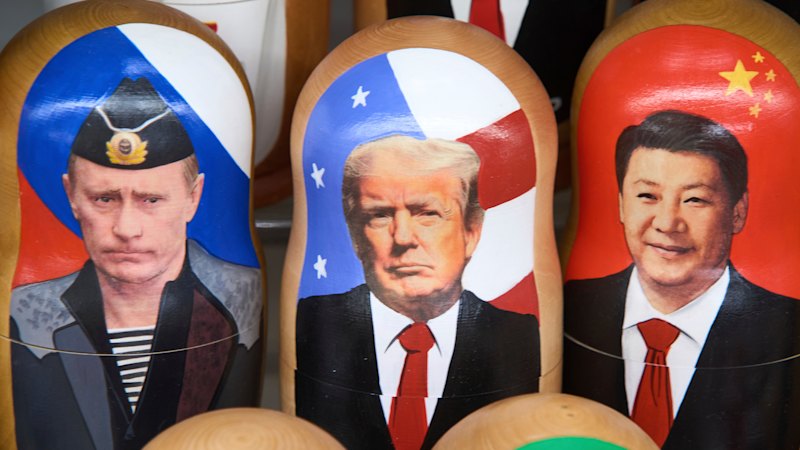
When Vladimir Putin and Donald Trump touch down in Shenzhen for an unprecedented three-way diplomatic showdown with Xi Jinping, they aren't just walking into an ordinary economic conference. They are stepping into a geopolitical pressure cooker. The official Asia-Pacific Economic Co-operation slogans plastered across the gleaming tech hub talk about prospering together, but nobody is buying the corporate-speak. The reality on the ground involves heavy sanctions, volatile oil markets, tense trade wars, and an uneasy attempt by three towering ego-driven leaders to redraw the practical lines of global power.
You need to understand why this specific summit breaks every rule of traditional international relations. For years, western allies managed global diplomacy through predictable channels, multilateral institutions, and strict protocol. This summit blows those norms apart. Xi is leveraging China's unmatched manufacturing dominance and supply-chain stranglehold. Trump rolls in armed with aggressive tariffs and fresh restrictions on advanced technology exports following recent semiconductor scandals. Putin arrives battered by heavy western economic penalties, yet desperate for high-level international legitimacy. Put them together away from the standard plenary sessions—specifically inside a private five-star villa just outside Shenzhen—and you get the makings of a modern-day Yalta conference minus the official paperwork.
The Power Play Behind Closed Doors
Beijing wants to project an image of absolute control. By hosting both the American president and the isolated Russian leader, Xi positions himself as the ultimate pivot player on the world stage. He gets to sit shoulder-to-shoulder with his primary strategic partner while cutting direct deals with a mercurial American administration.
Trump has already signaled his intent to push hard on his favorite talking points, including immediate discussions regarding the war in Ukraine and sweeping demands for denuclearization. But here is where reality hits hard. Beijing maintains a massive nuclear arsenal and refuses to play ball with arbitrary western disarmament quotas while the US and Russia maintain thousands of warheads each. Furthermore, China wants zero part in any formal negotiations over Ukraine that might cast Beijing as a junior partner or trap them in an unwanted diplomatic quagmire.
For leaders like Australian Prime Minister Anthony Albanese and other regional officials, the optics are an absolute nightmare. Standing in the same official photo frame as Vladimir Putin presents an immediate domestic and international PR dilemma. Foreign ministers and diplomats have spent weeks dodging joint appearances with Russian delegates at international forums, but snubbing Putin on Chinese soil carries massive economic risks. Nobody wants to offend Beijing, meaning middle powers are left doing elaborate choreography just to avoid standing next to a sanctioned war leader in the final group photo.
What This Means for Global Markets and Trade
Look past the diplomatic theater, and the real stakes become glaringly obvious. Global supply chains are fracturing in real-time. The restrictions on artificial intelligence microchips and advanced hardware have created deep fractures between Washington and Beijing. When tech giants and manufacturing powerhouses are caught in the crossfire, regular consumers feel the pinch through rising hardware costs, disrupted tech sectors, and volatile energy prices.
Trump's unpredictable trade maneuvers mean that any bilateral or trilateral understandings reached in those private Shenzhen villas can instantly upend global markets overnight. If you think international trade runs on predictable rules, this summit proves that personal political leverage and raw economic muscle matter infinitely more than bureaucratic trade agreements.
Navigating the New Normal
If you are running a multinational business, managing supply chains, or simply trying to make sense of where international security is heading, you have to stop looking at traditional diplomatic channels for answers. The real decisions are increasingly made behind closed doors by a handful of dominant figures who prefer direct transactions over institutional frameworks. Pay close attention to the bilateral exemptions carved out during these high-stakes meetings. They will dictate the next wave of trade restrictions, tech bans, and economic alliances long after the private jets leave Shenzhen.



