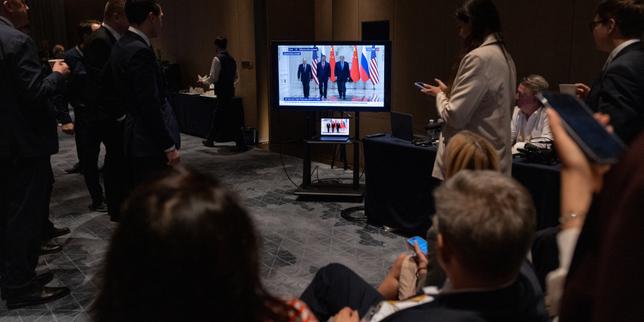
The headlines coming out of the latest high-stakes diplomatic talks in late November 2026 sound like something straight out of a Cold War thriller. Donald Trump, Xi Jinping, and Vladimir Poutine just wrapped a historic summit centered on global security and the war in Ukraine. Trump kicked off the aftermath by claiming that the United States, China, and Russia sit in a unique position to slash global nuclear arsenals.
It sounds grand. It sounds like a breakthrough. But if you look past the photo ops and sweeping statements about nuclear reductions, the harsh reality on the ground in Eastern Europe hasn't shifted an inch.
Talking about nuclear disarmament is easy because it kicks the hardest decisions down the road. Ending a active land war in Europe, however, demands immediate compromises that neither Moscow nor Kyiv are willing to make right now.
What Happened at the Summit and Why the Headlines Are Misleading
The main takeaway pushed by Washington and echoed across major media outlets is simple: the big three powers are talking again. Donald Trump framed the summit around the idea that Washington, Beijing, and Moscow hold absolute leverage over global stability. By bringing up nuclear reduction, the leaders created a high-level talking point that dominates front pages.
Here is what actually went down behind closed doors:
- Nuclear Posturing vs. Reality: Floating the idea of reducing strategic arsenals gives all three leaders a public relations win. It paints them as peacemakers on the world stage without locking them into binding timelines.
- China's Strategic Position: Xi Jinping walked into the summit playing the long game. Beijing wants economic stability and continued trade with the West, but China has zero incentive to force Moscow into an humiliating retreat.
- Russia's Core Demands: Poutine hasn't budged on his primary objectives. Russia continues to insist on territorial concessions and permanent Ukrainian neutrality, conditions that remain completely unacceptable to Kyiv and its key European allies.
While three men sat in a room discussing global balances of power, the frontline forces in eastern Ukraine were still exchanging artillery fire. The summit established that superpower dialogue is back on the table, but it failed to outline a concrete blueprint for a ceasefire.
The Gap Between Superpower Diplomacy and Ukraine's Reality
It is easy to fall into the trap of thinking three powerful leaders can simply redraw the map of Europe over lunch. That isn't how modern geopolitics works.
Ukrainians aren't fighting a proxy war that can be turned off with a switch from Washington or Beijing. Ukrainian leadership has consistently made it clear that any settlement negotiated over their heads without their explicit agreement won't hold.
Moscow knows this too. Poutine’s strategy relies on grinding down Western resolve over time. By engaging in high-level summits with Trump and Xi, the Kremlin signals to its domestic audience that Russia remains an indispensable global power that cannot be isolated.
Meanwhile, Europe finds itself in a tough spot. European capitals are watching these trilateral discussions with extreme anxiety. Leaders in Paris, Berlin, and Warsaw worry that big-power bargaining might lead to a forced peace that leaves European security exposed for decades to come.
Why Nuclear Reduction Talks Are Being Used as a Distraction
Focusing on nuclear weapons is a classic diplomatic tactic. When a direct resolution to an ongoing conflict is too difficult to achieve, diplomats pivot to broad arms control issues where everyone can agree on general principles.
- It buys time. Broad negotiations over warheads and delivery systems take years to write up and verify.
- It shifts the narrative. Instead of answering tough questions about territorial lines in Donetsk or Zaporizhzhia, officials can talk about global stability and non-proliferation.
- It satisfies domestic audiences. Claiming progress on nuclear safety looks good in home news cycles regardless of actual progress in Ukraine.
Don't buy into the idea that a agreement on strategic weapons automatically translates to peace on the ground. The INF Treaty and START frameworks existed for decades while regional conflicts raged across the globe.
What Actually Needs to Happen for Peace
If you're tracking this war and trying to figure out when it actually ends, ignore the vague summit communiqués. Watch these specific indicators instead:
- Security Guarantees: Until Ukraine receives legally binding security commitments that deter future invasions, no government in Kyiv can sign a durable peace deal.
- Sanctions Relief Mechanics: Russia wants sanctions lifted, but Western nations aren't going to roll back economic restrictions without clear, verifiable troop withdrawals.
- Control over Energy and Logistics: The real negotiations will happen over specific infrastructure, port access on the Black Sea, and energy pipelines—not just lines on a military map.
What to Watch Next
The trilateral summit between Trump, Xi, and Poutine showed us that high-level communications remain open, but don't mistake dialogue for a peace treaty.
Keep your eye on European defense spending metrics over the coming months and watch how Beijing adjusts its dual-use exports to Russia. Those economic actions will tell you far more about the trajectory of the war in Ukraine than any joint press statement issued after a summit.



