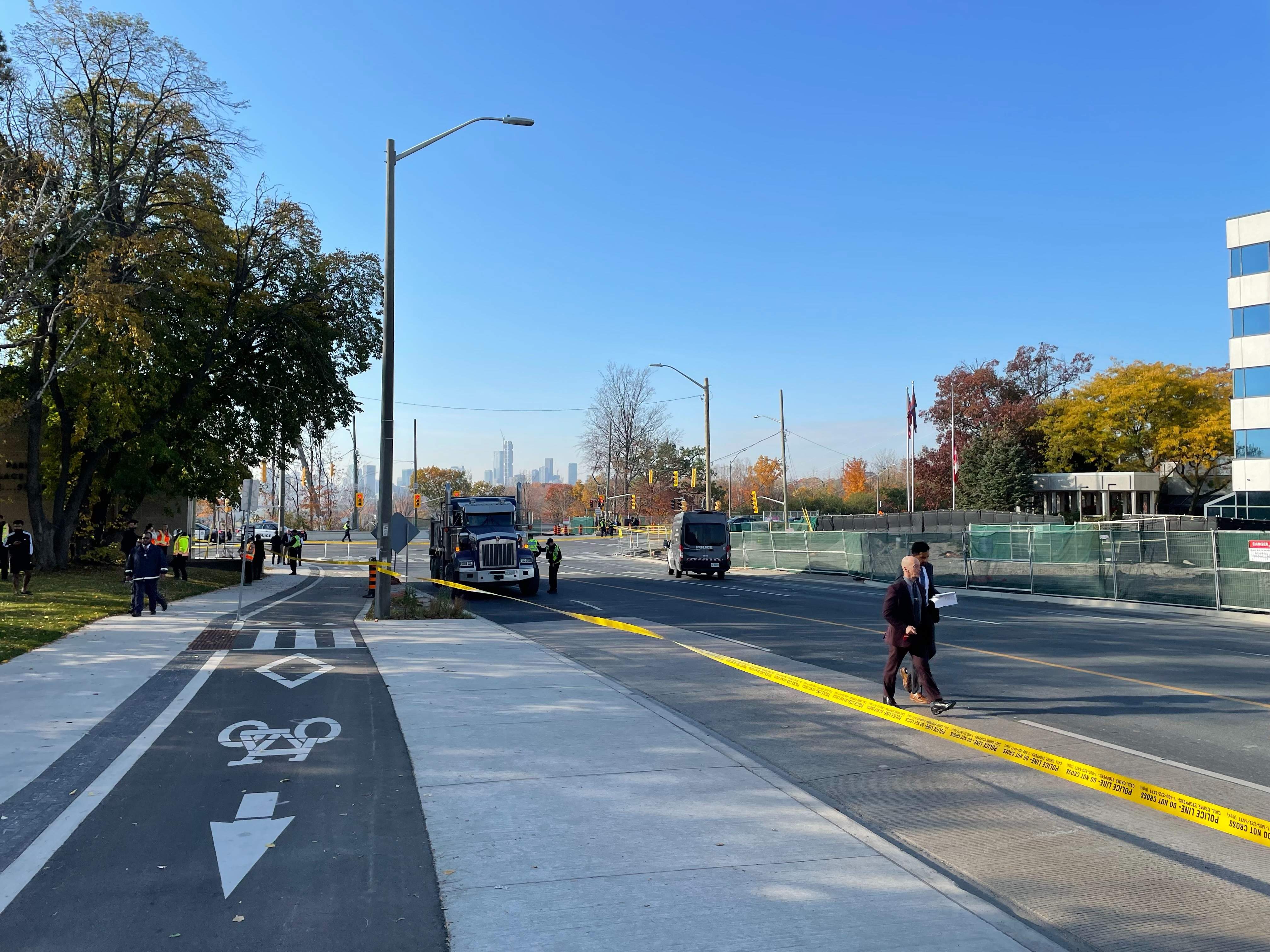
Every single shift on a busy urban street is a calculated risk. Most people drive past municipal workers without a second thought, assuming bright vests and cones are an impenetrable shield. They aren't.
A 42-year-old City of Toronto traffic agent lost his life while on duty in East York. Struck by a dump truck near Millwood Road and Overlea Boulevard, he was pronounced dead at the scene. The tragedy has sent shockwaves through municipal departments, labor unions, and local government, forcing a harsh look at the actual dangers frontline civil servants face every single day.
What Happened At Millwood And Overlea
The emergency calls came in at roughly 9:02 a.m. on a Thursday. Police, fire, and paramedics rushed to the intersection of Millwood Road and Overlea Boulevard, a notoriously congested artery connecting Leaside and Thorncliffe Park.
The worker was actively performing his duties when the collision with a dump truck occurred. Despite the quick response from emergency crews, his injuries were fatal. The driver of the truck stayed at the scene and is cooperating with investigators.
Toronto Police Service's traffic services division locked down the area immediately. Millwood Road was closed off between Redway Road and Pape Avenue, while Overlea Boulevard saw shutdowns stretching from Leaside Park Drive to Millwood. Commuters faced massive delays, but the traffic gridlock paled in comparison to the human cost of the incident.
The Invisible Hazards Of Working Toronto Streets
Traffic agents and construction flaggers occupy a brutal space in urban infrastructure. You stand yards away from multi-ton vehicles moving at high speeds, relying entirely on driver attentiveness to stay alive.
Mayor Olivia Chow released a statement calling the event heartbreaking, pointing out the vital, dangerous work these agents do to keep the city moving. But kind words don't stop heavy machinery.
CUPE Local 79, the union representing the worker, stepped up right away to demand accountability and support. Union president Nas Yadollahi emphasized that every single municipal employee expects to return home safely when their shift ends. The union is working closely with city officials to ensure members affected by the tragedy get immediate mental health support and counseling.
Yet, grief management is only a band-aid. The bigger question remains: how do we stop heavy truck collisions in dense Toronto corridors?
The Broader Street Safety Crisis
East York intersections are changing fast. Heavy construction, dense residential pockets, and commercial truck traffic create a cocktail of chaos. Dump trucks and transit vehicles mix with pedestrians, cyclists, and municipal staff in tight spaces.
When you look at urban safety protocols, a few glaring issues stand out:
- Sightlines around active construction and high-density zones are frequently obstructed.
- Heavy vehicle blind spots remain a leading cause of fatal pedestrian and worker strikes.
- Driver compliance with slowdown zones and traffic direction signals is notoriously spotty.
Technology and policy changes are moving too slowly. While cities love to roll out Vision Zero initiatives on paper, the physical reality on asphalt often feels neglected. Agents rely on high-visibility gear, but high-visibility gear doesn't stop a distracted or wide-turning dump truck driver.
Demanding Real Change Beyond The Statements
Politicians will issue condolences. Investigators will spend weeks reconstructing the exact angle of the truck and the positioning of the agent. But once the intersection reopens and the news cycle shifts, the systemic risks will still be waiting for the next shift change.
Protecting frontline municipal workers requires more than standard reflective vests. It demands physical barriers where possible, tighter restrictions on heavy commercial turning radiuses during peak hours, and stricter enforcement of distracted driving laws around work zones.
If you drive through Toronto, slow down. Pay attention to the people standing on the pavement holding stop signs. They aren't there to annoy you; they are doing a dangerous job to keep the city functioning. Right now, a family is mourning because a routine Thursday morning shift turned into a nightmare.
Demand better safety standards from local leaders before another worker pays the ultimate price.



