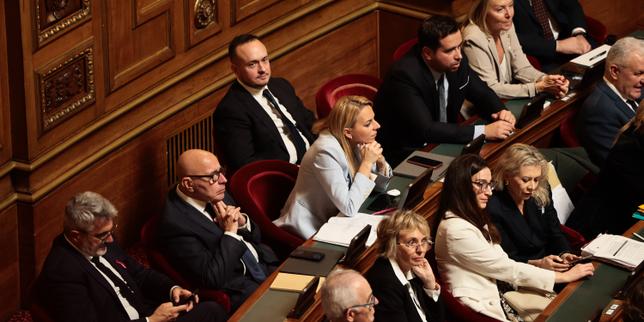
French politics rarely offers true moments of clarity, but Thursday's debate at the Palais du Luxembourg cut straight through the noise. When the subject turned to the ongoing war in Ukraine and France's financial commitments, the Rassemblement national found itself standing almost entirely alone. Pushing hard for a severe reduction or total freeze on aid to Kyiv, party representatives quickly discovered that the rest of the upper house wasn't buying it.
Even more striking than the RN's isolation was the empty seat syndrome across the chamber. La France Insoumise, usually quick to voice its own distinct and often controversial stance on foreign military interventions and European spending, was notably absent from the debate entirely. This double twist—a cornered nationalist party and empty benches on the radical left—highlights a fracture in how French political forces want to position themselves as the 2027 presidential horizon draws closer.
The Strategy Behind the RN Stance
To understand why the RN pushed so hard for cutting funding to Ukraine, you have to look at their domestic messaging. For months, figures within the party have balanced a tightrope act. They claim to support European stability while simultaneously insisting that French taxpayers shouldn't foot the bill for an endless conflict.
When Louis Aliot and other prominent voices floated the idea of turning off the financial taps to Kyiv, it triggered immediate pushback from opponents. Critics accuse the party of playing into Moscow's hands. Yet, the leadership maintains that domestic priorities like public services and purchasing power must come first.
At the Senate, this argument landed with a thud. Other political groups didn't just disagree; they framed the RN's budget-cutting rationale as a profound strategic miscalculation that undermines French credibility abroad. The attempt to separate military hardware support from financial upkeep didn't convince a majority that wants predictability in European security.
Where Was the Radical Left?
The absence of La France Insoumise from the debate raised plenty of eyebrows in the corridors of the Senate. LFI has historically maintained a complex relationship with the conflict, often criticizing NATO's footprint, questioning the delivery of heavy offensive weapons, and calling for independent diplomatic channels that bypass traditional Western blocs.
By skipping this specific parliamentary showdown, the movement missed an opportunity to pitch its alternative vision. Whether driven by tactical positioning or internal bandwidth strains, their empty chairs left the floor dominated by a unified pro-Ukraine front and a defensive nationalist opposition. It created a strange vacuum in a chamber that usually thrives on sharp, polarized cross-fire between all sides of the political spectrum.
What This Means for 2027
Foreign policy rarely decides French elections on its own, but conflicts abroad act as high-stakes stress tests for presidential hopefuls. When a party stakes out a controversial position on European defense, voters notice the friction between grand rhetoric and parliamentary reality.
The Senate showdown proved that while the RN can rally its base with anti-spending slogans, building a consensus in institutional chambers remains an uphill battle. Allies across Europe are watching how French political parties handle these commitments, and domestic opponents now have fresh ammunition to label nationalist foreign policy as unreliable.
The debate is over, but the political fallout is just getting started. Expect these lines to harden as the campaign season truly heats up.