High-stakes diplomacy rarely happens when everyone is smiling. It happens when things are breaking apart.
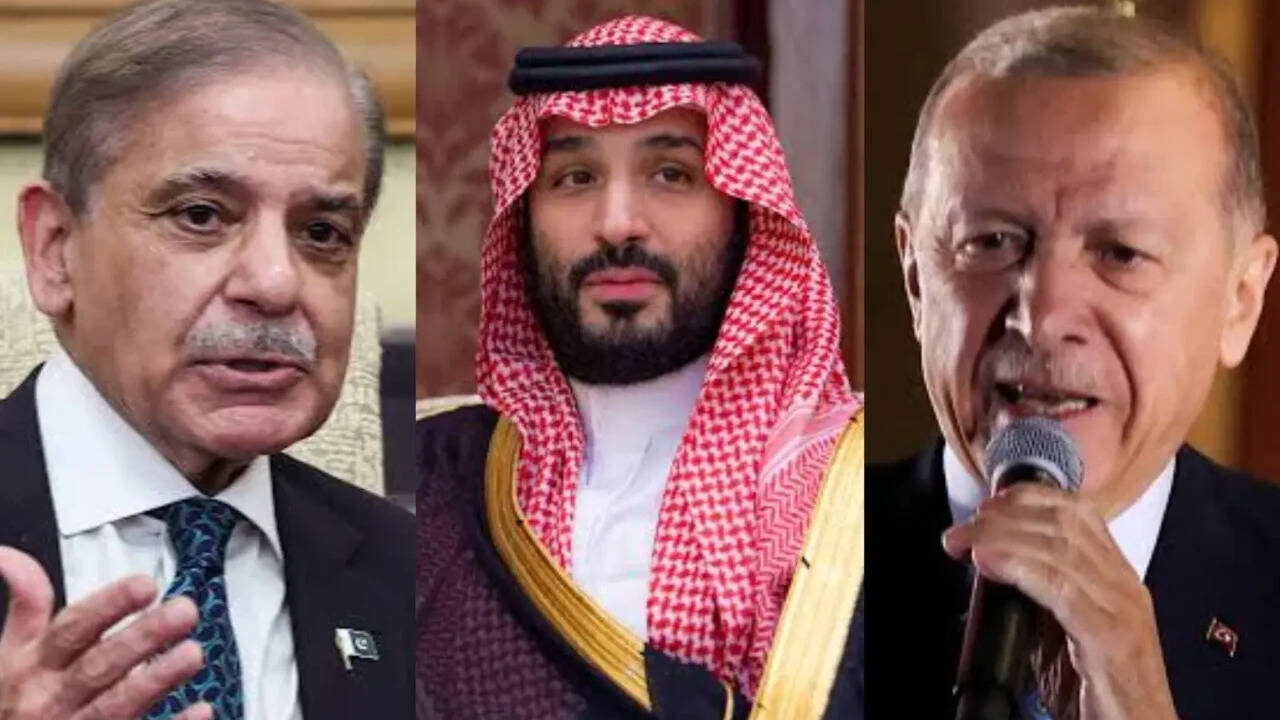
Top security officials from Saudi Arabia, Turkiye, and Pakistan walked straight into Tehran to sit down with Iranian leadership. This wasn't a standard diplomatic photo op. It was a calculated rescue mission for regional stability. Ever since US and Israeli strikes triggered a wide-scale conflict that spilled across borders, the Gulf has sat on a razor's edge. Now, the architects of the Mecca mutual defence pact are trying to hit the brakes before total disaster strikes.
You need to understand what led to this room. Back in August, Riyadh, Ankara, and Islamabad signed a mutual defense agreement. People called it a paper tiger. They wondered if it would ever mean anything outside of a conference room. Tehran just got the answer. Prince Khalid bin Salman, Turkish intelligence chief Ibrahim Kalin, and Pakistani army chief Field Marshal Asim Munir didn't fly into Iran for pleasantries. They flew in because the war has expanded too far, too fast, and nobody's economy or military can handle the fallout.
The Real Driver Behind the Tehran Talks
Peace talks don't start out of the goodness of politicians' hearts. They start when the cost of fighting outweighs the cost of backing down.
Look at what's happening on the ground. Yemen's Houthi movement didn't pause their campaign just because diplomats exchanged business cards. In fact, they ramped up attacks, targeting Saudi airports, vital ports, and crucial energy infrastructure like the East-West pipeline. When energy arteries face constant strikes, everyone gets nervous. Riyadh knows that long-term economic diversification under Vision 2030 goes up in smoke if missiles keep landing near population centers and oil facilities.
At the same time, regional players are picking sides with razor-sharp pragmatism. Look at Egypt. The Egyptian parliament just authorized military support to defend Saudi Arabia if things escalate further. Cairo recognizes a common threat when it sees one. When Saudi Arabia feels the pinch from Red Sea disruptions and Houthi advances, the wider Arab world shakes.
Iranian President Masoud Pezeshkian and foreign minister Abbas Araqchi met these delegations with a clear agenda on the table. They aren't just talking about bilateral ties. They are hashing out the heavy stuff: Israel's military footprint, regional proxy friction, and the lingering scars of Western strikes inside Iran.
Why Mediation Is Moving Past Washington
For decades, everybody looked to Washington or European capitals to broker peace deals in West Asia. That playbook is dead.
Regional powers are stepping into the vacuum. Pakistan and Qatar have taken the primary lead in shuttle diplomacy. Qatari mediators were on the ground in Tehran just a day before the Saudi-Turkish-Pakistani delegation arrived. Think about that shift. Local nations are solving local problems because external superpowers keep making things worse or losing interest when domestic political cycles change.
The June interim peace agreement proved that superficial ceasefires don't stick without regional enforcement. The moment US-Iran friction flared back up, the whole arrangement collapsed. That's why this Mecca pact delegation is different. These countries share immediate geographic borders, shared security anxieties, and direct economic stakes. If a missile flies across the Gulf, it lands in their backyard, not across an ocean.
The Shadow War That Won't Quit
You cannot look at the diplomatic push in Tehran without seeing what happens away from the negotiating table. Peace talks are happening in the spotlight, but the shadows tell a very different story.
Reports from regional security sources indicate that groups like Hezbollah have spent months quietly rebuilding. Armed with fresh funding funneled from Tehran, they are patching up broken command structures and ramping up drone production. Even with Israeli forces occupying parts of southern Lebanon and intense political pressure mounting in Beirut to disarm them, the underlying militant infrastructure is adapting.
This creates a brutal paradox for the diplomats in Tehran. How do you negotiate a lasting peace when all sides are simultaneously rearming for the next round?
Iran's leadership wants sanctions relief and a halt to expansionist military pressure. The Saudi-led defence bloc wants an end to proxy attacks on Gulf infrastructure. Yet, the deep-seated mistrust won't vanish because of one summit.
What Comes Next for the Region
Don't expect a sudden, magical peace treaty to fix decades of proxy warfare overnight. That isn't how geopolitics works.
What you are watching is the establishment of permanent crisis management channels. By bringing Saudi Arabia, Turkiye, and Pakistan into direct, high-level alignment with Iran, the region is building a safety valve. When a Houthi missile launches or an airstrike hits a sensitive target, these channels mean leaders can pick up a phone instead of automatically retaliating with full-scale war.
The real test will come over the next few months. If the Houthis keep hitting Saudi oil installations, Riyadh's patience will run out, no matter how many meetings happen in Tehran. If Israel intensifies operations, Iran's hardliners will demand a harsher response, squeezing Pezeshkian's administration from the inside.
Watch the border movements, monitor the oil flow through the Red Sea, and keep an eye on how Cairo implements its new defence commitments. The diplomatic push is real, but so is the danger. Peace in West Asia is never a given. It is a fragile truce bought day by day, negotiation by negotiation.