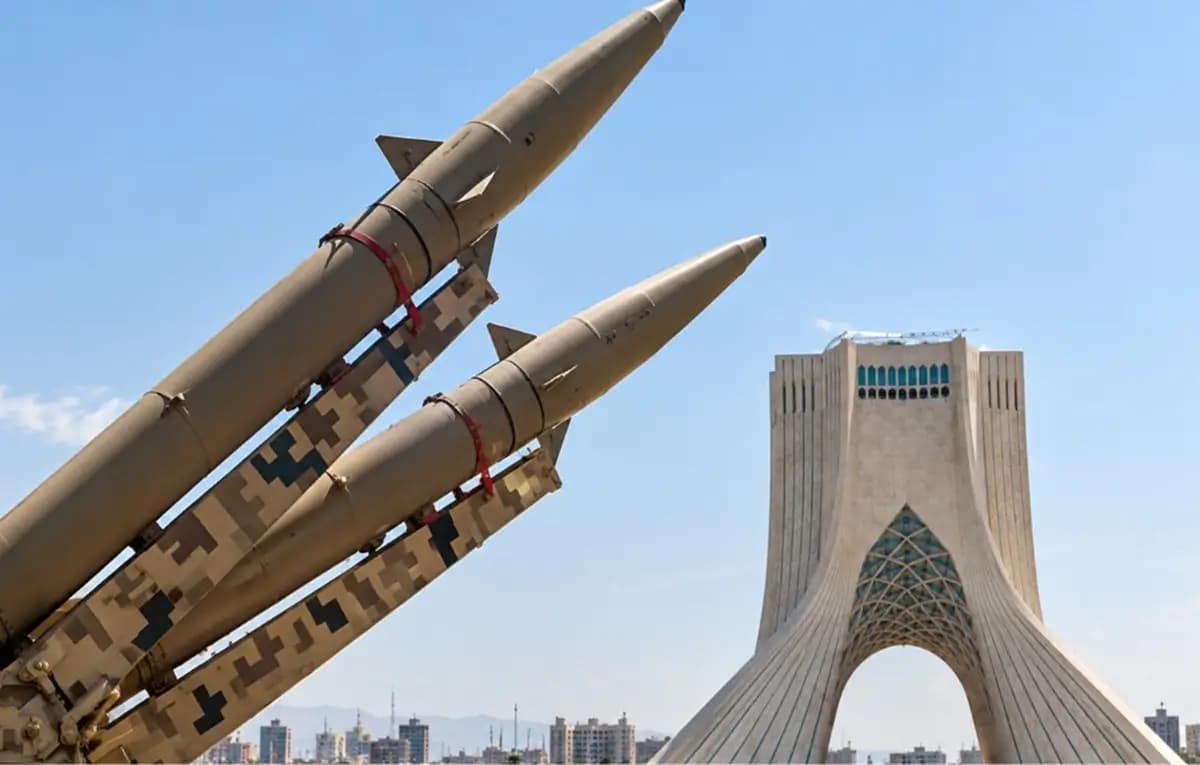
Explosions lit up the early morning sky over Riyadh as Saudi air defences intercepted a ballistic missile launched by Yemen's Houthi movement. This wasn't an isolated incident. It marks an alarming escalation in the regional fallout tied to the ongoing Iran war.
If you think this conflict is just about localized skirmishes in the Levant or isolated maritime clashes, you're missing the big picture. Riyadh's defense systems are being tested to their absolute limits. The security architecture of the entire Gulf is fracturing under the pressure of expanding regional proxy warfare.
Let's look at what's actually happening on the ground and why these kinetic developments matter right now.
The Breaking Point in Saudi Skies
Early Saturday morning, the Saudi-led coalition confirmed that its Patriot and modern air defense batteries intercepted and destroyed a ballistic missile heading straight for the Saudi capital, Riyadh. Simultaneously, a separate drone was intercepted over the kingdom's Eastern Province.
Civil defense alarms blared across Riyadh, Najran, and Wadi al-Dawasir. Residents woke up to the unmistakable thunder of anti-missile interceptors overhead.
While coalition spokesman Turki al-Malki reported zero casualties or structural damage from these specific interceptions, the psychological toll is mounting. This strike follows a horrific attack earlier this month on Riyadh's King Khalid International Airport, which claimed 13 lives and injured over 300 people.
The Houthis, backed by Tehran, are proving that distance and heavy air defense screens won't stop them from projecting power deep into Saudi territory.
Connecting the Dots: Hormuz, Riyadh, and Tehran
You cannot view the missile attack on Riyadh in a vacuum. It is part of a coordinated pressure campaign spanning multiple fronts.
While Houthi forces fire ballistic hardware toward the Saudi capital, commercial shipping in the Strait of Hormuz is facing unprecedented danger. Iranian naval units and affiliated groups have ratcheted up attacks on oil supertankers. In October alone, commercial transit through the crucial chokepoint has faced nearly three dozen confirmed attacks, trapping millions of barrels of crude and sending shockwaves through global energy markets.
Energy security is crumbling. International Energy Agency chiefs are openly warning that Europe and global markets face severe strain as crude supplies face renewed chokepoints. When missiles target Riyadh while tankers burn near Hormuz, the economic shock hits everyday consumers everywhere through fuel prices and inflation.
What Most Analysts Get Wrong About Regional Escalation
Many mainstream commentators treat these proxy strikes as mere background noise to the primary US-Israeli theater against Iran. That's a dangerous miscalculation.
Saudi Arabia has spent years trying to de-escalate its direct involvement in the Yemen conflict, pursuing diplomatic channels with both Sana'a and Tehran. Yet, as the wider Iran war intensifies, regional capitals find themselves dragged back into the crossfire.
When an Iran-aligned faction launches a heavy ballistic missile at Riyadh, it sends a clear geopolitical signal: Tehran's network retains deep strike capabilities and is willing to expand the theater of operations whenever Washington or its allies ramp up pressure.
Diplomatic efforts led by European and Middle Eastern ministers are struggling to keep pace with the military tempo. French and regional diplomats keep warning that an unchecked spiral will create "nothing but losers," but calls for restraint are falling on deaf ears as both sides dig in.
Where This Leaves Gulf Security
The reality on the ground is stark. Modern missile defense systems are remarkably effective, but they operate on a mathematical disadvantage. Interceptors are expensive and finite, while cheap drones and ballistic variants keep rolling off assembly lines.
Saudi air defense forces are constantly on high alert, dealing with multi-vector threats across vast geographical expanses from Najran on the Yemeni border up to Riyadh and the oil-rich Eastern Province.
If you live, work, or invest in the Gulf, the traditional assumption of stable, insulated metropolitan centers is gone. Security calculus has fundamentally shifted. Companies are recalculating logistics, insurance premiums for regional shipping have skyrocketed, and political risk assessments have become the number one priority for boardrooms across Dubai, Doha, and Riyadh.
The debris from Saturday's intercepted missile over Riyadh has cleared, but the smoke hanging over Gulf security will linger for a long time. Watch the Strait of Hormuz and watch the frequency of southern border interceptions. That is where the true trajectory of this war will be decided.



