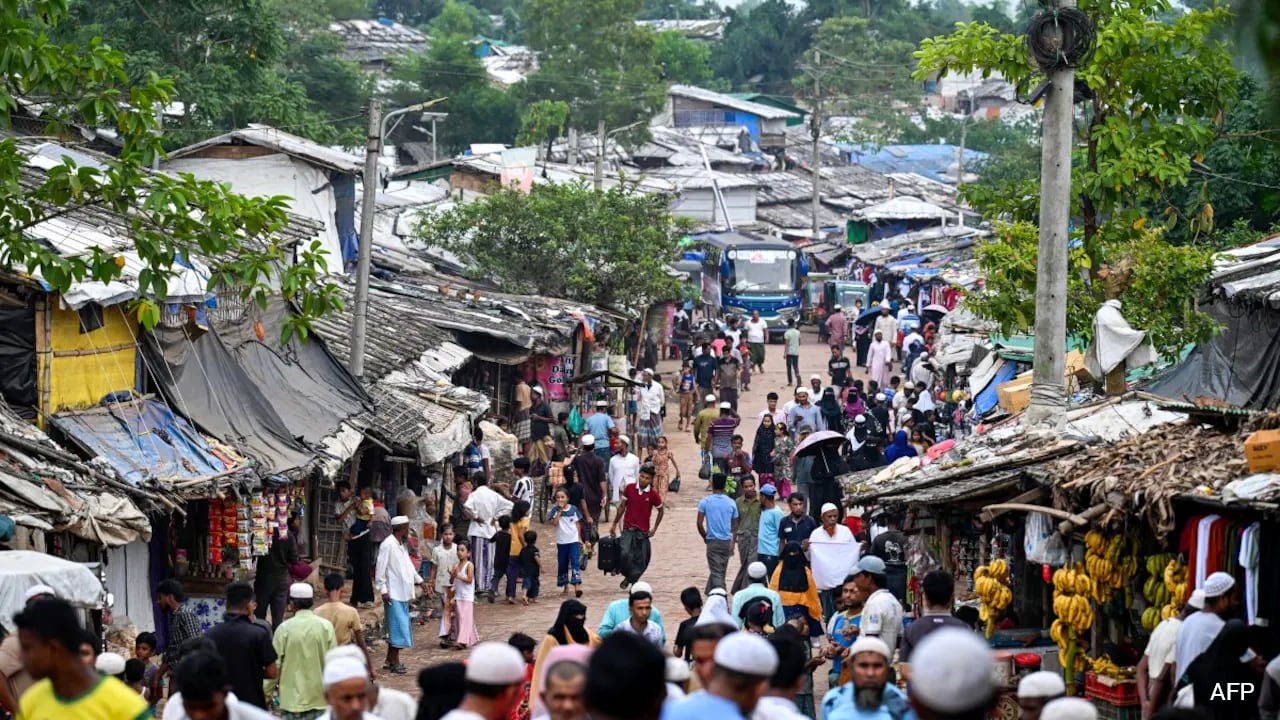
A piece of paper in The Hague can name a crime. It can't rebuild a burned village in Rakhine State or put food back on a family's table in Cox's Bazar.
On November 19, 2026, the International Court of Justice (ICJ) voted nine to six that Myanmar is responsible for committing genocide against the Rohingya during its 2017 military crackdown and failed to prevent or punish it. That's a watershed moment in international law. Since the 1948 Genocide Convention, the world's top court has never held a state directly responsible for genocide. If you're asking whether this Myanmar genocide ruling actually helps the Rohingya on the ground, the honest answer is yes in the long arc of justice, and barely at all this week.
Legal breakthroughs move slowly. Hunger and armed conflict don't wait for court calendars.
What the Myanmar Genocide Ruling Actually Decided
Let's clear up a common mix-up right away. The ICJ doesn't throw generals in prison. It adjudicates disputes between states, not individual criminal guilt. When people talk about Myanmar being found guilty of genocide in this case, they mean state responsibility under the Genocide Convention in the case brought by The Gambia.
For years, proving genocidal intent—the legal requirement that a state acted with intent to destroy a protected group in whole or in part—has been notoriously steep. Governments rarely leave a neat memo saying wipe them out. In this ruling, the majority looked at the totality of conduct in northern Rakhine State in 2017: mass killings, sexual violence, methodical village burning, attacks on people fleeing, child birth limits, and dehumanizing rhetoric. Counter-insurgency doesn't explain that pattern. The court concluded that genocidal intent was the only reasonable inference.
Just as consequential is who brought the case. The Gambia stepped forward without being a direct neighbor or victim state, relying on the principle that every party to the Genocide Convention has a shared legal stake in stopping genocide. Even though ICJ judgments don't formally bind future benches as rigid precedent, legal scholars are already dissecting how this reasoning on intent and standing could ripple into other cases, including South Africa's genocide case against Israel.
According to Human Rights Watch's coverage of the judgment, the court ordered Myanmar to:
- Investigate and prosecute perpetrators, including military commanders.
- Outlaw genocide under domestic law and guarantee non-repetition.
- Allow displaced Rohingya to return safely, reunite families, and return or replace lost property.
- Help locate the disappeared, rebury the dead, provide physical and psychological care, and pay individual and collective reparations where restitution falls short.
Why Recognition Matters So Much to Survivors
If you've ever followed human rights accountability up close, you know how easy it is for outsiders to treat a court verdict as "symbolic" and dismiss it. That misses what recognition does to people who've been erased for decades.
For generations, Myanmar's authorities have denied the Rohingya basic citizenship—gutted by the 1982 citizenship law—and even refused to recognize them as a distinct ethnic group, calling them "Bengalis" or illegal immigrants. When a survivor like Yousuf Ali travels to The Hague and says the judgment brings profound relief and hope for the next generation, he isn't talking about courtroom trivia. He's talking about the world's highest court saying on the record: you exist, you were targeted as a group, and what happened to you was genocide.
There's also a practical legal payoff over time. The International Criminal Court (ICC) deals with individual criminal liability, including a prosecutor's request for an arrest warrant against Min Aung Hlaing over alleged crimes against humanity. An ICJ finding of state genocide doesn't automatically convict anyone in another court, yet it builds a towering evidentiary record that prosecutors, documentation groups, and future tribunals can draw from.
The Brutal Gap Between Court Orders and Ground Reality
Here's where things get messy, and honestly, a bit sobering.
The court gave Myanmar two years to report back on compliance and kept the case open to decide further on compensation. Sounds tidy on paper. In reality, Myanmar is fractured by civil war following the 2021 military coup, and Min Aung Hlaing—the former commander in chief during the 2017 campaign who took the presidency in April 2026 after widely criticized elections—spokesperson called the ruling unfair and pointed to the six dissenting votes.
Think about the absurdity built into the remedy. The judgment orders Myanmar to protect the Rohingya and guarantee their safe return, yet the same military apparatus found responsible for the atrocities sits at the center of power. Meanwhile, in much of Rakhine State, fighting involves not just the junta but also the Arakan Army, and Rohingya civilians inside the state face abuse, displacement, and coercion from multiple sides.
And enforcement? The ICJ has no police force. Under Article 94 of the UN Charter, a party that fails to comply can face action before the UN Security Council, which has never actually taken enforcement steps on an ICJ judgment. Even if a resolution were drafted, China and Russia hold vetoes and have long shielded Myanmar's military politically and through arms or security ties—though both face reputational pressure when a formal genocide finding is on the table.
Meanwhile, roughly 1.2 million Rohingya remain displaced, with over a million crowded into camps in Bangladesh like Cox's Bazar. Over the past couple of years, funding shortfalls and ration cuts—including the World Food Programme halving food rations in early 2025—have hit families hard. A ruling in The Hague doesn't magically restore rations or open schools in a camp.
Diplomacy Is Already Pulling in Opposite Directions
One thing too many commentators gloss over is how unevenly governments are reacting. You might assume a historic genocide ruling forces every capital to freeze ties with Naypyidaw. It doesn't.
Several Southeast Asian states and the United States have engaged with Min Aung Hlaing's leadership in 2026—including a senior US State Department visit in September and strategic interest tied to critical minerals like rare earths—even as Washington previously labeled the atrocities genocide. At the same time, ASEAN has weighed "calibrated engagement," while European actors push harder against normalization.
That split creates real friction. Every time a foreign government treats Myanmar's leadership as a normal diplomatic partner without tough human rights conditions, compliance with ICJ orders gets easier for Naypyidaw to ignore. Still, public rulings create political leverage for activists, lawmakers, and European partners who can press governments to tie any engagement, trade, or aid to concrete steps on protection and humanitarian access.
What You Can Actually Do Right Now
Reading about a massive international court case can leave you feeling helpless. You don't have to sit on the sidelines.
If you want to do something concrete rather than just doomscroll headlines, start with these practical moves:
- Back verified humanitarian and legal aid. Direct support to established relief groups operating in Bangladesh and neighboring areas—as well as organizations documenting atrocities for accountability mechanisms—helps meet immediate needs like food, healthcare, and legal documentation. Check charity evaluators and UN/NGO operational reports before donating so your money reaches active programs.
- Track compliance milestones, not just headline verdicts. Watch the two-year reporting window, upcoming compensation proceedings, and actions by the UN General Assembly or Security Council. Holding governments accountable means checking what happens six months from now, not just the day after the verdict.
- Press your own elected representatives. If you live in a country engaging diplomatically or economically with Myanmar's authorities, write or call your representative to ask how their policy aligns with the ICJ judgment, humanitarian access, and refugee protection.
- Read primary sources alongside news summaries. Look up summaries from the ICJ, UN agencies, and human rights groups like Human Rights Watch to separate legal findings from political spin—especially when terms like "guilty" get used loosely in headlines.