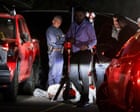
Costa Rica spent decades cultivating a peaceful reputation as the Switzerland of Central America, a place where journalists didn't have to look over their shoulders. That illusion shattered completely on a Monday afternoon in November 2026. Camilo Rodríguez, a well-known journalist and writer who spent his career publicly naming suspected drug traffickers and corrupt figures, was ambushed and shot dead while driving his red pickup truck on Route 32 near Heredia.
Two gunmen on a motorcycle intercepted his vehicle, firing at least 10 bullets into the truck before fleeing toward San José. For a nation that prides itself on stability and democratic safety, this wasn't just a murder. It was a terrifying milestone. Rodríguez is the first journalist killed in Costa Rica in a quarter of a century, ending an era of relative immunity that many took for granted.
The Shrinking Safe Haven for Reporters
When radio producer Parmenio Medina was gunned down in July 2001, the entire country reeled from the shock. It felt like an isolated tragedy, an ugly anomaly in an otherwise peaceful society. For 25 years, no other journalist met a similar fate. Reporters could investigate corruption, local politics, and organized crime without facing immediate, fatal retaliation.
That buffer is gone. Judicial Investigation Agency (OIJ) officials noted that the execution-style shooting bore all the hallmarks of a contract hit. Rodríguez had filed multiple complaints regarding death threats and had recently taken to wearing a bulletproof vest in public. Despite knowing the danger, he refused certain official protection programs recommended by the Attorney General's Office. For another perspective on this development, see the latest update from NBC News.
His assassination highlights a grim reality. Costa Rica's homicide rate doubled between 2013 and 2023, driven largely by the expansion of international drug trafficking networks using local ports to ship cocaine to Europe and North America. As cartel influence grows, the traditional shield protecting the country's democratic institutions is wearing thin.
Warnings Ignored and the Cost of Exposure
International press freedom organizations reacted swiftly to the killing. The Committee to Protect Journalists and Reporters Without Borders labeled the murder an urgent alarm signal. They pointed out that silencing independent voices reporting on drug cartels undermines the very foundation of regional democracy.
Attorney General Carlo Díaz stated publicly that investigators are treating the assassination as a direct retaliation for Rodríguez's publications naming individuals allegedly tied to organized crime. Yet, the investigation faces steep hurdles. Tracking down hitmen on motorcycles in heavy traffic corridors is notoriously difficult, and finding the intellectual authors behind the contract killing requires navigating deep-seated criminal webs.
President Laura Fernández condemned the attack, calling it a stain on the nation's freedom of expression, and mobilized police forces to prioritize the case. Words and task forces, however, won't easily restore the confidence of reporters working on the ground. When a prominent voice is silenced in broad daylight on a major highway, self-censorship becomes a matter of survival for everyone else in the industry.
What Comes Next for the Press in Costa Rica
The killing of Camilo Rodríguez forces a harsh reckoning. Costa Rica is no longer immune to the violent press censorship plaguing neighboring Latin American countries. Journalists investigating corruption now face a stark choice: back down or risk becoming the next headline.
If authorities fail to identify, capture, and prosecute both the triggermen and the masterminds behind this attack, it will send a dangerous message to criminal syndicates. Impunity breeds repetition. Restoring accountability isn't just about solving one murder. It's about proving that the rule of law still outweighs the power of the bullet.



