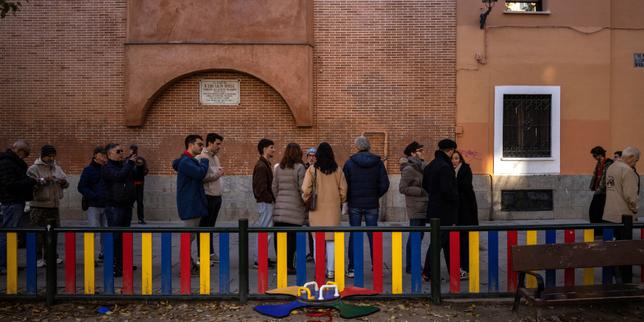
Long lines outside polling stations across Madrid and Barcelona didn't lie. When the Spanish interior ministry dropped the midday figures, the numbers caught everyone off guard. At 14:00 local time, voter turnout hit 45,74%, marking a massive surge compared to previous general elections.
People aren't staying home this time. They're showing up early, and the political stakes couldn't be higher.
A Historic Surge at the Ballot Box
If you thought voter apathy was the default state for modern European democracies, Spain just proved you wrong. That 45,74% figure isn't just a minor bump—it's a massive jump of over five full points compared to the July 2023 legislative elections, where turnout sat at 40,48% at the exact same hour. In fact, analysts and media outlets are calling it a record-breaking mobilization for a mid-day update.
Over 38 million citizens are eligible to cast their ballots to renew both chambers of the parliament. With numbers surging this early, polling stations have faced continuous queues throughout the morning. Citizens clearly feel that sitting this vote out isn't an option.
What is Driving the Rush
You have to look at the political landscape to understand why voters are sprinting to the polls. Prime Minister Pedro Sánchez is fighting the political battle of his career. After leading a leftist coalition for eight years, his government faces fierce headwinds.
On one side, the conservative Partido Popular (PP), led by Alberto Núñez Feijóo, has capitalized heavily on public frustration. Voters are grappling with real pressures: skyrocketing housing costs, inflation, and a wave of political scandals touching Sánchez's inner circle. Add in recent infrastructure crises, like the railway accidents that severely tested public trust, and you get an electorate split right down the middle.
Feijóo has urged voters to cast their ballots "with memory," pushing for a definitive political shift. Meanwhile, Sánchez has doubled down on his economic track record, warning that a victory for the right could bring a dangerous regression in social rights, especially if the PP is forced into a coalition with the far-right Vox party.
Why Europe is Watching Closely
Spain isn't voting in a vacuum. This election serves as the opening bell for a heavy cycle of major European political showdowns.
If the conservative bloc manages to unseat the current government, it signals a deeper consolidation of right and far-right momentum across the continent. Brussels, Paris, and Berlin are tracking every percentage point because a political flip in Madrid shifts the entire balance of power within the European Union.
The interior ministry will release subsequent updates as the afternoon progresses, and the final results will roll in once the ballot boxes close across the mainland, the Balearic Islands, and finally the Canary Islands. One thing is already certain: whoever wins will govern a deeply mobilized, highly polarized nation.