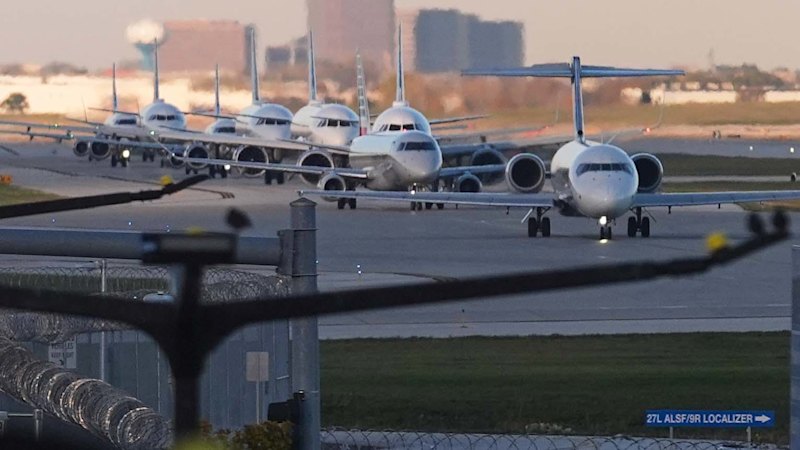
Airports nationwide descended into sudden quiet when the Federal Aviation Administration made the drastic call to halt all departing flights. If you were sitting on a tarmac or staring at a board of red cancellation notices, you lived through a rare piece of aviation history. The FAA grounded every single commercial departure across the United States, citing extraordinary circumstances and pressing safety concerns. Panic spread fast. Phones buzzed with emergency alerts and airport terminals filled with stranded passengers scrambling for answers.
This wasn't just another delayed flight caused by a passing thunderstorm. When the agency locks down the entire airspace, it signals a systemic failure that ripples far beyond a single hub. Beneath the immediate travel nightmare lies a much bigger conversation about infrastructure that lawmakers have kicked down the road for decades.
Inside the Nationwide Airspace Freeze
The crisis erupted when a severe communication issue hit all U.S. Air Route Traffic Control Centers. Transportation Secretary Sean Duffy confirmed the widespread technical failure, forcing the federal government to issue an immediate nationwide ground stop for all departing traffic. Incoming international flights faced individual case-by-case routing, while domestic departures were frozen completely.
Completely halting the U.S. airspace is virtually unprecedented outside of historical tragedies. In modern aviation history, total nationwide ground stops are counted on one hand. The first occurred in the wake of September 11, 2001. The second happened in January 2023 when a critical computer system malfunction crippled the pilot notification network for a couple of hours. This latest incident marks only the third time the system has ground to a complete halt, turning an ordinary Friday into an operational emergency.
The Staggering Scale of the Chaos
Numbers tell the story best. Flight-tracking data revealed that nearly 7,000 flights were either delayed or canceled within hours of the order. Terminals in major hubs like Atlanta, Chicago, and New York turned into makeshift campgrounds. Passengers sat cross-legged on carpets, using rolling luggage as makeshift desk spaces to hammer out frantic emails and rearrange hotel stays.
A ground stop carries a very specific operational meaning. Aircraft already airborne are generally allowed to complete their journeys under air traffic guidance, but anything parked at a gate is barred from pushing back. That means planes sat loaded with passengers for hours, burning fuel on the tarmac or taxiways before returning to the terminal gates. The backlog created a domino effect that airlines will spend days untangling.
Homeland Security officials rushed to calm public nerves, emphasizing that early indications pointed to a massive telecommunications outage rather than any malicious or nefarious attack. Even so, the sheer vulnerability of the network left millions of travelers shaken.
Why America Keeps Facing Air Traffic Meltdowns
You cannot look at this outage as a freak accident. It is the predictable outcome of running a modern global superpower on vintage wiring. The FAA oversees more than 14,000 air traffic controllers who manage over 44,000 flights every single day. Yet, the technological backbone supporting these professionals is notoriously outdated.
For years, aviation experts have warned that legacy hardware and outdated communication software are ticking clocks. Congress approved $12.5 billion last year to start patching the cracks, and federal officials recently went back to lawmakers asking for another staggering $30.1 billion to overhaul the entire architecture. When communication links between regional control centers snap, the entire house of cards collapses because there is no modern, resilient backup network capable of handling the load instantly.
What to Do When You Get Caught in a Ground Stop
If you travel frequently, you know that rolling delays and sudden ground stops can ruin your itinerary in seconds. Sitting around and waiting at a gate agent's desk is a losing strategy.
When a nationwide grounding hits, bypass the physical airport lines entirely. Open your airline's mobile app immediately to rebook or secure standby seats before thousands of other passengers flood the queue. Keep an eye on secondary ground transit options if your trip is regional. Most importantly, ignore third-party booking aggregators for real-time updates and check directly with the carrier for official operational status.
Fixing America's skies will take years of heavy engineering and billions in sustained funding. Until that modernization is complete, passengers will continue to pay the price when the system hits its breaking point.



