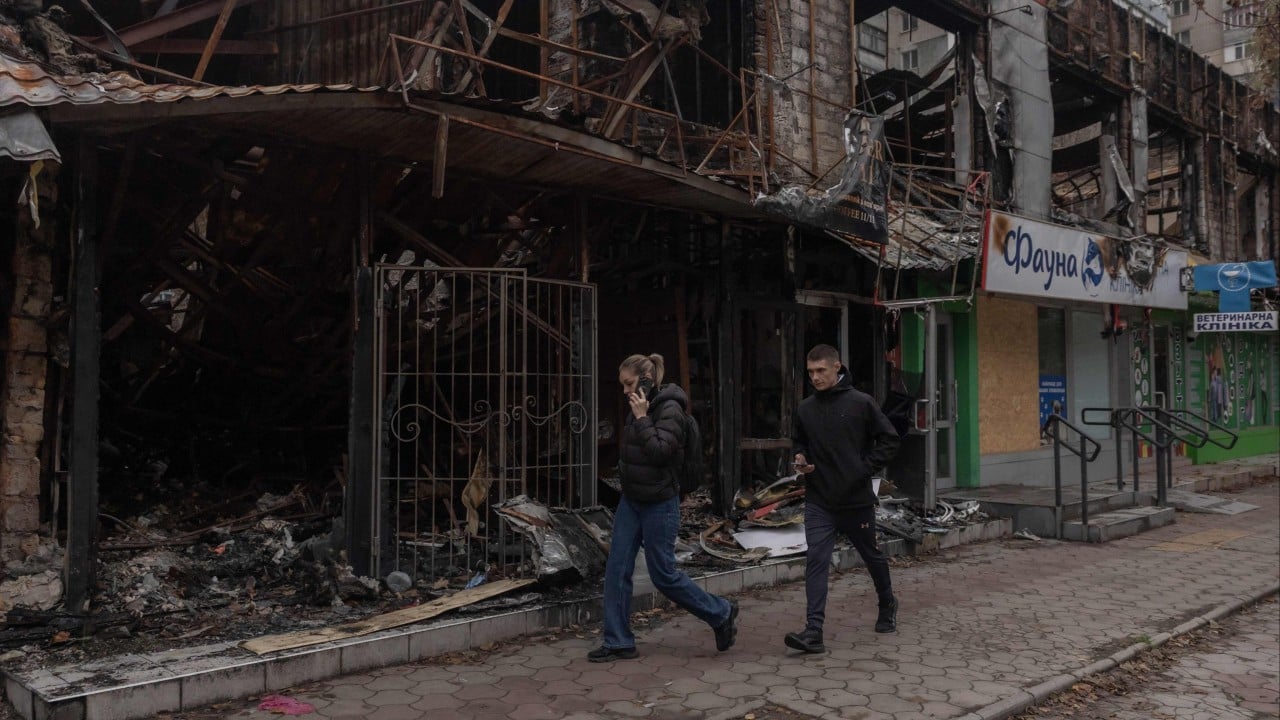
Silence on a battlefield never lasts. In the southern stretches of Ukraine, a rare six-day pause brought an eerie quiet to the bombed-out streets of Kherson, only to expire on a Sunday evening with no extension in sight. Brokered around a humanitarian aid mission in the Russian-occupied town of Oleshky across the Dnipro River, this brief lull became the longest localized truce of the ongoing war. But as ordinary people stepped outside to sweep glass, check ruined apartments, and plant tulips in neglected gardens, military planners on both sides were playing a completely different game.
Ceasefires in active conflict zones rarely serve pure humanitarian goals. They function as pressure valves, tactical resets, and intelligence-gathering windows. When the guns fall silent, the underlying friction doesn't disappear. It merely shifts shape.
What a Brief Pause Actually Looks on the Ground
Walk through Kherson during wartime and you notice the absence of normal life immediately. Plywood replaces glass. Skeletons of concrete apartment buildings stand open to the elements. When the localized truce took effect, the atmosphere shifted from hyper-vigilant terror to cautious disbelief.
Residents who had spent months ducking short-range FPV (first-person view) drones suddenly found themselves walking down open avenues. Municipal workers scrambled to repair anti-drone netting strung high above the streets. Families visited fire-gutted flats to salvage whatever memories survived the shelling.
Yet, the silence came with psychological weight. Local residents noted that a sudden taste of safety makes the return of violence twice as brutal. You let your guard down. You start hoping. Then reality sets back in.
The Military Reality Behind the Lull
While civilians used the quiet to plant grapevines and clean up yards, military units treated the pause with pragmatic suspicion. Frontline officers across the Dnipro River watched the relative calm translate into logistical movement.
- Troop Rotations: Frontline positions saw fresh units swapped in to replace exhausted personnel.
- Supply Lines: Ammunition stockpiles and heavy equipment were shifted closer to active engagement zones.
- Drone Surveillance: Reconnaissance operators used the lull to map updated enemy coordinates and adjust targeting parameters.
A Ukrainian officer speaking anonymously warned that the resumption of hostilities could prove worse than the phase preceding the truce. Wars of attrition rarely wind down permanently through localized pauses. They compress energy before a violent rebound.
The Broader Context of Southern Exhaustion
Kherson remains one of the most fractured symbols of the conflict. Captured early in the 2022 invasion and partially reclaimed later that year, the regional capital sits within constant artillery and drone range. Short-range FPV drones equipped with live-streaming cameras have turned routine street crossings into lethal hazards, classified by United Nations investigators under systematic human rights violations.
The end of this temporary agreement highlights a grim truth about modern state-level combat. Localized humanitarian exemptions cannot survive structural hostility. Russia refused requests to extend the agreement, leaving the strategic waterway and its surrounding towns bracing for an immediate return to aerial bombardment and counter-battery fire.
The tulips planted during a fleeting week of quiet will face the same elements as the shattered concrete around them. The pause is over. The baseline reality of the southern front has returned.