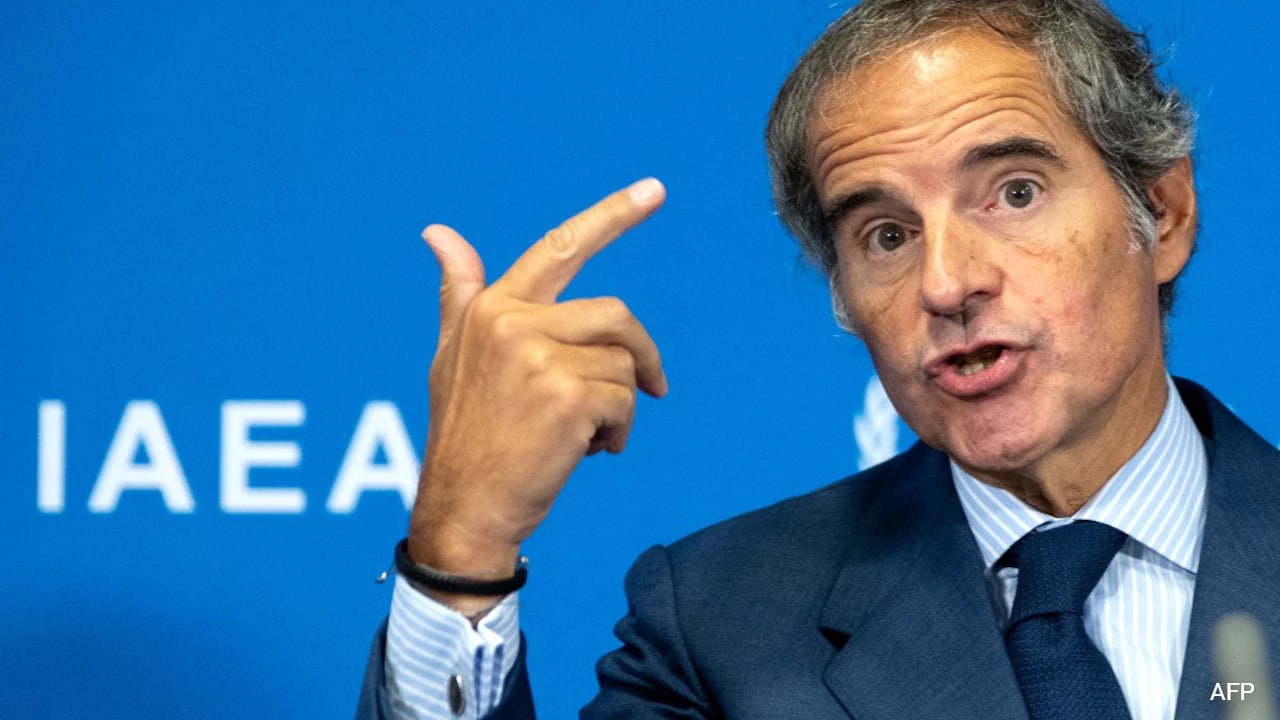
Blind spots in international nuclear monitoring usually end in geopolitical disasters. Right now, the United Nations nuclear watchdog is operating completely in the dark inside Iran. Rafael Grossi, the head of the International Atomic Energy Agency, stood before the UN Security Council to deliver a blunt warning. Inspectors haven't stepped foot inside key Iranian nuclear facilities since mid-2025. That blackout wasn't scheduled. It followed intense military strikes from Israel and the United States, leaving the international community guessing about what is happening to thousands of pounds of sensitive materials.
When an atomic watchdog can't inspect, rumors take over. And in global security, bad intelligence sparks worse wars.
To understand why this matters, you have to look at what happened before the inspectors were locked out. Prior to the June 2025 conflict, the IAEA estimated that Tehran held roughly 440 kilograms of uranium enriched up to 60 percent purity. That percentage is terrifyingly close to the 90 percent threshold required for a nuclear weapon. It sits miles above the 3.67 percent cap established by the now-defunct 2015 Joint Comprehensive Plan of Action.
Nobody outside of Iran knows the exact status or location of that stockpile today.
The Security Council meeting itself followed a rare non-compliance referral from the IAEA board. Britain, France, Germany, and the United States pushed the measure through, marking the first time in two decades that Tehran has been officially referred to the top UN body for reporting violations. But symbolism doesn't stop centrifuges. Russia and China hold permanent vetoes on the council. They voted against the resolution alongside Niger, protecting their strategic partner in Tehran from binding international sanctions.
Diplomacy is stuck in neutral while military threats accelerate.
Iran's permanent representative to the United Nations, Amir Saeid Iravani, did not hold back his frustration during the debate. He called out what he termed a glaring double standard at the heart of the international system. From Tehran's perspective, the council remained silent while US and Israeli warplanes struck its sovereign infrastructure. When an attacker faces zero accountability, invoking non-proliferation treaties becomes a hard sell. Tehran argues that the language of disarmament is being cynically weaponized to achieve regime change rather than regional stability.
That argument resonates deeply across the Global South, complicating Western efforts to build a unified coalition.
Meanwhile, leadership in Washington has kept the pressure at a fever pitch. In recent media appearances, US President Donald Trump openly questioned his next moves against Tehran, framing the choice bluntly between negotiating a fresh deal or launching fresh military operations to wipe out the remaining infrastructure. That kind of rhetoric keeps oil markets volatile and regional governments on edge. When leaders speak about finishing off an adversary casually on television, deterrence turns into a game of chicken.
The danger of this standoff lies in the complete absence of verification. Without boots on the ground and cameras inside enrichment halls, the world relies entirely on satellite imagery and guesswork. Guesswork has started wars before. If intelligence agencies miscalculate the status of that 60 percent enriched uranium, a preemptive strike could be launched based on a ghost threat. Alternatively, a threshold might be crossed quietly without anyone noticing until it is too late.
Transparency is the only mechanism that prevents miscalculation. Until Iran opens its doors back up to Grossi's inspectors, everyone is flying blind in a nuclear storm.



