One week in late November 2026 exposed just how messy, personal, and politically tangled global technology has become.
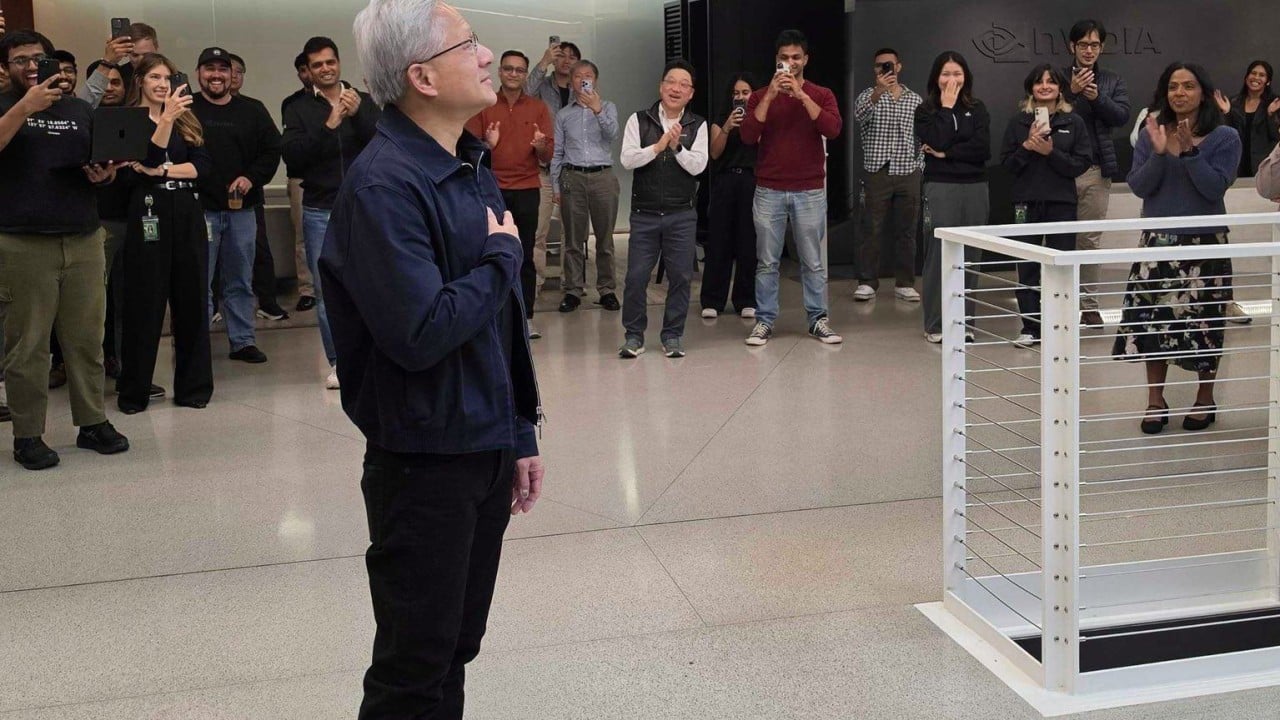
A federal jury in Brooklyn found Huawei guilty on 10 of 12 criminal counts after a years-long legal battle, convicting the telecom giant on charges including bank and wire fraud, conspiracy to steal trade secrets, and sanctions evasion while clearing it of racketeering conspiracy. Barely a day earlier, Nvidia CEO Jensen Huang returned to the helm of his company just 11 days after stepping down—a dramatic reversal pushed through after US President Donald Trump intervened behind the scenes, Elon Musk rallied tech support, and markets panicked.
Put those two stories next to the rest of the week's headlines—a Pakistani astronaut boarding China's Tiangong space station aboard Shenzhou-24, Shanghai Party chief Chen Jining coming under investigation, and diplomatic choreography around APEC in Shenzhen—and you don't see a tidy grand strategy. You see colliding legal doctrines, raw market pressure, and political improvising.
What the Huawei Conviction Actually Proves
If you follow tech policy closely, you've probably heard two completely opposite claims about Huawei's US trial: either the verdict proves Huawei ran a rogue criminal enterprise, or it was just a politically motivated prosecution from day one. Neither story captures the full picture. To get more information on the matter, in-depth coverage can be read on NBC News.
The jury convicted Huawei and three subsidiaries on 10 of 12 counts, covering trade secret theft, fraud tied to Iran sanctions, and related offenses. Yet jurors acquitted the company on racketeering conspiracy. That split verdict matters. Prosecutors wanted a sweeping indictment framing Huawei's entire global rise as a racketeering scheme, and jurors didn't buy that broadest brush—even while convicting on serious fraud, sanctions, and intellectual property counts.
In my view, the biggest mistake observers make is treating a trial verdict as the end of the story. It isn't. Huawei has already signaled plans to appeal, sentencing and appellate litigation will drag on, and a separate federal case involving two Huawei subsidiaries in Seattle isn't slated for trial until October 2027. Meanwhile, Huawei keeps operating in more than 170 countries and posted 880.9 billion yuan ($126 billion) in annual revenue last year.
- Criminal liability doesn't freeze operations overnight: Courtroom convictions carry heavy legal and reputational weight, especially when US Attorney General Todd Blanche frames them around accountability under the law. Still, a global hardware and infrastructure vendor doesn't vanish because a jury in New York returns a guilty verdict.
- Appeals and parallel cases stretch the timeline: Between appellate arguments and the Seattle proceedings scheduled for late 2027, legal pressure on Huawei will remain a multi-year grind rather than a single knockout blow.
- Supply chains already adapted years ago: Washington's export controls and 5G restrictions forced telecom operators and chipmakers to reroute supply chains long before this verdict landed.
Jensen Huang's 11-Day Return and the AI Power Game
If the Huawei verdict shows how slowly the courts grind, Jensen Huang's 11-day comeback shows how fast Wall Street and the White House can move when trillion-dollar valuations are on the line.
Huang stepped down on November 12 amid board turmoil, personal controversies, and intense scrutiny, only to be unanimously reinstated by Nvidia's board on November 23. Once the news hit, Nvidia shares surged 31.48% in a single session to close at $165.05—their biggest one-day jump since 2003, adding nearly $1 trillion in market value in one go.
Honestly, that single-day market reaction tells you everything about how concentrated AI wealth and anxiety have become. When a single founder-CEO's exit triggers market turmoil and his return adds close to a trillion dollars in equity value in one day, corporate governance stops looking like a polite boardroom exercise.
Trump acknowledged in a CNBC interview that he spoke with Huang, Musk, and board members and pushed for a deal after a brutal stretch for stocks, while also pointing to assurances around national security questions. Yet the story isn't settled either. Senate scrutiny and closed-door interviews are still looming, alongside regulatory questions. Mixing presidential dealmaking with high-stakes semiconductor leadership creates a weird tension: markets love the short-term relief rally, while lawmakers keep asking tough questions about oversight and national security.
Beyond Silicon and Courts: Orbit, Politics, and Diplomacy
A narrow tech-only lens misses why this week's news cycle felt so interconnected. Look at what else unfolded alongside the Brooklyn verdict and Nvidia's rebound:
- Tiangong opens its doors wider: On November 25, China's Shenzhou-24 mission delivered three astronauts to the Tiangong space station, including Pakistani astronaut Muhammad Zeeshan Ali—the first foreign crew member to visit Tiangong. It's a clear signal that Beijing wants its orbital station to look like an international alternative as long-term plans for the International Space Station face transition and retirement questions.
- A shock probe in Shanghai: State media announced an investigation into Shanghai Communist Party chief Chen Jining, making him the first serving Shanghai party boss probed in two decades since Chen Liangyu in 2006. Because Shanghai has long served as a launchpad to top national leadership, an investigation into its party chief sends ripples straight through China's political elite.
- Quiet signals at APEC: Around the APEC gathering in Shenzhen, Japanese Prime Minister Sanae Takaichi was greeted and seen off by retired diplomat Zhang Qiyue, a former Chinese ambassador to Belgium. Protocol choices like who meets a visiting leader on the tarmac are rarely accidents in Asian diplomacy; they let hosts calibrate tone without issuing formal statements.
Where Most Coverage Goes Wrong
People love neat narratives—the West is winning, China is surging, AI is unstoppable. Real life is much more contradictory.
A common mistake is assuming that a criminal conviction in a US court automatically cripples a Chinese tech giant's global business, or that a stock rally after a CEO's reinstatement erases underlying governance and regulatory risks. Conversely, assuming that political shakeups in Beijing or Washington happen without friction ignores how messy both systems can be when economic stakes collide with security fears.
If you're an investor, operator, or policy watcher—including here in India, where electronics manufacturing, telecom gear, and AI infrastructure sit right in the middle of US-China friction—you shouldn't trade on headlines alone. Watch the court dockets, the appeals, the Senate hearings, and the supply-chain contracts that actually move hardware and capital.
Practical Next Steps This Week
- Track the legal milestones, not just the verdict: Follow Huawei's appellate filings and watch the calendar for the separate Seattle subsidiaries trial scheduled for October 2027.
- Separate relief rallies from governance risk: When reviewing AI or semiconductor exposure, look past single-day spikes like Nvidia's 31.48% jump and check upcoming congressional reviews, regulatory probes, and earnings fundamentals.
- Stress-test your own supply chain: If your business relies on telecom equipment, cloud GPUs, cross-border financing, or specialized components, map out single-country dependencies before policy shifts force a rushed pivot.