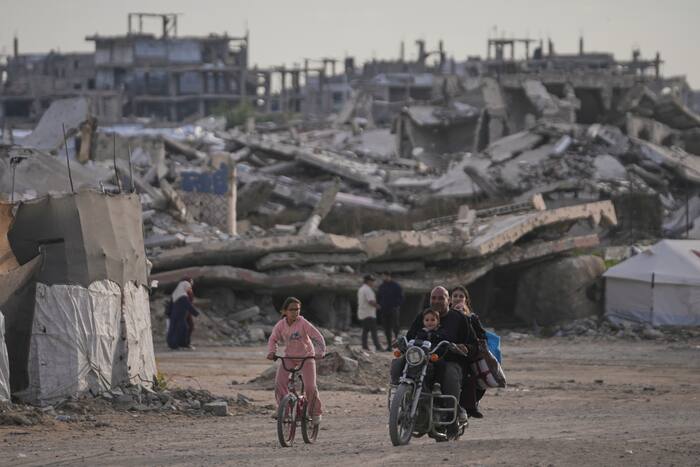
The truce is dying. Six months after the U.S.-brokered ceasefire in Gaza took effect, the international body tasked with keeping it alive has issued an urgent warning to the United Nations Security Council. Without immediate intervention, the entire arrangement is going to shatter.
Nickolay Mladenov and the Board of Peace made it clear in their latest briefing that the gap between paper agreements and reality on the ground is widening into an unbridgeable chasm. If you thought a signed deal meant stability, you haven't been paying attention to what's actually happening in Gaza right now.
The Reality Behind the Stalled Roadmap
A ceasefire that delivers nothing visible cannot survive. That is the core message of the board's report.
While fighting continues through persistent Israeli strikes and ongoing militant activity, the logistical bottlenecks are strangling any hope of recovery. Winter is arriving, and hundreds of thousands of civilians are still living in tents and wreckage.
The report highlights critical failures across the board:
- Humanitarian aid supplies remain heavily restricted by Israeli authorities.
- Essential winterization materials like shelter kits, generators, and heavy machinery are stuck at borders.
- The interim technocratic civil administration created to run Gaza has been blocked from taking office.
- Decisions regarding the training and deployment of civilian police forces have faced endless delays.
Without these foundational steps, deploying an international stabilization force is impossible. And without that force, full Israeli troop withdrawal, the disarmament of Hamas, and large-scale reconstruction remain pipe dreams.
Pointing Fingers While the Situation Deteriorates
Both sides are playing a dangerous game of reciprocal obstruction. Israel points to Hamas militant activity and the ongoing security threat to justify restrictions and delays. Meanwhile, Hamas points to continued military operations and blocked supplies to excuse its own failures to disarm and comply with the roadmap.
The Board of Peace called out this dynamic directly. Neither party gets to treat the other's delays as a free pass for its own inaction.
Yet, pointing out the blame doesn't clear the political road. The Israeli government has dragged its feet on establishing the necessary legal and administrative conditions for civilian police to return. Without a functioning local police force, civil order collapses into chaos, making any international stabilization effort a suicide mission.
What Happens If the Truce Dies?
The consequences of total collapse are terrifyingly straightforward. There is no backup plan.
If this agreement fails, diplomats won't just dust off an old playbook. There is no second road map. There is no alternate administration ready to step in. There is no safety net. The territory will plunge back into unmitigated destruction, closing the door on any credible pathway to Palestinian self-determination and statehood.
The Security Council has the authority to step up, put its full political weight behind enforcement, and force both sides to stop dragging their feet. Ignoring the warning signs won't make them disappear. The time for diplomatic hand-wringing has passed, and the window to salvage the peace is closing fast.