At ten o'clock on a freezing Monday night, a Ukrainian soldier picked up a marker and scribbled straight onto the wing of a kamikaze drone. The message was blunt: “The bridge is fucked.”
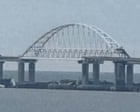
Hours later, that exact drone, followed by hundreds of others, slammed into the Kerch Bridge. The resulting explosions dropped a massive structural span and road arch straight into the Kerch Strait. For Vladimir Putin, this wasn't just a military setback or a logistics failure. It was a direct, deeply personal humiliation delivered right before high-stakes international talks.
Most coverage treats this as a random military escalation. They miss the bigger picture. This strike was a meticulously timed, multi-stage operation designed to strip away the illusion of Russian invulnerability when it hurts the Kremlin the most.
The Anatomy of a High-Stakes Strike
Destroying a multi-billion-dollar crossing protected by layered air defenses, electronic jamming, and naval barriers isn't something you do on a whim. Ukrainian military officials confirmed that the operation involved a complex, seven-stage playbook. For broader background on this topic, comprehensive reporting is available on The Guardian.
First came the waves of diversionary drones. Their sole purpose wasn't to hit the bridge, but to saturate local radar networks and exhaust Russia's air defense capabilities. Once those defenses were tied up, domestic long-range systems—including Ukrainian-developed Flamingo cruise missiles—targeted specific structural points on both the road and rail sections.
What makes this operation genuinely fascinating from a technical standpoint is how Ukraine bypassed external constraints. With military satellite networks like Starshield experiencing restrictions and instability, Ukrainian engineers relied on homegrown guidance systems to execute precision hits over hundreds of kilometers.
When the dust settled, satellite imagery and video footage confirmed a devastating blow: a major road span was lying in the water, and an adjacent rail arch was severely compromised.
Beyond Logistics: Why the Kerch Bridge Is Personal
When Putin personally drove a Kamaz truck across the newly opened Kerch Bridge in 2018, he billed it as the physical embodiment of his imperial ambitions. It was meant to permanently tether occupied Crimea to the Russian mainland. Kremlin propagandists spent years boasting that the structure was completely impregnable, guarded by ironclad security.
That narrative has shattered.
The bridge is the primary artery feeding military fuel, ammunition, and troops into the southern theater. With traffic halted and repair cranes facing immense maritime hazards under the constant threat of follow-up strikes, Moscow's supply lines are in a chokehold. Ukrainian commanders have made it crystal clear: any engineering crews attempting to fix the damage will become immediate targets.
The timing is equally brutal for Moscow. The strike landed just days before a major trilateral summit involving Donald Trump, Xi Jinping, and Putin. It sends an unmistakable signal to global leaders that Russia cannot even protect its most prized nationalist symbols, let alone project permanent control over conquered territory.
What Happens Next on the Ground
Moscow is trying to downplay the structural damage, insisting that repairs will happen quickly and that alternative routes remain open. But the reality on the ground is grim for Russian logistics. The alternative land corridor through southern Ukraine is constantly battered by drones, leaving occupying forces dangerously exposed.
Meanwhile, Kyiv views the operation as entirely justified retribution. As Russian forces continue hammering civilian power grids and plunging Ukrainian cities into freezing blackouts ahead of winter, the message from the front lines is simple: the war returns to where it started.
The myth of Russian permanence in Crimea is crumbling into the Black Sea, one span at a time.



