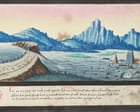
You scroll through your phone at midnight. Every notification brings another headline about extreme weather, political chaos, and impending global doom. You feel sick, yet you cannot stop refreshing the feed. You think this digital paralysis is a modern curse unique to our internet-addicted era. You are completely wrong. Five hundred years ago, people did the exact same thing, minus the glowing screens. They just used painted parchment instead.
That manuscript is known today as the Book of Miracles, and it is heading to Christie's in London this December. Auction specialists expect the rare sixteenth-century wonderbook to fetch between £700,000 and £1 million when it goes under the hammer. But the price tag misses the point entirely. This book is a raw, unfiltered mirror showing that human anxiety has barely evolved since the Renaissance.
If you want to understand why our ancestors stared at the sky with absolute terror, you have to look at what they actually recorded on those pages. Let's break down what makes this surviving relic one of the most fascinating historical artifacts of our time.
The Accidental Discovery of the Book of Miracles
For nearly five centuries, the Book of Miracles simply vanished from cultural memory. Nobody knew it survived. Nobody even knew it existed outside of obscure academic references.
The story of its modern resurrection reads like a treasure hunt. About twenty years ago, book scouts and historians stumbled upon the manuscript tucked away in the library of a small baroque castle in southern Germany. The estate owner decided to clear out the property, throwing the manuscript into an ordinary local auction alongside old furniture, decorative carpets, and drinking tankards.
It sold for roughly £100,000. Whoever bought it back then had no idea they held a multimillion-dollar unicorn. Shortly after that modest sale, the manuscript found its way into the private collection of Mickey Cartin, a prominent Connecticut contemporary art collector who recognized its surreal power.
Now, public institutions finally get a shot at acquiring it before it disappears back into private hands. Christie's has scheduled the auction for December 10, giving museum curators and national libraries a brief window to bid. Before the auctioneer calls out final numbers, members of the public can view the manuscript in person for six days in London.
What Actually Lives Inside the Pages
Created in mid-sixteenth-century Augsburg, Germany, the manuscript contains one hundred sixty-seven stunning watercolor and gouache paintings. Each illustration depicts a terrifying natural anomaly, celestial event, or biblical plague.
Underneath every single painting sits a handwritten German caption. These captions record the exact geographic coordinates, dates, and eyewitness accounts of each disaster. The creators of this book compiled broadsheets, local chronicles, and historical records to build a comprehensive catalog of terror.
Consider the sheer variety of horrors packed into these illustrations. You see massive swarms of locusts darkening the skies over Poland during a terrible windstorm in 1527. You see the North Sea breaching coastal dikes and swallowing towns whole during the catastrophic Frisian flood of 1230. You see fiery comets slashing across night skies, solar eclipses turning daytime into pitch blackness, and strange winged creatures resembling dragons streaking over Bavaria in 1533, which modern scientists attribute to vivid sightings of the northern lights.
Then there is the bizarre weather that defied logical explanation at the time. In 1456, blood rain supposedly poured over Rome, turning rivers red. In 1551, five blazing suns appeared simultaneously over Leipzig.
To a sixteenth-century observer watching these events unfold, the end times felt imminent. They weren't just looking at weird weather; they were reading divine warning signs written in the clouds.
Why Sixteenth Century Germans Were Obsessed With Apocalypse
Religion and politics drove the creation of this book in ways that feel eerily familiar today. During the 1500s, Europe suffered from severe doctrinal disunity. The Protestant Reformation tore communities apart, pitting Catholics and Lutherans against one another in bitter ideological warfare.
Lutheran theologians like Martin Luther and Philip Melanchthon leaned heavily into these apocalyptic visions. They used sensationalist accounts of natural disasters to advance Protestant eschatology. If God sent blood rain, comets, and monstrous hailstones, it meant He was angry about the corruption of the Catholic Church and the moral failure of society.
Eugenio Donadoni, Christie's international specialist in medieval and Renaissance manuscripts, notes that these German wonderbooks functioned as the sensationalist mass media of their day. They satisfied a deep cultural craving for dramatic, fear-inducing news. People wanted to know how bad things were getting across the continent.
Printers and artists fed that appetite relentlessly. They gathered reports from merchants, travelers, and local officials, transforming raw panic into tangible art. It was sensationalism packaged as divine warning.
The Fine Line Between Superstition and Science
What makes the Book of Miracles genuinely remarkable is its dual nature. It sits directly on the fault line where medieval superstition violently collided with the birth of modern scientific inquiry.
On the surface, every painting screams divine wrath and supernatural judgment. People in the illustrations fall to their knees, weeping and praying as giant hailstones smash medieval rooftops in Dordrecht, or as the North Sea drowns entire populations in Frisian villages.
Look closer, however, and you notice a profound shift taking place. The artists didn't just paint random monsters; they meticulously recorded exact dates, locations, and eyewitness testimonies. They wanted proof. They wanted empirical documentation.
Take the five suns over Leipzig in 1551. Today, meteorologists recognize that specific phenomenon as a parhelion, commonly known as a sun dog. It happens when ice crystals in high-altitude clouds refract sunlight, creating optical rings and bright spots that mimic multiple suns.
Take the blood rain of Rome. High concentrations of red dust blown north from the Sahara Desert mixed with ordinary rain droplets, staining puddles red.
The people who made this book were terrified, yet they were also intensely curious. They wanted to catalog the physical world. They wanted to measure, document, and verify anomalies. That compulsion to record physical reality laid the early groundwork for empirical observation and the scientific revolution that followed.
Why Art Collectors Compare It To Modern Doomscrolling
Art experts and historians refuse to view this manuscript as a dry historical document. They see it as a living psychological artifact.
Till-Holger Borchert, director of the Suermondt Ludwig Museum in Aachen, recalls his visceral reaction upon first examining the manuscript. He called it a one-of-a-kind piece that grabs you right by the soul. When a facsimile edition was published in 2013, it sparked an obsession among people drawn to apocalyptic history.
Eugenio Donadoni captures the modern resonance best by comparing the experience of flipping through its pages to late-night internet habits. Leafing through the Book of Miracles in the 1550s mirrors the exact psychological mechanics of modern doomscrolling.
Think about your own habits. When crises hit, you pull out your phone. You consume disaster after disaster. You look at rising sea levels, economic instability, political turmoil, and extreme weather reports from across the globe. You know reading the news will make you anxious, but you cannot stop.
Sixteenth-century Europeans did the exact same thing. They sat by candlelight, turning the heavy pages of wonderbooks, absorbing graphic accounts of floods, locusts, and bleeding skies. They lived in an era of massive uncertainty, economic shifting, and climate anomalies, watching their world transform beyond recognition.
Some scenes painted in watercolor and gouache possess a striking aesthetic that feels completely avant-garde. Certain illustrations look so intensely surreal that art critics compare them to Salvador Dalí. If you stripped away the Gothic German lettering at the bottom of the pages, you could easily mistake the artwork for mid-century modern surrealism.
What You Can Learn From Sixteenth Century Panic
History rarely repeats itself in identical outfits, but it loves wearing the same accessories. Whenever societies face rapid technological disruption, religious polarization, institutional collapse, and erratic weather patterns, collective anxiety spikes through the roof.
The creators of the Book of Miracles dealt with their existential dread by documenting every single terrifying detail they could find. They didn't look away from the chaos. They painted it, cataloged it, and tried to make sense of a world spinning out of control.
Understanding this artifact changes how you view your own relationship with bad news. Humanity has always possessed an insatiable appetite for catastrophe. We have always tried to find patterns in random storms, seeking cosmic meaning in ecological stress.
Recognizing this pattern gives you a powerful tool for emotional regulation. When you catch yourself spiraling down a rabbit hole of modern disaster headlines, remember the citizens of Augsburg in 1550. They stared at painted comets and prayed for salvation while their world changed underneath their feet. They survived their crisis, and we will navigate ours.
Take a cue from those Renaissance catalogers. When anxiety hits, channel your nervous energy into constructive observation rather than passive panic. Document what you can control, filter your inputs, and stop letting digital noise dictate your mental state.
Stop treating bad news as a sign of unique modern failure. It is simply part of the human condition, repeated across centuries on parchment, paper, and glass screens.