The headlines always default to Washington. Congress gets the cable news chayouts, the endless pundit panels, and the billions in super PAC money. But anyone watching the 2026 midterm elections closely knows the real story happened at the state level.
While federal control hung in the balance, Democrats quietly executed a stunning structural takeover of statehouses across the country. They didn't just win a few scattered seats. They shattered historic glass ceilings and broke long-standing conservative trifectas in places experts swore were completely out of reach. If you only looked at national polling averages, you missed the ground-level earthquake that reshaped the map.
Breaking the Map in Deep Red Territory
Let us talk about what actually happened on election night. You cannot look at the 2026 gubernatorial results without acknowledging how deeply entrenched Republican power was in several key states heading into November. For decades, mapmakers and strategists treated states like Texas and Georgia as impenetrable fortress walls for the GOP.
That wall cracked wide open. In Texas, Gina Hinojosa pulled off a monumental upset against incumbent Greg Abbott, ending more than thirty years of continuous Republican control of the governor's mansion. Hinojosa's victory wasn't just a squeaker; it fundamentally shattered the state's Republican triplex and sent shockwaves through national party headquarters.
Down in Georgia, former Atlanta mayor Keisha Lance Bottoms flipped the statehouse, defeating Republican Rick Jackson and securing a victory that hadn't gone to a Democrat since the late nineties. These weren't lucky breaks or accidental wins born from low voter turnout. They were the result of hyper-targeted local organizing that bypassed the national noise and focused squarely on kitchen-table issues, public education, and reproductive rights.
Historic Firsts That Mattered
Representation is often treated as a talking point by political campaigns, but 2026 turned those talking points into absolute reality. The sheer volume of historic firsts in these gubernatorial races completely redefines what American leadership looks like.
Consider New Mexico, where Deb Haaland secured a historic victory to become the first Native American woman ever elected governor of a U.S. state. A citizen of the Laguna Pueblo and former Interior Secretary, Haaland's campaign connected deeply with rural and indigenous communities that mainstream pollsters routinely ignore.
In the Midwest, Minnesota voters elected Amy Klobuchar as their first female governor, defeating former House Speaker Lisa Demuth. Meanwhile, historic milestones rippled across party lines as well; Byron Donalds broke a major barrier in Florida by winning the state's highest office, becoming the first Black governor in Florida's history.
These victories prove that voters were looking past traditional partisan boxes. They voted for candidates with deep roots in their communities who promised tangible administrative competence over ideological theater.
Why This Shift Changes the Next Two Years
Winning a governor's office isn't just about ego or adding a shiny line to a political resume. Governors hold the ultimate defensive firewall in American politics. They control state agencies, execute public health policies, oversee election administration, and—crucially—wield veto pens against hostile state legislatures.
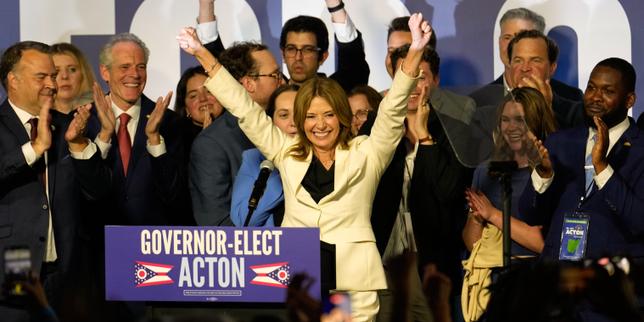
When Democrats broke Republican trifectas in states like Ohio and Iowa alongside Texas, they instantly stripped away the unfettered legislative dominance the GOP enjoyed for years. That means future policy fights over voting access, labor laws, and environmental standards will no longer be one-sided blowouts. Divided government is back with a vengeance, forcing bipartisan compromise where none existed before.
National committees are already scrambling to rewrite their playbooks for the next election cycle. Relying on coastal fundraising and generic national messaging is officially dead. The path forward belongs to local organizers who can build authentic coalitions block by block, town by town, defying the old maps entirely.



