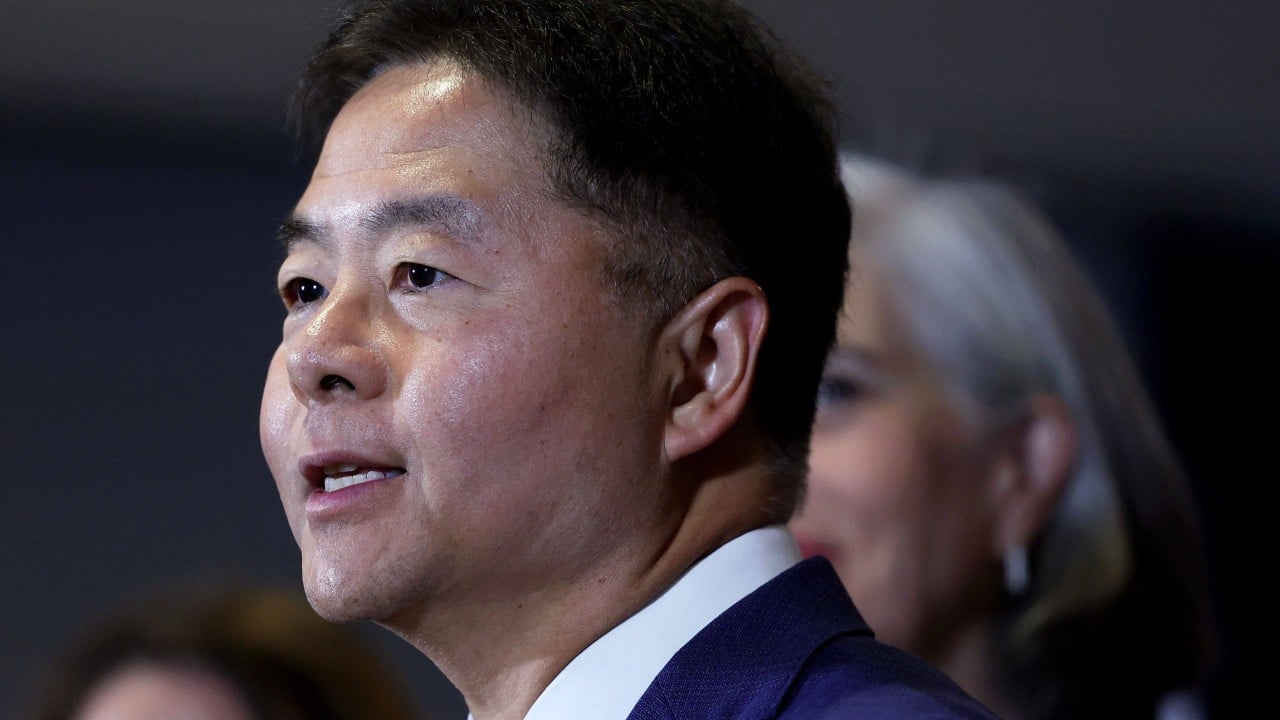
Power in Washington rarely shifts overnight. Instead, it evolves through calculated moves, institutional trust, and timing. When Representative Ted Lieu sets his sights on a higher congressional leadership post, he isn't just chasing a new title on Capitol Hill. He's reshaping what representation looks like at the highest tiers of American government.
If you've followed Lieu's trajectory from the California State Assembly to the floor of the United States House of Representatives, you already know he plays the long game. But breaking institutional barriers in federal politics takes more than a sharp tongue on social media or clever questioning during committee hearings. It takes building a coalition behind closed doors where the real deals happen.
The Reality of Leadership Elections Behind Closed Doors
Most voters think congressional leadership is decided by fiery floor speeches or public television debates. That's a myth. The battles that actually matter take place in caucus rooms away from cameras.
When Lieu previously secured his spot as Vice Chair of the House Democratic Caucus, he made history as one of the highest-ranking Asian Americans in congressional leadership. That win wasn't handed to him. He had to convince colleagues from diverse ideological wings of the party that he could deliver votes, raise money, and communicate effectively to a national audience.
Climbing higher now means navigating an even tighter bottleneck. The top tiers of party leadership are fiercely guarded. Incumbents hold onto positions for decades. To break past that ceiling, a contender needs to prove they offer something distinct. Lieu brings a background in computer science, a legal mind from his days as an active-duty Air Force JAG officer, and a digital footprint that rattles opponents on a daily basis.
Beyond the Social Media Persona
Critics often reduce Lieu to his viral moments. You've probably seen the clips of him questioning hostile witnesses with surgical precision or dropping dry one-liners on X. That visibility helps build a national brand, but inside the Capitol, brand alone doesn't pass bills or whip votes.
The real engine behind Lieu's influence is his operational utility to the party. He understands how to weaponize data, policy specifics, and procedural rules. When you talk to staffers and colleagues, they point to his work behind the scenes—coordinating messaging, backing vulnerable members in tight districts, and navigating complex legislative texts.
This operational competence is precisely why a higher leadership bid carries weight. Parties out of power, or fighting to hold slim majorities, cannot afford ornamental leaders. They need tactical thinkers who can outmaneuver the opposition on procedural turf. Lieu fits that functional mold.
What Another Glass Ceiling Means for Congress
Representation matters, but institutional power changes the calculus. For decades, congressional leadership has skewed heavily homogenous. Seeing an Asian American immigrant who arrived in the US at age three rise through the ranks alters the psychological baseline of what leadership looks like in Washington.
Yet, symbolism only carries you so far. The friction point is policy and power distribution. As the Democratic caucus wrestles with generational shifts, regional divides, and ideological friction between progressive and moderate factions, leaders must act as bridges. Lieu has managed to keep a foot in multiple worlds—appealing to tech-forward progressive donors while maintaining strong ties with institutional establishment figures.
If he successfully ascends to a top leadership slot, expect a shift in how the party handles digital communication and rapid response. Traditional political operations are notoriously slow. Lieu's office treats information warfare like a real-time campaign. Scaling that capability across an entire caucus changes how opposition research and public narratives are deployed nationwide.
The Road Ahead
Washington rewards persistence. Every leadership race reshapes the internal power grid of Capitol Hill, creating ripple effects that dictate which bills hit the floor and which ideas die in committee.
The path forward isn't guaranteed. Internal caucus politics are notoriously volatile, driven by personal ambitions, regional balance, and shifting congressional maps. But by positioning himself for a higher post, Lieu is forcing the party to confront its future structure.
Pay attention to how the internal whip counts shift over the coming months. The outcome will tell you a lot about where the party's center of gravity is heading.



