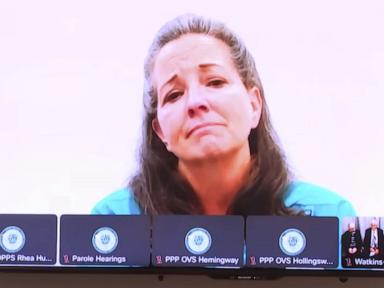
Thirty-two years after two young boys vanished into John D. Long Lake, Susan Smith seeking parole again has brought a painful chapter of American crime right back into the spotlight. She's back before the South Carolina Board of Paroles and Pardons on Thursday, November 19, 2026, two years after the board unanimously rejected her first bid for freedom.
Honestly, this case never really left the public's mind. It's the kind of story that hooks people because the lie at the center of it was so calculated, and the fallout kept rippling outward for decades. For nine days in late October and early November 1994, Smith—then 22—stood before cameras pleading for the safe return of her sons, 3-year-old Michael and 14-month-old Alex. She claimed a Black man had carjacked her and driven off with the boys. All along, her car had rolled down a boat ramp into the lake with both children strapped in their car seats.
When people search for news about her hearing today, they aren't just looking for a quick date and time. They want to know why someone convicted of killing her own children can even ask to get out. They want to know what actually happened at the 2024 hearing, what her prison record looks like, and whether she stands a snowball's chance in hell of walking free.
The short answer? The odds are stacked heavily against her. Still, the legal mechanics and human dynamics behind this hearing explain a lot about how parole works in South Carolina.
How Susan Smith Seeking Parole Fits Into South Carolina Law
A lot of folks hear "life sentence" and assume it means a person stays locked up until they die. That wasn't always true under South Carolina law at the time of Smith's 1995 trial.
After a jury convicted Smith of two counts of murder in July 1995, prosecutors pushed for the death penalty. Jurors chose life imprisonment instead. Under the sentencing rules in place when she was convicted, someone given a life sentence became eligible for parole after serving 30 years. If the board says no, the inmate doesn't just disappear into a black hole—they can come back every two years to try again.
That's why we're sitting here in November 2026 watching round two. Round one happened on November 20, 2024, right around the 30-year mark. Smith appeared by video from prison, cried, said she was "very sorry," and told the board she'd give anything to undo what she'd done. She also said God had forgiven her and asked the board to show that same mercy.
The board wasn't moved. The vote to deny release was unanimous.
Having followed parole hearings and clemency boards for years, I can tell you that a tearful video statement rarely carries much weight on its own when the underlying crime is this severe. Boards look at the nature of the offense, victim opposition, institutional behavior, and public safety. When all four point in the same direction, a request usually goes nowhere fast.
Why the 1994 Lie Still Matters Today
You can't talk about this case without talking about the false carjacking story. For nine days, Smith pointed investigators and the media toward a phantom Black assailant.
In 1990s America—and plenty of places today—that lie tapped straight into deep-seated racial fear and anxiety over violent crime. Police eventually questioned how a carjacker would push a mother out of the car and drive off with two kids in the back, and Smith confessed on November 3, 1994.
That deception didn't just waste precious hours and public trust. It cemented a level of outrage that hasn't faded over three decades.
What Happened Behind Bars Over Thirty Years
One mistake people make when following high-profile prison cases is assuming an inmate either becomes a model saint or spends every day in solitary confinement. Real prison records are usually messier than that.
Over more than three decades at Leath Correctional Institution near Greenwood, Smith's record has included rule violations that critics bring up every time her name comes up for release. Back in 2000, an investigation found she had sexual relationships with prison employees. Prosecutors and opponents have also pointed to other infractions over the years, including speaking with a documentary filmmaker against prison rules—a charge that resulted in a disciplinary conviction in October 2025, her first disciplinary action in nearly ten years.
Opponents argue those episodes show a pattern of poor judgment and boundary violations. Supporters or observers who look at mental health notes from the 1995 trial point back to her defense team's argument that she was struggling with severe emotional and psychological distress at the time of the killings.
Both sides of that argument are part of the public record. Pretending the case is simple doesn't help anyone understand it. What's clear is that parole boards weigh institutional conduct alongside the original crime, and any recent infraction gives opponents fresh ammunition.
The Voices Showing Up to Oppose Release
For the boys' father, David Smith, this isn't an abstract legal debate. It's his life.
At the 2024 hearing, David Smith told the board that 30 years wasn't enough punishment for taking two children's lives, and he made it plain he intended to keep showing up every two years so Michael and Alex wouldn't be forgotten. He has consistently said he hasn't felt genuine remorse from his ex-wife toward him and wants her in prison until she dies.
Former 16th Circuit Solicitor Tommy Pope, who prosecuted the case in 1995 and later served as speaker pro tempore of the South Carolina House, has also stood firm against her release, urging the board to keep her behind bars. When original prosecutors and the surviving father both show up in Columbia to oppose parole, the political and emotional weight in the room is massive.
The Numbers Behind Parole in South Carolina
If you're wondering whether Smith has a realistic shot right now, look at the broader statistics from the South Carolina Department of Probation, Parole and Pardon Services. According to agency data cited in recent coverage, the seven-member board has granted parole in only about 4% of cases before it, with most approvals coming in non-violent offenses. She also needs two-thirds support from the board to win release.
Do the math on that. A notorious double child-murder case with fierce opposition from the victims' father and former prosecutors is starting from a steep deficit before a single word is even spoken.
Even so, because South Carolina law allows eligible inmates with old life sentences to reapply every two years after a denial, these hearings will likely remain a recurring fixture unless the board grants parole or something in the legal landscape changes.
Practical Ways to Follow Case Developments Accurately
True-crime headlines move fast, and clickbait thrives on exaggeration. If you want reliable information rather than rumor or recycled drama, take a few practical steps:
- Check official state notices and board summaries through the South Carolina Department of Probation, Parole and Pardon Services rather than relying solely on sensationalized social media posts.
- Read primary court and statutory context—such as South Carolina Code Title 16—when claims circulate about sentence length, parole eligibility, or two-year review intervals.
- Separate fact from speculation by looking for direct quotes from officials, documented disciplinary findings, and established trial records instead of anonymous gossip.
- Pace your consumption if heavy crime coverage wears you down; stepping away from graphic details doesn't make you less informed, and it keeps your head clear.
WLTX parole hearing coverage provides local reporting on the Columbia proceeding and the two-year review cycle.



