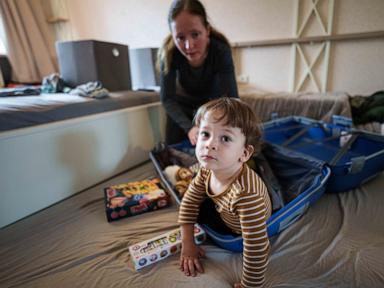
When your two-year-old child already knows the exact vocabulary for incoming air defense fire and air raid sirens, normal life has ceased to exist. Families across Kyiv and other major urban centers are wrestling with a brutal calculation. Do they pack up their remaining belongings and flee westward, or do they stay put in freezing apartments while the power grid crumbles?
The calculus isn't simple. It's an agonizing balancing act between personal survival and the deep psychological anchor of home.
Russia’s sustained campaign against critical energy infrastructure has pushed Ukraine's power grid to its absolute limits. Routine rolling blackouts have stretched into grueling multi-hour power cuts. In some districts, electricity supplies vanish for up to twenty hours a day. When power goes, district heating fails, water pumps stop working, and sewage systems stall. For millions of Ukrainians, the upcoming months threaten to be the most punishing phase of the war yet.
The Reality on the Ground
Walk down a residential street in Kyiv right now, and you'll see the frantic preparation. People are hauling portable power stations, heavy-duty power banks, and rechargeable LED lamps into first-floor apartments. Families are relocating from upper floors because elevators stop working the moment the grid trips offline. For additional details on this issue, detailed reporting can be read on NBC News.
The physical destruction of generation facilities has been severe. Missile and drone strikes target key electrical substations repeatedly, forcing repair crews to work under impossible conditions. When temperatures plunge well below freezing, living without a reliable heat source stops being an inconvenience. It becomes a life-threatening hazard, particularly for elderly residents and young children.
Yet, millions refuse to leave. The reasons go far beyond stubbornness.
Why Many Choose to Stay
Leaving your country means entering an uncertain future as a refugee. It means draining whatever meager savings remain, trying to find housing in overcrowded European host nations, and living in a state of permanent limbo. For many, staying is an act of fierce defiance and deep personal identity.
Take parents like Kateryna Tsvihun, who made the painful decision to evacuate her toddler out of Kyiv for his safety, even while knowing she feels fundamentally anchored to her home. Her husband is actively fighting on the front lines. Leaving him behind creates an emotional fracture that is almost as painful as the physical danger of staying.
"I cannot live without Kyiv and Ukraine," is a sentiment echoed across coffee shops, makeshift shelters, and bomb-damaged neighborhoods. People are rooted by family ties, community responsibilities, and a refusal to hand over their way of life to invading forces. Those who can afford to send their children away often return themselves, or plan to come back the moment spring arrives.
The Strain on Infrastructure and Support
The humanitarian toll is compounded by shrinking international assistance. Organizations like the International Rescue Committee report that millions of people urgently need aid as winter sets in. Rural areas face acute shortages of medical staff, and collective shelters struggle to maintain proper insulation and heating.
Ukraine's leadership faces immense pressure on multiple fronts. Securing adequate anti-missile defense systems, such as Patriot batteries, remains a daily struggle. Without robust air defense shields, repairing the energy grid feels like an endless game of whack-a-mole. Every time engineers rebuild a damaged substation, another barrage threatens to wipe out the progress.
What Comes Next
If you're watching these events unfold from afar, the helplessness can feel overwhelming. But understanding the reality on the ground requires looking past simple headlines about geopolitical talks or macro-level casualty numbers. It's about individual families stocking up on gas burners, insulating windows with makeshift plastic sheeting, and timing their daily chores around unpredictable electricity schedules.
The resilience of the Ukrainian population is staggering, but human endurance has absolute limits. Whether communities can weather this winter depends heavily on international logistical support, the delivery of emergency energy equipment, and the strengthening of air defense corridors.
The choice between staying and leaving isn't just about escaping the cold. It's a daily negotiation with fear, duty, and the desperate hope that home will still be standing when spring finally arrives.



