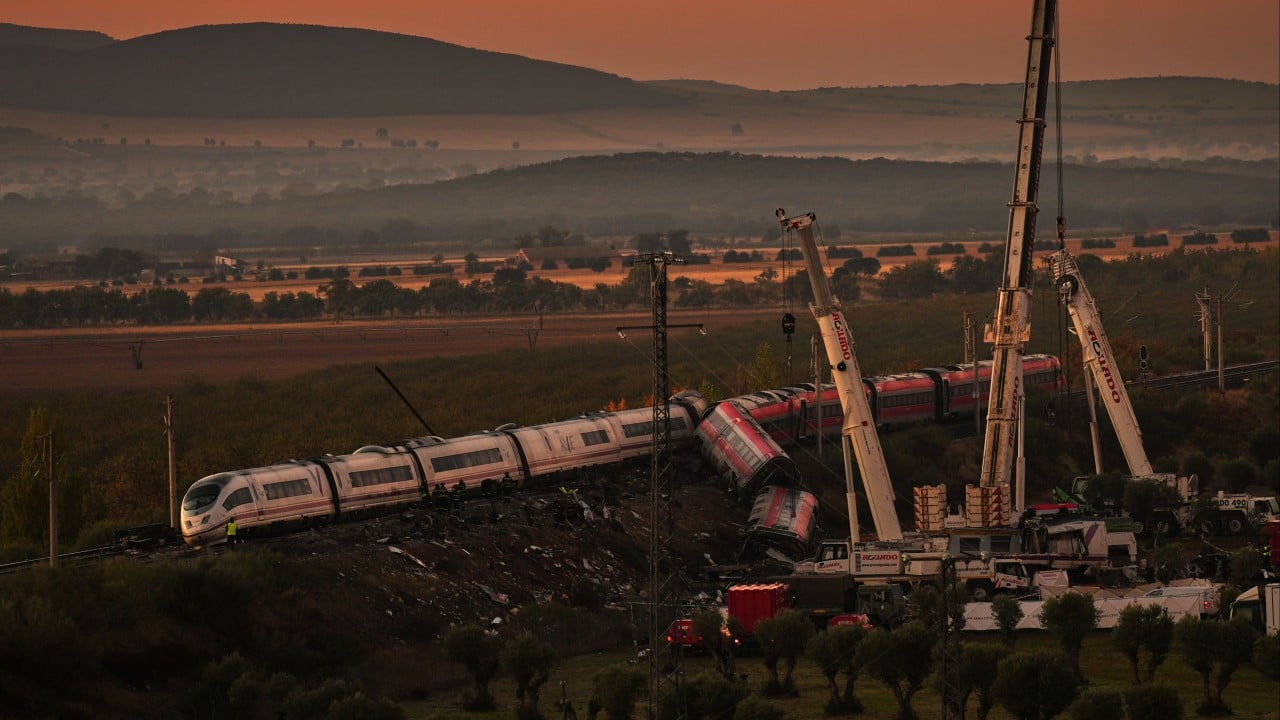
Spain is currently observing three days of national mourning following a devastating high-speed train collision. At least 68 people lost their lives, and over a hundred others sustained injuries when a Renfe AVE train plowed into a stationary Iryo service near Los Yébenes in the province of Toledo. This tragedy has shaken public confidence in one of Europe's most advanced rail networks, raising urgent questions about signaling automation, human oversight, and infrastructure safety.
What Actually Happened on the Tracks
The crash occurred on the heavily traveled Madrid-Seville high-speed line. According to preliminary investigations and official statements, an Iryo service carrying 147 passengers had come to a halt on the tracks. Shortly afterward, a Renfe AVE train carrying 397 passengers departed from Madrid Atocha and traveled down the same line, eventually colliding with the rear of the stationary train.
The impact was catastrophic. It tore through carriages, derailed sections of both trains, and sent two cars plummeting down a four-metre slope. Survivors have recounted scenes of absolute terror. Luggage and cell phones flew through the air as the carriages buckled. A piece of a broken rail reportedly pierced straight through the roof of a carriage, adding to the horror of the event.
Local residents and emergency responders rushed to the rural area near Urda, turning a local sports hall into an emergency refuge. Military emergency units, firefighters, and medical helicopters scrambled to the site to triage the wounded. Among the victims was former Employment and Social Security Minister Fátima Báñez, who was traveling in the rear carriage of the Iryo train. BBC News has also covered this important issue in extensive detail.
The Scrutiny Over Control Center Decisions
Transport Minister Óscar Puente didn't mince words when addressing the press. He labeled the decision made by the Administrador de Infraestructuras Ferroviarias (ADIF) control center as "inexplicable". Initial leaks of communication logs suggest that the automatic signaling system had failed, forcing operations under manual control.
Despite the stationary train blocking the track, the control center authorized the second high-speed train to resume normal operations. Transport officials maintain that the train engineers were not at fault. Instead, attention has shifted entirely to the communication breakdown and human error within the central dispatch office. Investigators from the Independent Authority for the Technical Investigation of Accidents and Incidents (AITAT) are combing through data logs to piece together exactly how dispatchers missed the obstruction.
The Broader Crisis Facing Spanish Rail Infrastructure
Spain's high-speed rail network has long been a point of immense national pride. It is one of the largest networks of its kind globally, connecting major urban centers with punctuality and speed. However, this disaster follows other severe incidents earlier in the year, including a fatal crash in Adamuz.
These back-to-back tragedies have forced the government to confront uncomfortable truths about system resilience. Commuters are asking whether rapid expansion and privatization have outpaced safety protocols. Prime Minister Pedro Sánchez has vowed a transparent, rigorous investigation and called for heightened safety measures to restore public trust. With an early general election looming, the political fallout from the crash adds intense pressure to an already fraught national atmosphere.
For now, the focus remains on supporting the families of the victims and treating the dozens of injured survivors still recovering in hospitals. As flags fly at half-mast across the country, Spain faces a difficult road ahead to ensure its railways are safe enough to regain the public's trust.