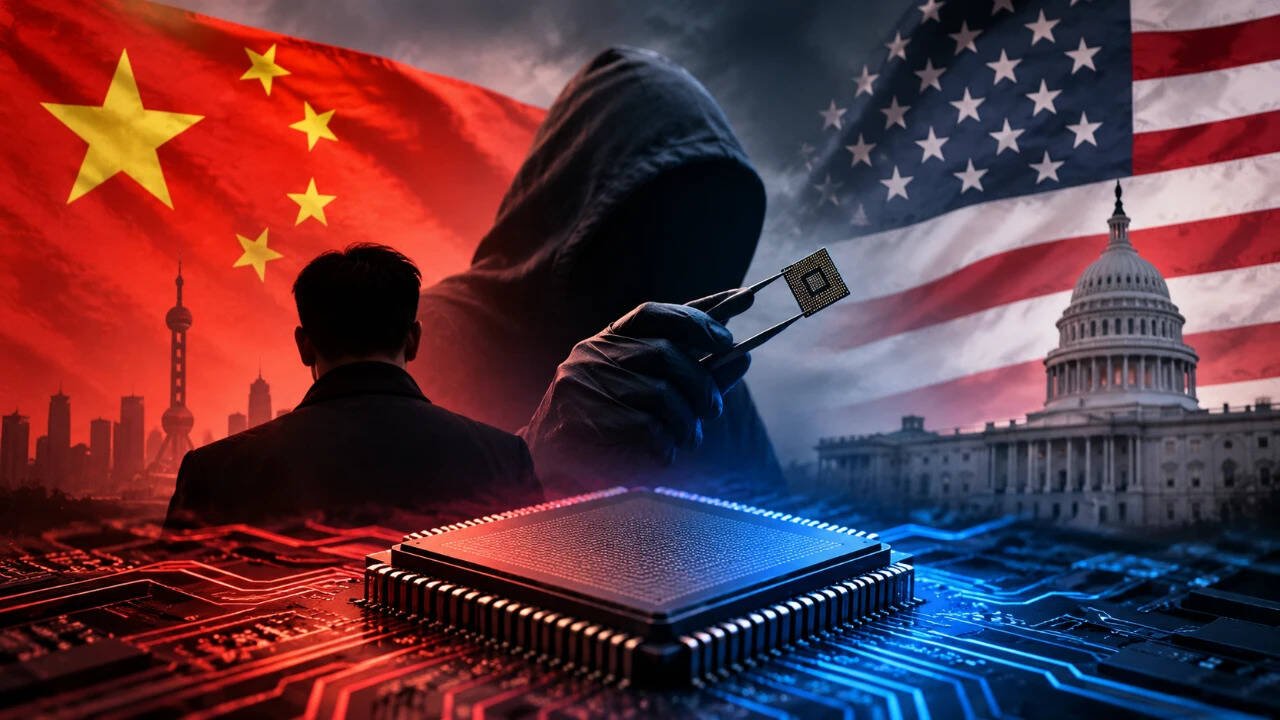
When a candidate nails a brutal national qualification test with a near-perfect scorecard, people usually suspect exceptional talent or obsessive revision. In South Korea, however, a stunning performance on the certified tax accountant examination triggered a national crisis. The top scorer, who answered 159 out of 160 questions correctly, confessed to a simple truth. He didn't study his way to the top. He used generative artificial intelligence and a miniature camera.
The confession shattered public trust in a country where standardized test scores dictate entire life trajectories. It arrived just days before the Suneung, the annual national college entrance exam that brings corporate offices and public transport to a standstill so students can reach testing centers undisturbed. When high-pressure meritocracies meet modern artificial intelligence tools, traditional proctoring collapses.
How the AI Exam Cheating Scheme Worked
The method was remarkably low-tech in execution yet high-tech in capability. The candidate, identified as Han Won-seok, attached a microcamera to capture exam questions as they appeared on the paper. Those image files were routed to a generative AI model, which processed the complex tax law and accounting problems in seconds. The answers were then relayed back to his smartphone.
This setup bypassed conventional security checks. Proctors didn't spot anything unusual because the hardware was small and easily concealed. The results were staggering. In sections where the average examinee scored around 30 out of 100, the cheater swept every single item. Skeptics initially pointed to unblemished study books and suspicious timelines, but the system's defenders insisted hard work had won the day. They were wrong. Experts at Engadget have also weighed in on this trend.
The Cultural Shockwave Across South Korean Education
South Korea takes educational testing with absolute seriousness. For decades, the system has functioned as the primary elevator for social mobility. Millions of families invest fortunes in private cram schools, known as hagwons, and students spend their adolescence studying fifteen hours a day.
When cheating infiltrates this sacred hierarchy, the psychological impact is profound. If an individual can bypass years of grueling preparation by hiding a tiny lens and querying a machine, the entire premise of fair competition evaporates. Public outrage forced the presidential office to convene emergency policy meetings. Officials scrambled to deploy countermeasures, announcing inspections of everyday items like eyeglasses and assigning dedicated monitors to watch for smart devices at testing centers.
The panic extended beyond the tax accountant test. Authorities began auditing other rigorous evaluations, including the certified public accountant examination and the legal education eligibility test, as online communities flagged other statistically improbable scores.
Why Traditional Proctoring Cannot Keep Up
Proctors are trained to look for cheat sheets, smuggled notes, and obvious whispering. They are entirely unequipped for discreet, wearable electronics linked to large language models. AI tools can analyze complex multi-step financial regulations, solve calculus problems, and draft legal arguments faster than a human can flip a page.
Installing radio-frequency jammers or electronic scanners in every classroom is expensive, logistically difficult, and politically contentious. Jamming signals can disrupt surrounding neighborhoods, while scanners risk invading student privacy. Meanwhile, generative AI models continue to shrink, becoming more integrated into everyday accessories like glasses, watches, and smart audio gear.
The Future of Testing in the Age of Artificial Intelligence
Prohibiting electronic devices and lengthening penalties—politicians are pushing to ban offenders from exams for up to ten years—will not solve the underlying vulnerability. As long as high-stakes exams rely on remote or closed-book knowledge retrieval, students will find ways to bridge the gap between their brains and external intelligence networks.
Education systems must rethink how they evaluate capability. Testing memorization and formulaic problem-solving in a controlled room is a dying model. When machines can pass professional board exams effortlessly, asking humans to do the same without tools becomes an exercise in absurdity. Until academic institutions adapt their evaluation methods, the integrity of high-stakes testing will remain permanently compromised.