Imagine spending twelve years of your life studying for a single test, only to watch the entire system buckle because someone bought a pair of high-tech glasses. That is the exact nightmare playing out across South Korea right now. With the country's monumental College Scholastic Ability Test, known locally as the Suneung, just days away, anxiety has reached a fever pitch.
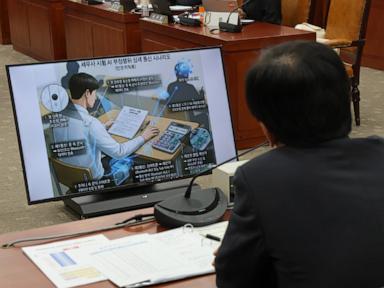
The panic didn't materialize out of thin air. It kicked off when the top scorer in a rigorous national tax accountant exam confessed to a stunning breach: he used a micro-camera to snap test questions, fed them to a generative AI model, and read the answers off a smartphone. He answered 160 questions and got only one wrong. That single confession tore open a terrifying reality for South Korea's hyper-competitive academic landscape. Traditional proctoring cannot keep up with consumer-grade artificial intelligence.
The Rise of Stealth Tech in the Examination Hall
For decades, cheating on high-stakes Korean exams meant passing physical notes or using primitive, bulky radio transmitters that security guards could easily spot. Today's threat looks entirely normal. AI-enabled smart glasses and microscopic wireless earpieces blend seamlessly into daily life.
The gear is cheap, discreet, and shockingly effective. A student can wear a pair of ordinary-looking horn-rimmed glasses equipped with a tiny lens, stream a math problem to a backend language model in milliseconds, and receive structured solutions directly through an audio feed. When the tax accountant scandal broke, it exposed a glaring vulnerability in state-run testing infrastructure. Standard radio-frequency detectors failed to catch the devices during preliminary tests, proving that human eyes alone are no longer enough to guard institutional integrity.
Panic in the Classrooms and Government Emergency Rooms
The political fallout was immediate. Prime Minister Han Seong-sook convened an emergency pan-government meeting to lock down test protocols before the Suneung. Officials scrambled to deploy dedicated monitoring personnel to every single test site, mandating specialized training for proctors to spot the subtle design cues of smart eyewear.
Discussions even turned to drastic network restrictions, including the temporary shutdown of public Wi-Fi near testing locations to starve wireless devices of a data connection. Meanwhile, penalties for getting caught are set to skyrocket. Lawmakers are moving to extend exam bans from a single year up to a decade, alongside heavy criminal charges for obstructing official duties.
Yet, the countermeasures have triggered unintended panic among honest students. Countless teenagers who wear ordinary prescription glasses worry they will face aggressive scrutiny, hostile interrogations, or false accusations simply because their frames resemble high-tech gadgets. Parents are left agonizing over whether they should rush to replace prescription lenses days before the exam just to avoid suspicion, adding an absurd layer of psychological torture to an already brutal testing culture.
When High-Stakes Testing Meets Modern Reality
South Korea’s obsession with standardized testing is legendary. Corporate careers, social status, and marriage prospects often trace directly back to which university a student manages to enter. Because the stakes are impossibly high, the incentives to cheat using advanced tools will only grow.
Banning devices and cutting off Wi-Fi are stopgap measures. They buy time, but they do not solve the fundamental flaw. When artificial intelligence can ace professional credentialing exams instantly, testing boards face an existential identity crisis.
Educators argue that the only long-term fix requires completely rewriting how exams work. Instead of testing memorization and rapid calculation—tasks that AI handles effortlessly—systems must shift toward evaluating deep critical thinking, original synthesis, and real-world problem-solving that machines cannot fake. Until the structure of the exams changes, the cat-and-mouse game between proctors and tech-savvy cheaters will only intensify, leaving millions of honest students caught in the crossfire.