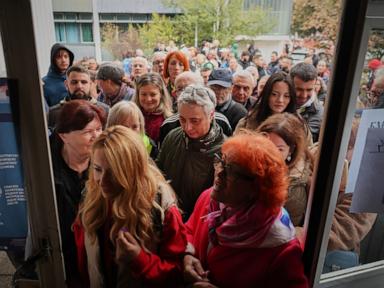
Serbia is voting today in a high-stakes parliamentary election that isn't just another routine political contest in the Western Balkans. It's a high-wire referendum on Aleksandar Vucic and his ruling Serbian Progressive Party (SNS). After fourteen years in power, Vucic faces a genuinely dangerous challenge not from traditional political rivals, but from a movement of university students who refuse to play by the old rules.
If you've followed Balkan politics over the past decade, you know Vucic usually steamrolls his opposition. He dominates the media, controls state institutions, and keeps opposition leaders fragmented. But this time feels completely different.
Polling shows the ruling party and the youth-backed movement running neck and neck. The tension across Belgrade and rural municipalities is palpable. To understand why this election matters far beyond Serbia’s borders, we have to look past the official campaign slogans and examine the deep systemic anger driving 6.4 million registered voters to the polls.
The Tragic Catalyst That Shattered the Status Quo
To make sense of today's parliamentary election, you have to rewind two years. The turning point came when a massive concrete canopy collapsed at the railway station in Novi Sad, killing 16 people.
That tragic accident wasn't viewed as a mere structural failure. Across Serbia, citizens saw it as the direct, devastating outcome of unchecked corruption, poor oversight, and political cronyism. Public fury exploded into sustained street demonstrations.
Students took the lead, demanding full accountability for the construction disaster. They organized marches, blocked major intersections, and transformed isolated grief into an organized national political force.
When citizens realize that administrative corruption can directly cost human lives, political neutrality vanishes. The collapse in Novi Sad broke the psychological spell of stability that Vucic had relied on for years.
How Students Built an Anti-Establishment Force Without Politicians
The student movement created an unexpected political brand called the Students' List. Their political strategy was brilliantly simple: eliminate professional politicians from their candidate slate entirely.
Instead of running well-known party operatives who carry political baggage, the Students' List filled its slate with independent experts, university scholars, respected athletes, organic farmers, and local community figures.
This decision threw the government's attack machine off balance. Standard smear tactics don't work when candidates are local agronomists or high-school teachers with spotless reputations.
- Grassroots Outreach: Instead of relying on expensive television ads, student organizers cycled and walked across rural Serbia. They engaged directly with voters in small villages long considered bulletproof strongholds for Vucic.
- De-centralized Message: Their campaign pitch, "we know how," framed the struggle not as an ideological battle between left and right, but as a practical rescue mission for public institutions.
- Voter Disillusionment: By refusing to align with legacy opposition figures, the students drew millions of politically exhausted citizens back into the political process.
Vucic tried his usual play. He resigned from the presidency last month just to run directly as prime minister and anchor the SNS ticket himself. But shifting positions couldn't hide the fact that his populist machinery was facing a completely new kind of opponent.
Media Dominance, State Control, and International Pressure
Holding elections under Vucic's rule has never offered an even playing field. Independent election monitors and European Union observers have repeatedly highlighted severe campaign irregularities.
During this campaign cycle, civil society groups documented state-sponsored surveillance, cyberattacks against activist networks, and targeted detentions of youth organizers. Pro-government tabloids and national TV channels spent weeks branding student leaders as foreign agents aiming to destabilize the nation.
In local municipal votes earlier this year, political violence flared in ten districts, including targeted physical assaults on investigative journalists.
The European Union is watching this vote closely. Serbia remains an official candidate for EU membership, yet Vucic has spent years walking a delicate tightrope between Western diplomatic ties, Russian energy dependency, and Chinese infrastructure funding. Brussels knows that an election marred by overt voting fraud or violent post-election crackdowns could derail regional stability in southeastern Europe.
What Happens When the Polls Close
The immediate question isn't just who wins the most seats among the 18 competing parties, but what happens the moment the votes are counted.
Because the main contest is so close, turnout will determine everything. A high turnout will likely wipe out smaller niche parties that can't cross the 3% parliamentary threshold, concentrating the 250 seats in the assembly between the populists and the student-backed coalition.
Vucic publicly stated that he would accept a loss if the official results didn't go his way. Yet, in the very same breath, he warned that any post-election protests claiming vote rigging would be crushed instantly.
Independent conflict monitors, including analysts at ACLED, warn that the risk of civil unrest is high if the State Election Commission releases results that contradict parallel independent polling.
When power hinges on a razor-thin margin in a system with low public trust in election officials, a disputed outcome can drag the country into a prolonged political crisis overnight.
Key Takeaways for Following the Results
If you're keeping an eye on the results as they come in, focus on these critical factors:
- Watch the Rural Margins: Pay attention to the voter margins in smaller municipalities outside Belgrade. If the student movement's rural outreach made dent in traditional SNS strongholds, the government loses its baseline majority.
- Track Turnout Numbers: High turnout in major urban centers like Belgrade, Novi Sad, and Nis heavily favors change-seeking candidates.
- Monitor Independent Tabulations: Do not rely solely on preliminary announcements from state authorities. Compare official figures with parallel counts published by non-partisan election monitoring groups like CRTA.
The vote in Serbia today proves that even entrenched populist governments can face formidable resistance when grass-roots youth movements step up to demand accountability.



