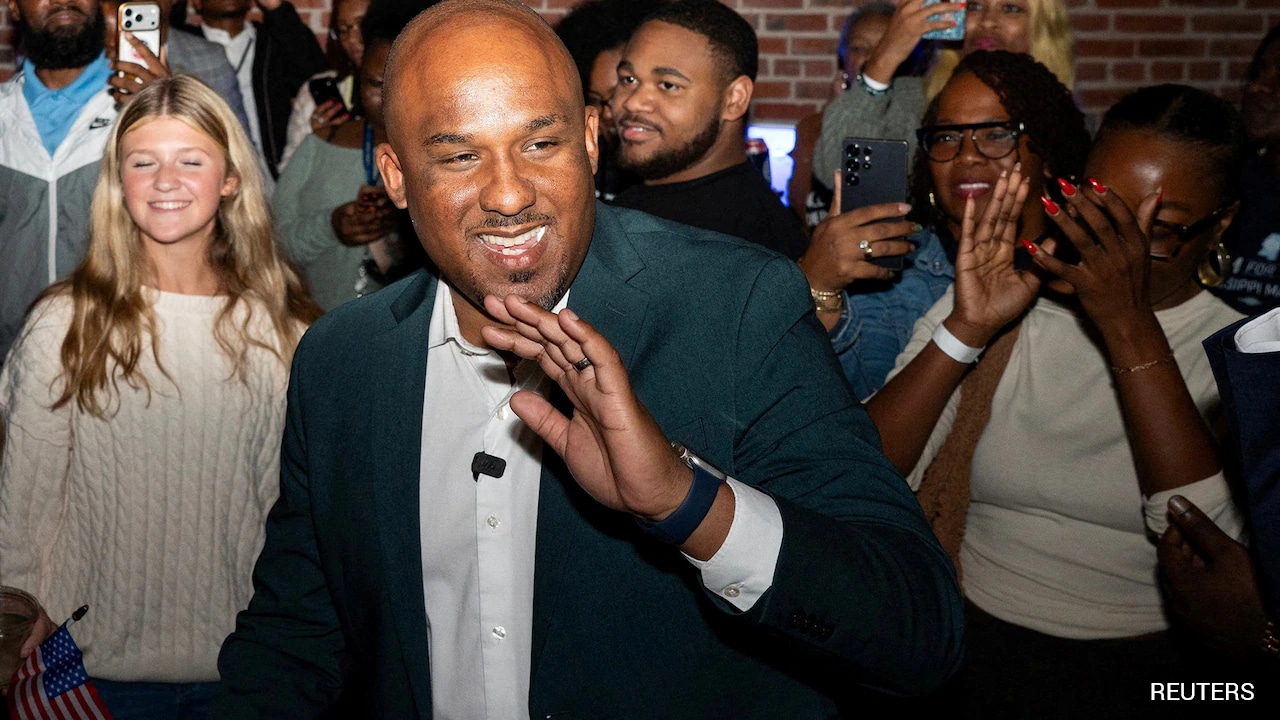
Political shockwaves don't usually start in Mississippi. For decades, conventional wisdom locked the Deep South into a predictable red corner. Then Scott Colom pulled off the unthinkable. By defeating incumbent Republican Cindy Hyde-Smith, Colom became the first Black U.S. senator from Mississippi since Reconstruction—and the state's first Democratic senator in over four decades.
If you're wondering how a Democrat won a deep-red seat where Donald Trump previously dominated by massive margins, you have to look past standard punditry. This wasn't a fluke. It was a masterclass in grassroots organizing, targeted messaging, and capitalizing on unforced errors from an entrenched opponent.
Breaking a 150-Year Barrier
Let's talk about the history here because the weight of it is staggering. The last Black senator to represent Mississippi was Blanche Bruce, who took office in 1874 during an era of brief, post-Civil War progress before Jim Crow laws locked Black Americans out of power for generations.
For nearly a century and a half, that door remained bolted shut. When Colom, a district attorney, stepped into the race, few national analysts gave him a realistic shot. Polling aggregators routinely kept his odds in the single digits. But politics on the ground rarely match computer models in Washington. Colom bypassed traditional, consultant-heavy playbooks and spent his time where voters actually live: at local festivals, public housing complexes, town halls, and food trucks.
The Viral Moment That Turned the Tide
Every winning campaign needs a defining pivot, and Colom's came courtesy of a massive blunder by his opponent. Earlier in the election cycle, when asked about soaring beef prices, Senator Hyde-Smith suggested that Mississippians simply "have so many proteins to choose from."
It was the modern equivalent of letting them eat cake.
Colom's campaign turned that out-of-touch remark into pure gold. They launched a viral ad featuring everyday Mississippians looking directly into the camera and stating that instead of picking another protein, they were going to "Pick another senator." The slogan caught fire on TikTok, spread across Facebook, and framed the entire final stretch of the race. It shifted the narrative away from abstract national talking points and zeroed in on economic frustration and basic kitchen-table costs.
Old Feuds and Direct Confrontations
The animosity between Colom and Hyde-Smith wasn't new. Back in 2023, President Joe Biden nominated Colom for a federal judgeship in northern Mississippi. Hyde-Smith used her home-state senatorial privilege to outright block the confirmation, citing policy disagreements.
Instead of retreating, Colom used that roadblock as fuel. When he launched his Senate bid, he didn't run a campaign of petty revenge. He ran on competence, criminal justice experience, and economic protection for working-class families. He took clear stances against federal tariff policies that acted as hidden sales taxes on consumers and hammered home the importance of protecting rural healthcare systems from devastating funding cuts.
Why the Deep South Map is Shifting
National Democrats have wasted millions of dollars over the years trying to flip unreachable seats by running cautious, poll-tested campaigns that try to appeal to everyone and end up inspiring no one. Colom did the exact opposite. He leaned into his community roots, welcomed high-profile visits from national surrogates like Raphael Warnock and Cory Booker, and turned out Black voters and working-class families who usually sit elections out.
When the dust settled after days of nail-biting provisional ballot counts, Colom edged out Hyde-Smith by a razor-thin margin of roughly half a percentage point.
The victory signals a broader, underlying shift across the American South. Voters are increasingly exhausted by politicians who treat safe seats as lifetime appointments. When a candidate connects on a human level, speaks directly to economic pain, and refuses to write off any zip code, the old political maps stop working the way they used to.



