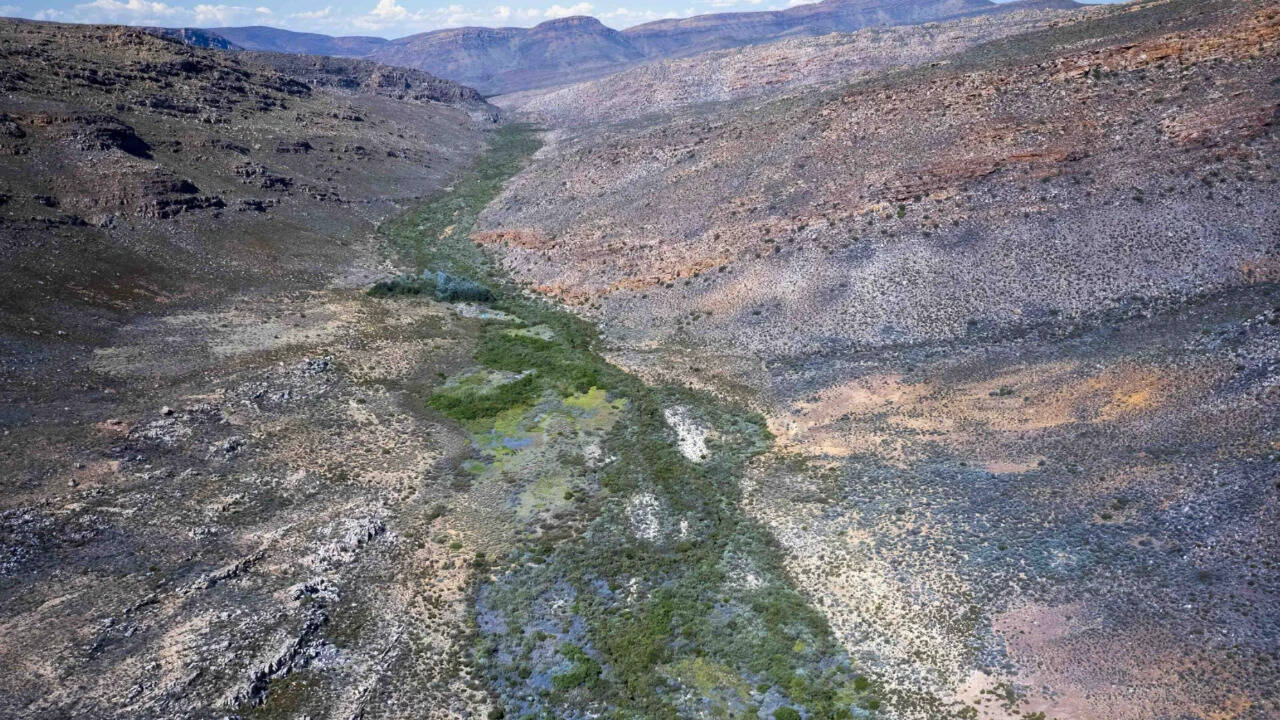
Why Removing Spotted Bass From South Africa's Breekkrans River Matters So Much
Five years ago, a tiny, glowing native minnow in South Africa's Cederberg mountains had almost nowhere left to swim. Now, after teams began removing invasive spotted bass from the Breekkrans River in 2023, the critically endangered Doring fiery redfin has gained five times as much accessible habitat, jumping from a cramped 2-kilometer stretch to 10 kilometers by 2026.
That jump sounds neat on paper. In the field, it took summers of cold water, hand nets, spear guns, electrofishing gear, and downstream barriers built to stop predators from slipping back in.
If you've ever watched a river get overtaken by an introduced sportfish, you know how fast the balance flips. Sport anglers brought spotted bass (Micropterus punctulatus) into South Africa's river systems starting in the late 1930s because they wanted a tough, exciting fish to catch. Nobody introducing them in the 1930s was thinking about small, endemic cyprinids that evolved over millions of years in isolated fynbos streams.
Yet that exact predatory drive is what makes spotted bass so destructive to native freshwater life. As CapeNature faunal ecologist Martine Jordaan has pointed out in coverage reported by the NCIJ Network and Mongabay, spotted bass are effective predators that readily eat smaller fish, and most of South Africa's native freshwater species top out around 12 centimeters or less. When a predator that size moves into a stream full of small native minnows, the native fish don't just lose territory. They vanish from entire reaches.
For the Doring fiery redfin (Pseudobarbus doring), endemic to the Olifants-Doring River System, the squeeze got tight. Freshwater Research Centre (FRC) conservation ecologist Jeremy Shelton has noted that the Breekkrans River holds the largest remaining population of the species, likely numbering only a few hundred adults. Before removal work ramped up, those fish were stuck in a bass-free corridor of roughly 2 kilometers.
How a River Restoration Project Actually Plays Out in the Water
Here's the mistake people make when they hear about "removing invasive fish." They picture a crew showing up once with a net, scooping out the problem species, and walking away with a high-five.
Rivers don't work like bathtubs.
First, you have to stop re-invasion. If you clear bass from an upper stretch of river without blocking movement from below, fish from downstream pools will simply swim back up once conditions suit them. That's why teams working on the Breekkrans River—led by the Freshwater Research Centre alongside CapeNature and the Fynbos Fish Trust—constructed a downstream fish barrier to keep cleared water protected.
Second, timing matters. Teams have focused removal efforts during the Southern Hemisphere's summer months, when water conditions and fish activity line up for fieldwork. And instead of relying on a single gadget, crews use a mix of mechanical methods—including nets, spear guns, and electrofishing equipment—to track down and remove spotted bass across a targeted 8-kilometer stretch of relatively pristine river.
Having worked around conservation projects myself, I can tell you how unglamorous this work really is. You're wading or swimming through rocky channels, squinting into murky eddies, chasing fast, wary fish that learn to bolt the second a shadow crosses the surface. You don't get every single individual on day one. You get most of them, come back, sweep again, and keep pressure on the population until remaining numbers drop low enough that native species can breathe and expand.
What the Competitor Coverage Gets Right and What It Skips
Recent news coverage—including a report from the Times of India drawing on October 2026 reporting from the NCIJ Network and Mongabay, as well as the FRC's 2022–23 annual report published in March 2024—captures the headline win clearly. Expanding accessible habitat from 2 kilometers to 10 kilometers by 2026 is a concrete, measurable gain for a Critically Endangered fish.
Where brief news summaries tend to stay surface-level is the bigger ecological context behind why mechanical removal is used in the first place, and why it's controversial among some anglers.
Let's be honest about that debate. Bass fishing has a loyal following in South Africa. When conservationists talk about eradicating or suppressing bass in a river, some recreational fishers push back, arguing that bass are part of local fishing culture or questioning whether physical removal can really succeed in flowing water.
On the flip side, freshwater ecologists point out that small endemic fish like Pseudobarbus doring exist nowhere else on Earth. Once a single river population is wiped out by introduced predators, you can't just order replacement redfins from a hatchery like nothing happened. Also, low-conductivity mountain streams with sensitive native fauna often call for careful, targeted methods rather than blanket approaches, which is a big reason mechanical removal—nets, spear guns, electrofishing, paired with barriers—has become such an important tool in projects documented by the Freshwater Research Centre and CapeNature.
There's also a human angle that deserves more credit than a passing mention. According to the FRC's reporting, the project wasn't purely about fish counts; it was also designed to create local employment opportunities and build freshwater conservation capacity in the region. When rural river restoration supports local jobs and skills instead of feeling like an outside mandate, long-term stewardship actually sticks.
Why Natural Barriers Aren't Enough on Their Own
In an untouched river network, waterfalls and steep cascades sometimes act as natural walls that stop upstream fish movement. Once humans move fish around—whether intentionally for angling or accidentally via water transfers and bait buckets—those natural boundaries get bypassed or tested in new ways.
In the Breekkrans River, expanding from 2 kilometers to 10 kilometers of accessible habitat means the Doring fiery redfin isn't just getting extra water. It's getting connected pools, varied flow speeds, feeding areas, and room for juveniles to spread out without running straight into a wall of hungry bass.
Still, I wouldn't call a habitat expansion from 2 kilometers to 10 kilometers "mission accomplished" and pack up the gear. A species with only a few hundred estimated adults in its main stronghold still faces real risks: droughts, extreme floods, genetic bottlenecks, and any stray bass that slips past defenses. Growth in space is huge progress, not a guarantee of permanent recovery.
Practical Next Steps If You Care About Freshwater Recovery
If you're an angler, conservationist, landowner, or just someone who cares about keeping weird little native fish alive, a few practical steps actually make a difference:
- Never move fish between waterways. Even if you think you're helping a dam or stream "improve" its fishing, moving bass or other non-native fish can wipe out tiny endemic species in years.
- Clean gear between rivers. Check boots, nets, waders, and vessels so you aren't hitchhiking invasive organisms or pathogens from one catchment to another.
- Support local conservation groups. Organizations like the Freshwater Research Centre and CapeNature rely on sustained funding, field capacity, and community backing to keep multi-year river projects going after the initial headlines fade.
- Follow multi-year metrics, not one-off headlines. When reading about conservation wins, look for sustained habitat expansion, barrier maintenance, and long-term population monitoring rather than a single good season.



