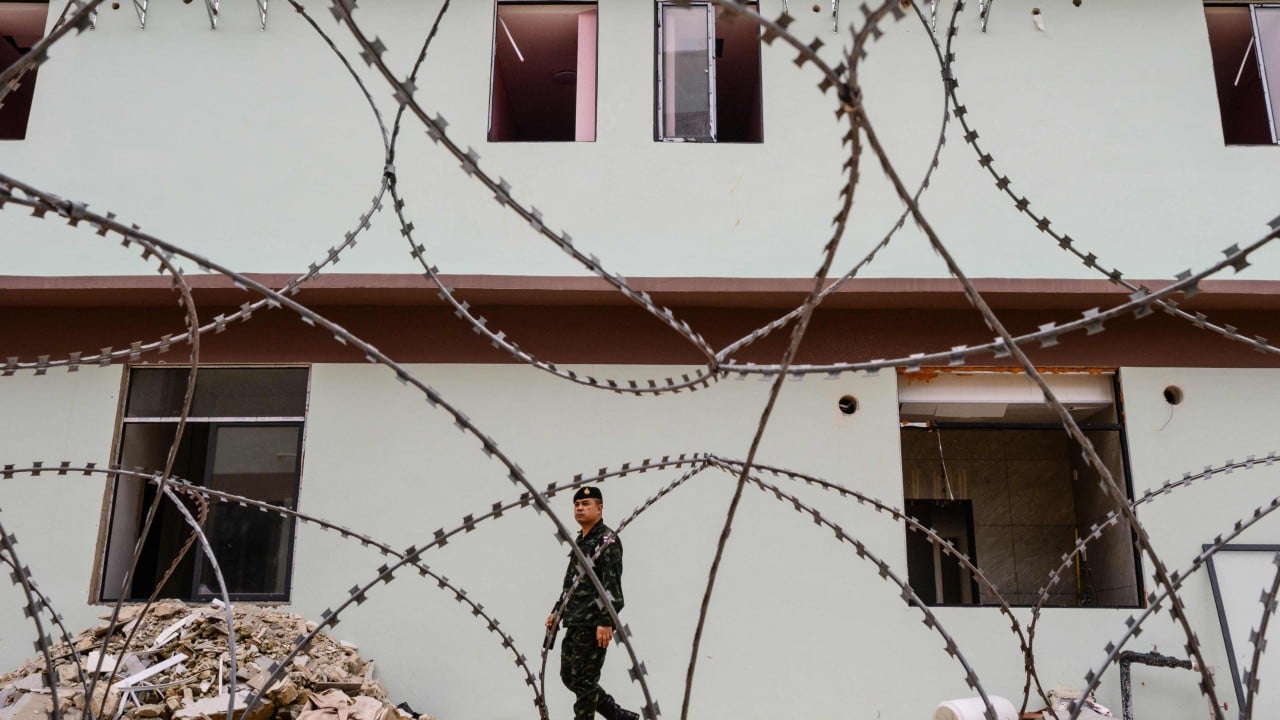
Bashing down gates at a single compound makes for great television, yet the billions keep flowing out of Southeast Asia. You can demolish buildings along a river or arrest a handful of mid-level managers, and the syndicate behind them will still have another office running by Friday.
That reality sits at the heart of why advocates, researchers, and survivors are pushing for a completely different playbook. Traditional raids treat scam compounds like isolated factories that vanish once you lock the doors. In truth, they operate like corporate franchises—modular, adaptable, and plugged straight into regional politics, cross-border finance, and global job-recruitment traps.
According to a July 2026 UN Office on Drugs and Crime (UNODC) estimate, scams cost victims across East and Southeast Asia, Australia, and New Zealand between US$88.3 billion and US$114.1 billion in 2025 alone. And those numbers don't even capture the human toll inside the walls, where tens of thousands of people from dozens of countries have been coerced into running romance, investment, and crypto fraud schemes under threat of violence.
Why Southeast Asia Scam Centres Outsmart Flashy Crackdowns
When governments stage big, visible operations, syndicates don't pack up and go home. They scatter.
Take high-profile actions along border zones in Myanmar and Cambodia. Pressure in one district has repeatedly pushed operations into neighboring provinces, across river crossings, or into smaller, less conspicuous setups like leased office floors and residential houses. Researchers at institutions like the Lowy Institute and The Asia Foundation have pointed out that the capacity to reconstitute quickly is a core feature of how these networks survive, not a side effect.
Honestly, that makes total sense if you look at how the business is built. Many of these complexes grew out of casino and online gambling ecosystems that already had money-moving channels, local protection networks, and compound-style housing. When travel restrictions and enforcement shifted during the pandemic, operators pivoted smoothly from gambling to digital fraud, treating scamming, money laundering, and data theft as specialized services they can plug in wherever law enforcement is weakest.
There's also a political blind spot in how enforcement happens. Selective crackdowns often focus on protecting one country's citizens or chasing headline-grabbing targets while leaving the financial architects and local enablers untouched. As long as corrupt officials, militias, or complicit local actors profit from leases, utilities, or protection, knocking down one building just shifts real estate value down the road.
The Double Victim Trap Nobody Talks About Enough
Here's a misconception that still trips people up: assuming everyone inside a scam compound is a willing crook who just got unlucky when the police arrived.
Some people do show up hoping for high-paying jobs, sure. Many more are lured by fake job ads promising customer service, tech, or hospitality work abroad, only to have their passports confiscated, debts invented against them, and quotas enforced through intimidation or physical abuse. UN agencies and anti-trafficking groups have documented survivors from over 50 to 70 nationalities caught in this web.
What happens next is often where policy fails worst. Too often, rescued or escaped workers get treated like immigration offenders or fraud suspects rather than trafficking survivors. Without proper screening, safe shelter, medical and mental health care, and help getting home safely, people who escaped hell can end up detained, deported without support, or re-trafficked into another operation.
At the same time, we shouldn't flatten the ethics of the situation either. People losing their life savings to fake investment platforms or pig-butchering scams are real victims too. A serious response has to hold room for both truths: the person sending deceptive messages may be trapped under coercion, and the person wiring money across the globe is still getting robbed.
What Advocates Actually Want Next
If fences and raids aren't enough, what are anti-trafficking groups, legal aid organizations, and survivor advocates pushing governments and companies to do instead?
Stop Punishing Survivors and Build Real Protection
Advocates from groups like International Justice Mission (IJM) and UN agencies have been loud about shifting from purely punitive sweeps to survivor-centered protection. That starts with mandatory screening during raids and border crossings so trafficked workers aren't misclassified as criminals.
It also means funding the unglamorous work that happens after the cameras leave:
- Safe housing and legal assistance so survivors aren't left stranded in unfamiliar countries.
- Trauma counseling and livelihoods or skills training so people can rebuild without falling back into desperate job offers.
- Witness protection and safe pathways for survivors who want to testify against recruiters and compound bosses.
Organizations like the International Organization for Migration (IOM) and IJM have highlighted how survivor voices—people who actually lived inside these compounds—are shaping clearer warnings for jobseekers and pushing prosecutors toward cases that target traffickers rather than scapegoating captive workers.
Follow the Money Instead of Just the Walls
You can't easily move a concrete compound overnight, but stolen funds move across borders in seconds through banks, payment rails, and crypto wallets. Advocates and financial crime experts increasingly argue that governments need tighter cross-border asset tracing, faster freezes on illicit crypto flows, and real accountability for the shell companies and property developers bankrolling these sites.
If a syndicate loses access to laundering channels and clean cash-out routes, running a massive operation gets much harder and much less profitable. Raids make noise; starving the financial pipeline hits the people actually pulling the strings.
Tighten Recruitment Rules and Platform Accountability
Most victims don't wake up wanting to work in a scam compound. They apply to an online ad or respond to a recruiter promising legitimate overseas work.
Advocates want stricter licensing and oversight of recruitment agencies across origin and transit countries, paired with practical job-seeker warnings that reach people before they board a flight or cross a border. Tech platforms and messaging apps sit right in the middle of this pipeline too, both as places where fake job lures spread and as channels where scammers hook victims. Policy experiments in places like Singapore have shown how targeting enablers—like fake accounts, impersonation ads, and slow reporting lanes—can disrupt the mechanics of fraud, though advocates warn rules have to keep pace as criminals jump apps.
What You Can Do Right Now
Even if you don't set regional policy or run an NGO, you're not powerless against this ecosystem.
- Vet overseas job offers aggressively. If a recruiter promises unusually high pay for basic entry-level work, rushes your travel, asks you to route through third countries, or refuses to give verifiable company details and contracts, walk away and check with official labor or embassy channels.
- Treat high-return "investment" chats as a red flag. Scams tied to these compounds thrive on slow trust-building over messaging apps, fake trading dashboards, and urgency. Never move money based on a stranger's tip or an app someone walked you through on chat.
- Report fraud and trafficking leads to the right places. If you or someone you know is targeted by a scam, report it quickly to your bank and national cybercrime or consumer-protection authority. If you suspect someone is being held or forced to work in a scam operation, reach out to consular services, anti-trafficking hotlines, or established organizations like IJM or IOM rather than trying to negotiate alone.
- Support organizations backing survivors. Look for reputable anti-trafficking and legal-aid groups doing long-term reintegration and survivor advocacy—not just emergency rescues—so people coming out of these compounds have a real shot at staying safe.