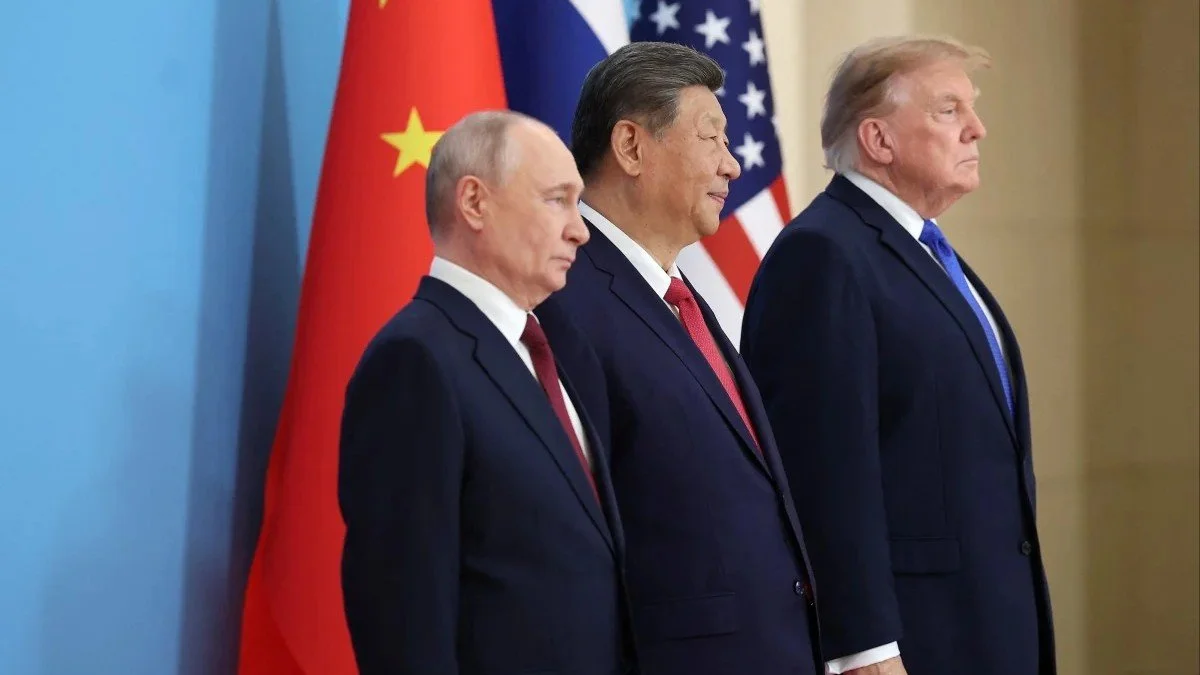
I wasn't able to read that Financial Times piece directly because it sits behind a paywall, and I can't guess what specific lines or details were inside it. If you paste the text here, I can break down that exact angle and build right off it. Still, looking at the topic itself—Putin inviting European leaders to Moscow—we already know the core tension behind the headline. Diplomacy in a war zone rarely comes with clean motives.
Here's the short answer upfront. An invitation from the Kremlin to European heads of state or government isn't a sign that peace is suddenly around the corner. Most Western capitals will treat it as political theater, a wedge tactic, or a carefully staged photo opportunity designed to test European unity. Yet dismissing it out of hand as pure noise is a mistake too, because diplomatic theater still shapes public debate, exposes fractures inside Europe, and forces leaders to state clearly what terms they will—and won't—accept.
Honestly, every time a move like this pops up, people jump to extremes. Half the room says Moscow is signaling genuine readiness to talk. The other half says it's all bait. Neither side gets the full picture if they ignore how high the stakes are on the ground and inside Brussels.
Why Putin Inviting European Leaders to Moscow Tests European Unity
Think about what a trip to Moscow actually costs a European leader politically. You don't just buy a plane ticket and sit down for tea. You walk straight into a storm at home, in Brussels, and in Kyiv.
Since Russia's full-scale invasion of Ukraine began in February 2022, normal diplomatic traffic between Moscow and major European capitals has been frozen or heavily restricted. Sanctions, travel bans, diplomatic expulsions, and ongoing military strikes have turned what used to be routine state visits into high-wire political statements. When Vladimir Putin extends an invitation to European leaders to come to Moscow, the location itself carries weight. Going to the Kremlin means meeting on the host's turf, under the host's cameras, on the host's narrative clock.
That's why the real target of an invitation like this often isn't even the person invited. It's the alliance around them. Europe doesn't speak with one voice on every foreign policy question, even when unity looks strong at summit press conferences. Different countries have different histories with Russia, different economic exposures, and different domestic politics. A bold public invite puts pressure on governments that already face vocal domestic critics questioning the cost of sanctions, energy shifts, or continued support for Ukraine.
From my vantage point watching European foreign policy, the hardest part for leaders isn't saying no to Moscow. The hardest part is keeping the coalition aligned while different capitals weigh their own domestic pressures. A single leader breaking ranks—or even appearing to waver—can hand Moscow a propaganda win without a single treaty being signed.
The Trap of Optics Versus Substance
In diplomacy, optics aren't harmless decoration. They're part of the leverage.
If a European leader shows up in Moscow, the Kremlin gets images that project normalcy, relevance, and regional clout. Even if the guest arrives with tough messages and leaves without giving an inch, the visual frame is hard to control once state media edits the tape. That's a classic trap in high-stakes negotiations. Showing up can look like validation, even when your intent is pushback.
On the flip side, flatly refusing without explaining your terms can sometimes be spun as stubbornness or refusal to engage. European officials spend a lot of energy walking that line—staying firm on sovereignty and international law while avoiding handing Moscow easy talking points about "Western refusal to talk."
What People Get Wrong About Kremlin Diplomacy
A lot of commentary treats diplomatic invitations like a binary switch. Either someone wants peace, or they're lying. Realpolitik doesn't work like a light switch. It works more like a pressure gauge.
First, an invitation doesn't automatically mean a serious compromise is on the table. Governments regularly use outreach to test reactions, divide opponents, signal strength to domestic audiences, or appeal to third countries in the Global South. A gesture can be tactical without being a peace breakthrough.
Second, people often assume that talking means weakness or betrayal. Not necessarily. Throughout modern history, adversaries have talked during active conflicts—sometimes to avoid miscalculation, sometimes to exchange prisoners or protect humanitarian channels, and sometimes just to probe where the other side's red lines actually sit. Talking isn't the same as surrendering principles. The catch is how and where those talks happen, and whether Ukraine and key allies are central to the process rather than sidelined.
Third, it's easy to overestimate how much a single meeting can move entrenched positions. Deep geopolitical conflicts aren't usually solved over a dinner table in Moscow when core security demands, territory, and accountability remain sharply contested. When the underlying gaps are huge, a summit often highlights the distance between sides rather than closing it.
The Questions Every Reader Should Ask Right Now
When a headline like this hits your feed, you don't need to guess blindly. You can cut through a lot of the noise by asking a few sharp questions.
- Who was actually invited, and how was the invite delivered? Was it a broad public remark, a formal diplomatic channel, or aimed at specific leaders known to favor engagement or hold distinct views within Europe? Public grandstanding behaves very differently from quiet back-channel diplomacy.
- What is the timing? Look at what's happening on the battlefield, in European elections, in energy markets, or around major summit calendars. Invitations rarely happen in a vacuum.
- What conditions or framing came with it? Did it sound like an open-ended dialogue, or did it come wrapped in demands that European capitals have already rejected?
- How do Kyiv and major EU and NATO partners react? Their response tells you quickly whether the move is seen as a serious probe or a calculated distraction.
You can track official statements and policy analysis directly through institutions like the European Council, NATO, and think tanks such as Chatham House or the Carnegie Endowment for International Peace. Primary statements and sober analysis beat hot takes every single time.
Where Real Leverage Actually Sits
It's tempting to focus on dramatic gestures and high-profile invitations because they make great headlines. Yet real leverage in a conflict like this usually sits in slower, grittier places.
It sits in military and financial support, sanctions enforcement and evasion workarounds, energy resilience, industrial production, and long-term security commitments. Those things are less flashy than a headline about a trip to Moscow. They also shape reality far more than a speech or an invitation does.
That doesn't mean diplomacy is irrelevant. Far from it. Every serious conflict ends—or freezes—through some combination of force, economic pressure, and negotiation. Still, real negotiation requires credible leverage and clear guardrails. Without them, an invitation is just another move on the chessboard.
If you want to follow this story smartly over the next few days, do three concrete things. Check who responds officially from major European capitals and what exact words they use. Watch whether European partners stay coordinated in their public messaging. And if you have the text or key details from the Financial Times article you wanted to build on, paste it here so we can examine its exact angle and flesh out the specific details you care about most.



