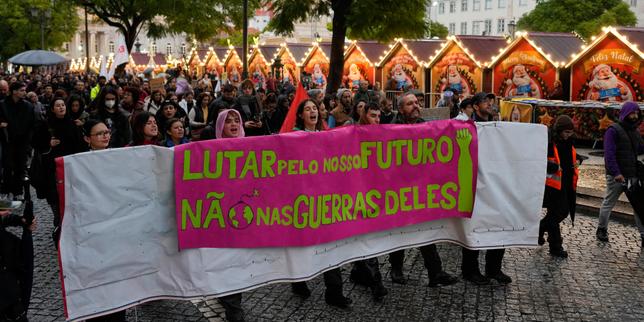
Walk through central Lisbon or Porto right now and you can feel how badly the math breaks down for ordinary people. Thousands of workers, students, and retirees are marching over low wages and soaring housing costs, and honestly, the rage in those streets makes complete sense. When a full-time paycheck barely covers a room in a shared flat, patience runs out fast.
I've spent plenty of time watching Southern European housing markets tighten up, and Portugal's squeeze is unusually sharp. You have a national minimum wage of €920 gross per month in 2026 alongside average annual earnings that Eurostat placed roughly 37% below the European Union average in 2025. At the same time, property prices have more than doubled since 2017, and rents on new leases have jumped dramatically, especially in Lisbon and Porto. That gap isn't a minor economic hiccup. It's a daily grind that forces young adults to delay moving out, pushes commuters farther from their jobs, and leaves retirees watching fixed pensions lose ground to groceries and fuel.
Why Portugal Protests Over Low Wages and Housing Hit a Nerve
These demonstrations didn't come out of nowhere. Over the autumn of 2026, frustration built across tent camps, union marches, and mass street rallies—culminating in major nationwide turnouts in November that drew tens of thousands of people, including massive crowds in Lisbon. Unions like the General Confederation of Portuguese Workers (CGTP), tenant collectives such as Movimento pela Habitação and Casa para Viver, and everyday residents have converged around a simple demand: pay people enough to live in the cities they keep running.
What makes this moment different from a routine protest cycle is how visible the contradiction has become. On one side, you see luxury developments, short-term rentals, foreign remote workers earning higher salaries abroad, and institutional property buyers. On the other, a waiter, nurse, or retail clerk earns a fraction of what a basic apartment commands. Even when politicians point to scheduled bumps in the minimum wage—slated to reach €970 in 2027 and €1,020 in 2028—workers living paycheck to paycheck don't feel relief today when October inflation hit 3.8% on the back of food and energy costs.
The Trap Between Local Paychecks and Globalized Rents
Here's the part people outside Portugal often miss. Lisbon and Porto aren't just competing with local buyers anymore. They're priced against international incomes, tourism demand, and real estate capital that views Portuguese property as a safe, sunny bet.
If you earn €1,100 or €1,300 a month locally, a €1,150 two-bedroom apartment—or a steep one-bedroom lease in a desirable neighborhood—isn't just expensive. It's math that doesn't work. A common mistake newcomers make is judging affordability by looking at a sunny café terrace or a reasonably priced glass of wine, then assuming everyday living is cheap. Once you factor in rent deposits, utility bills, commuting costs, and groceries, the budget tightens in a hurry.
In real terms, young Portuguese graduates often face a harsh choice: stay near family and accept stagnant pay while living with parents or housemates, or pack a bag and look for higher wages elsewhere in Europe. Losing young talent only makes long-term productivity harder to lift, which keeps upward pressure on wages sluggish.
What People Get Wrong About Housing Crises
Whenever housing protests erupt, debate quickly splits into two oversimplified camps. One side blames short-term rentals, foreign buyers, and real estate investment funds for pricing locals out. The other side argues that Portugal simply hasn't built enough homes fast enough and that strict rent controls or heavy taxes will scare off construction.
Both sides touch on real pieces of the puzzle, yet neither captures the whole picture on its own. Blocking property funds or tightening short-term rental rules might slow speculative churn in certain city centers, especially if paired with stronger tenant protections against abusive evictions. Still, if permitting is slow, construction labor is scarce, and building materials cost more, supply won't magically double overnight. Conversely, building luxury units without affordable supply or stronger local wage growth won't fix affordability for a worker making close to minimum wage.
It's also worth being honest about data limits and political spin. Housing statistics vary depending on whether you track asking prices on listing portals, median rents on newly signed leases via Portugal's National Statistics Institute (INE), or broader EU affordability indices from Eurostat. Political clashes over police tactics, protest encampments, and property ownership among officials further polarize the conversation, making calm, evidence-backed policy harder to pass.
Practical Moves If You Live, Work, or Plan to Relocate
Whether you're already living in Portugal, thinking about moving there, or trying to navigate rising rents as a worker or tenant, wishing the market would cool down isn't a strategy. You have to plan around the reality in front of you.
- Stress-test your budget against new-lease rents, not old averages: Base your numbers on current listing prices and realistic utility and transport expenses, not outdated figures or optimistic estimates.
- Look beyond core city centers early: Compare commuting times and real monthly costs in surrounding municipalities or mid-sized cities rather than defaulting straight to central Lisbon or Porto.
- Factor in Portugal's 14-month pay structure and deductions: When evaluating a job offer or salary benchmark, check gross vs. net pay, meal allowances, and holiday/Christmas subsidies so you know what actually lands in your bank account.
- Know your tenant rights and local support groups: If you're renting, keep written records of contracts, receipts, and repair requests, and connect with local tenant associations or legal clinics if you face steep hikes or pressure to leave.
- Watch policy shifts and budget debates closely: Keep an eye on municipal housing rules, short-term rental regulations, and state budget measures, since changes to taxes, rent subsidies, or rules for foreign residents can alter both costs and opportunities quickly.
Real relief in Portugal won't come from a single speech or a one-off rally. It takes higher-value jobs, faster affordable housing supply, fair rules for renters, and honest political trade-offs—and until those pieces move together, the pressure on the streets isn't going away.



