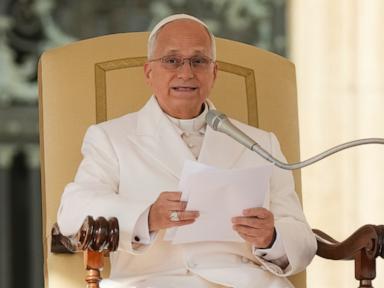
When Pope Leo XIV boards the plane for his first apostolic journey to Latin America, he isn't just checking off a standard Vatican itinerary. He's heading straight back into familiar territory. Covering Uruguay, Argentina, and Peru, this 12-day marathon marks his longest international trip since taking office and comes on the heels of a major health scare that had observers guessing whether he'd make the journey at all.
If you've been trying to figure out why this specific tour matters so much, you have to look past the routine diplomatic handshakes. This is personal.
The Journey Back to Peru and Familiar Ground
The final leg of the trip hits closest to home. Pope Leo XIV—born Robert Francis Prevost—spent decades working in Peru as an Augustinian missionary before eventually serving as the Bishop of Chiclayo. When he lands in Peru, he isn't just a visiting head of state; he's returning to a place where he spent a massive chunk of his adult life and earned local citizenship.
That deep-rooted connection changes the entire dynamic of the trip. While stops in Uruguay and Argentina involve high-stakes meetings with secular leaders like President Yamandú Orsi and President Javier Milei, the Peru homecoming carries an emotional weight that few modern papal tours manage to replicate. Further insights on this are detailed by The Guardian.
Overcoming Health Hurdles
Let's address the elephant in the room. Just weeks before packing his bags for a grueling 19,000-mile schedule involving 14 flights, the pope underwent surgery for lung cancer at Gemelli Hospital in Rome. Naturally, rumors swirled about whether the trip would get postponed or canceled entirely.
The Vatican's medical team cleared him, noting that his recovery has tracked ahead of schedule and that no further oncological treatments are required right now. Still, traveling across three South American countries, dealing with high altitudes in places like Cusco, and keeping up with a brutal string of public Masses will test his physical stamina. Vatican insiders insist he's ready, but you can expect every cough or slow step to be heavily analyzed by the press pool.
What's on the Agenda in Uruguay and Argentina
Each country on the schedule brings its own set of unique political and religious realities.
In Uruguay, the pope faces a nation with one of the lowest percentages of self-identified Christians in Latin America. It's a secular society, and his visit marks the first papal trip there since John Paul II went in 1988. Expect his messaging there to focus heavily on dialogue with a secularized culture rather than preaching to a massive choir.
Then there is Argentina. Home turf for his predecessor Pope Francis—who famously never made it back home during his pontificate—Argentina presents a complex socioeconomic backdrop. Leo XIV is scheduled to meet with trade unionists, social movement representatives, and local bishops. Given the country's turbulent economic history and ongoing debates over poverty and policy, his words on social justice will carry immense weight.
Why This Trip Defines His Pontificate So Far
Since becoming the first American pope, Leo XIV has faced constant questions about how he will manage the global church compared to Francis. By choosing South America for his major overseas expedition, he's signaling continuity with the Global South, where the demographic heart of Catholicism now beats hardest.
He isn't touring safe European capitals. He's diving into regions grappling with deep political polarization, economic strain, and shifting religious landscapes. How he handles the crowds, the intense security, and his own post-surgical recovery over these twelve days will set the tone for the rest of his time in the papacy.
Keep an eye on the local media coverage as the schedule unfolds. The speeches he gives off-the-cuff might just reveal more about his vision for the church than any formal encyclical ever could.



