Why Political Distrust Could Wreck South Korea's Push to Curb Its Imperial Presidency
South Korea doesn't suffer from too little democracy. It suffers from too much concentrated power colliding with zero trust. After Yoon Suk Yeol's December 2024 martial law debacle, his unanimous removal by the Constitutional Court in April 2025, and Lee Jae-myung's election in June 2025, Seoul is talking seriously about rewriting the 1987 Constitution. Yet political distrust threatens to turn that reform effort into another round of trench warfare.
Will political distrust upend South Korea’s bid to tame its imperial presidency? Probably, unless leaders stop treating constitutional rules as weapons in a partisan cage match. Voters like the idea of curbing executive overreach. Opponents suspect any rule change is a sneaky power grab in disguise.
Here's the blunt truth right up front. Constitutional text can't fix a political culture where every election feels existential and every loss invites prosecution or impeachment. Even a sensible shift—like moving from a single five-year term to a four-year, two-term presidency with stronger parliamentary checks—hits a brick wall when the ruling camp and the opposition don't trust each other to play fair.
How the Imperial Presidency Took Root After 1987
People outside Korea often assume the 1987 democratization constitution built a neat system of checks and balances. It didn't. Framers designed a single five-year presidential term specifically to prevent dictatorships from stretching their stay in office. That part worked. The unintended side effect was a winner-take-all presidency packed with appointment leverage, budget influence, decree powers, and outsized sway over prosecutors and agencies.
Because the president can't run for a second term, incentives get weird fast. Early on, a president acts like an all-powerful monarch. Later on, lame-duck paralysis sets in while rivals sharpen their knives for the next cycle.
Look at the track record since democratization. Almost every administration has ended in scandal, political retaliation, impeachment, or prison battles involving former leaders and aides. When the prize is that huge and the penalty for losing feels that severe, politics stops being compromise and starts looking like survival.
Why Distrust Poisons Every Reform Proposal
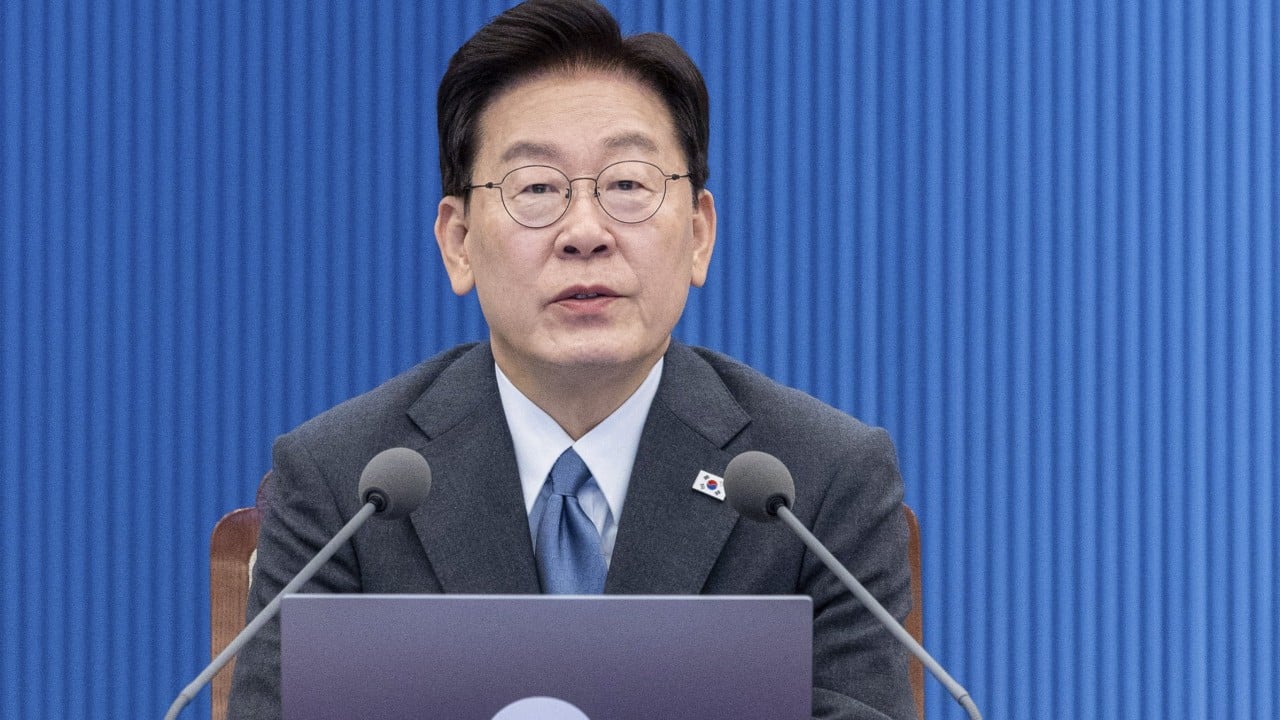
In August 2026, President Lee Jae-myung's camp backed the idea of a four-year, two-term presidency paired with stronger National Assembly powers, while stressing that constitutional amendments belong in the legislature through bipartisan agreement. On paper, a renewable four-year term lets voters deliver a midterm verdict instead of waiting five years while frustration boils over.
In practice, distrust twists every detail. Critics ask whether re-election eligibility could tempt a sitting president or future leader to stretch influence. Supporters argue that capping terms at two—and boosting legislative authority—actually reins in the imperial presidency. Neither side gives the other the benefit of the doubt.
By November 2026, tensions flared even harder after court rulings tied to the martial law fallout prompted the ruling Democratic Party to push for impeaching Supreme Court Chief Justice Jo Hee-de, while opposition leaders in the People Power Party rejected Speaker Cho Jeong-sik's push to pursue a constitutional amendment. When lawmakers are fighting over judicial legitimacy and special counsel bills, asking them to calmly design a new constitutional bargain is like asking two boxers mid-round to rewrite the rules of the ring.
What People Actually Ask About Fixing South Korea's System
Could a parliamentary system work instead of tweaking the presidency?
Some reformers favor a parliamentary model or a stronger prime minister system to diffuse executive authority. Honestly, it sounds neat in political science seminars. In South Korea's hyper-polarized environment, a parliamentary system could easily produce fragile coalitions, endless cabinet reshuffles, and backroom deals voters resent. That's a big reason Lee has argued a parliamentary or semi-presidential shift isn't practical or desirable right now.
Why is amending the Constitution so hard in the National Assembly?
The math is brutal by design. Changing the Constitution requires at least two-thirds support from the National Assembly—meaning 200 out of 300 lawmakers (or two-thirds of the 299 sitting members in the current assembly)—followed by a national referendum. With the People Power Party holding over a hundred seats and deep hostility across the aisle, passing an amendment without real opposition buy-in isn't happening.
What happens if constitutional reform stalls again?
Nothing stays frozen. If formal constitutional revision stalls, power battles spill into statutes, impeachments, prosecutions, and court clashes. Institutional resilience showed up during the December 2024 martial law crisis, as analysts at institutions like Brookings have noted, yet surviving an acute shock isn't the same as fixing chronic polarization.
What Actually Works vs. What Sounds Good on Paper
I've watched plenty of institutional reform debates across democracies fail for the exact same reason: people treat a cultural trust deficit as a technical drafting problem. Writing a cleverer clause on paper doesn't force rivals to stop weaponizing prosecutors, courts, or impeachment motions.
- What sounds good in theory: Passing a sweeping constitutional overhaul in one dramatic push to cure the imperial presidency overnight.
- What actually works in practice: Starting with narrower, verifiable guardrails—like clearer limits on emergency powers, stronger civil-service and military protections against unlawful orders, and transparent parliamentary rules—that build a track record of restraint before tackling a full constitution rewrite.
Another common mistake is assuming voters will rally behind constitutional mechanics alone. Koreans care deeply about democratic norms, sure, but sluggish economic growth, cost-of-living pressure, and regional security anxieties dominate daily life. A reform pitch that feels like insider political engineering will lose oxygen fast.
Practical Next Steps for Watching or Engaging With This Debate
If you're following South Korean politics, advising on regional risk, or trying to cut through cable-news noise, don't get fooled by lofty speeches about "constitutional renewal." Track concrete behavior instead:
- Watch the 200-vote reality check: Ignore trial-balloon headlines unless there is real movement toward bipartisan talks involving the People Power Party leadership. Without credible opposition consent, constitutional revision is mostly posturing.
- Separate structural checks from partisan scores: Pay close attention to whether proposals strengthen institutional independence—such as courts, local autonomy, and legislative oversight—regardless of who wins the next election. A rule you wouldn't want an opponent using is a bad rule.
- Track everyday governance alongside constitutional talk: Watch how the administration handles economic growth, budget negotiations, and security alliances. A government that delivers steady competence earns far more credibility for institutional reform than one locked in constant institutional warfare.
- Read primary institutional signals: Follow updates from the National Assembly of the Republic of Korea and policy analysis from groups like the Carnegie Endowment for International Peace to distinguish genuine legislative drafting from political messaging.
Reform won't rescue South Korea's democracy from distrust. Only consistent restraint will give reform a fighting chance.
South Korea's Lee backs 4-year, 2-term presidency with stronger parliament
This video covers President Lee Jae-myung's support for a four-year, two-term presidency with stronger parliamentary checks, directly illustrating the reform debate and bipartisan hurdles discussed above.



