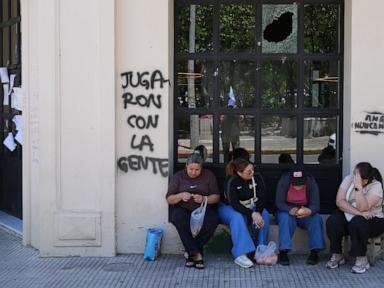
When roughly sixty percent of a nation's adult population loses access to their liquid funds overnight, society doesn't just stutter—it stops. That is the exact reality unfolding in Paraguay following the sudden closure and intervention of Ueno Bank. Public schoolteachers have walked off the job, taking to the streets of Asuncion and other cities to demand immediate pension fund protections. They aren't exaggerating the threat. Over US$800 million in public and pension funds were entangled in the lender before regulators seized it amid a severe solvency crisis.
If you are wondering how a major financial institution crashes this hard and drags down the country's leadership with it, the answers point straight to a toxic mix of high-risk lending, political exposure, and public outrage. President Santiago Peña was ousted and impeached, Vice President Pedro Alliana took the oath of office, and the national currency, the guarani, took an 8 percent hit against the U.S. dollar. Teachers, civil servants, and everyday retail depositors are footing the bill for a banking scandal they saw coming from a mile away.
Inside the Ueno Bank Collapse
Ueno Bank wasn't a small-town credit union. It had aggressively scaled to become the fifth-largest bank in Paraguay by deposits, pulling in nearly three million account holders through smartphone apps, flashy marketing, and supermarket perks. But rapid expansion masked rotting financials. Regulators stepped in before dawn to seize the institution after discovering that it was severely undercapitalized, holding massive amounts of uncollateralized loans and questionable related-party transactions.
Worse still, public pension entities had deposited roughly US$355 million into the institution, blowing past legal limits designed to protect retirement savings. When the central bank hit the brakes and froze accounts, those billions vanished from circulation. For a public school teacher earning a modest salary, a frozen account means rent goes unpaid, groceries don't get bought, and retirement security evaporates.
Why Teachers Are Leading the Charge
Educators in Paraguay have long operated under tight economic constraints, making their pension funds sacred. When news broke that millions in retirement reserves had been funneled into a failing bank with political ties, the reaction was immediate. Striking teachers blocked major thoroughfares and gathered outside sealed bank branches with a clear message: structural guarantees must replace political promises.
Public sector workers know that inflation eats away at cash values during prolonged state bailouts. They are refusing to accept vague assurances from a rattled government. The strike has disrupted national education infrastructure, but teachers argue that staying in classrooms while their life savings evaporate makes no sense. They want explicit constitutional and institutional walls built around pension assets so that no future administration can use retirement funds as personal piggy banks for commercial lenders.
Political Fallout and the Fall of the Presidency
The economic shockwave translated into a political earthquake within days. Former President Santiago Peña, an economist and former International Monetary Fund official, found his administration collapsing under the weight of public protests and legislative betrayal. Lawmakers accused him of using his political influence to direct state money into Ueno Bank while turning a blind eye to regulatory red flags.
Even though Peña had divested from Ueno's holding company under public scrutiny last year, his historical ties and political appointments at the central bank left him politically isolated. As street protests intensified and clashes with police broke out, his support within the ruling Colorado Party evaporated. The Senate moved swiftly to impeach and strip him of immunity, placing him under investigation alongside former central bank officials. Pedro Alliana stepped into the presidency, inheriting a fractured nation, a depreciating currency, and an angry workforce demanding accountability.
What Happens Next for Paraguay's Economy
The road back to stability is long, and patching up public trust won't happen overnight. The newly installed administration faces a crippled payment system, jittery international bond markets, and an ongoing labor strike that threatens to paralyze public administration. Restoring confidence requires complete transparency regarding where every dollar of public and pension money went.
If you are tracking Latin American financial markets or regional politics, this crisis serves as a stark reminder of what happens when regulatory capture meets unbridled corporate expansion. Deposit insurance funds are scrambling to restore retail liquidity, but public sector unions won't back down until long-term legislative safeguards are codified into law. Teachers have drawn a hard line in the street, and they aren't picking up their chalk until their pensions are bulletproof.



