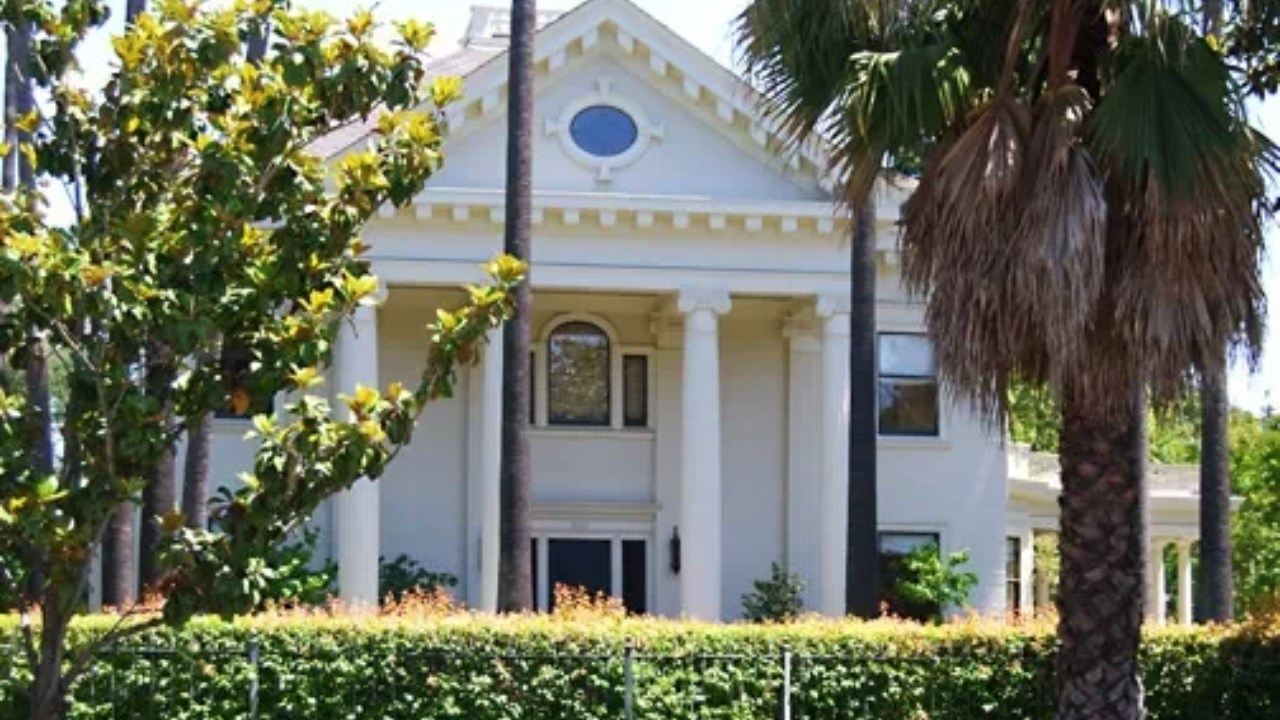
Real estate in Silicon Valley usually gets talked about in terms of cold tech money and glass boxes. But every once in a while, a property hits the market that reminds everyone of a completely different era. The Squire House in Palo Alto is currently listed for $19.988 million, and it has nothing to do with modern software fortunes. It is a century-old survivor with a fascinating backstory.
John Adams Squire didn't build a typical Northern California home when he commissioned this estate back in 1904. He was a Stanford classics scholar who lived from 1857 to 1930, arriving in Palo Alto in 1891 for advanced studies in ancient languages. Instead of following his family's meat-packing business roots in Massachusetts, he chose Greek and Latin. When he and his wife Georgiana decided to put down roots on University Avenue in the Crescent Park neighbourhood, they wanted a home that reflected those scholarly passions.
The Architecture Behind the Classic Revival Style
San Francisco architect T. Paterson Ross designed the mansion, and builder George W. Mosher brought it to life in 1904. They chose the Roman Classic Revival style. The front facade features an imposing two-storey portico supported by grand Ionic columns and topped with a triangular pediment.
Step inside, and you won't find minimalist white walls or open-concept steel beams. The interior retains its historic character with quarter-sawn oak floors, leaded-glass windows, intricate wood panelling, and heavy pocket doors. The living room features a fireplace anchored by a rich mahogany mantel, while the formal dining room shows off built-in sideboards and detailed wood craftsmanship.
There is even a quirky piece of family history tucked under the roof. The large attic space was reportedly used by Squire's three daughters as an indoor roller-skating rink. When the infamous 1906 San Francisco earthquake struck, the house held its ground. While two chimneys collapsed from the violent shaking, the core structure and those iconic columns stayed standing.
Saved From the Bulldozer by Community Action
The home stayed in the Squire family until Georgiana passed away in 1959. By the early 1970s, the property faced a very real threat of destruction. An owner planned to sell the land to a developer who wanted to tear down the mansion and carve the lot into four separate building sites.
Local residents and the Palo Alto Historical Association refused to let it happen. They formed a dedicated Save the Squire House Committee. Neighbours rallied, and local Girl Scouts even held bake sales to help gather funds. The city stepped in temporarily, buying the property to give preservationists a fighting chance. They raised $90,000, while the city added structural funding before selling it to a private buyer for $135,000.
That rescue mission changed local policy forever. It led directly to Palo Alto adopting its Historic Preservation Ordinance in 1979 and establishing a Historic Resources Board. The home earned official status as California Historical Landmark Number 857. The private sale came with a strict façade easement, meaning the exterior and grounds remain legally protected from unapproved alterations.
What You Get for Twenty Million Dollars
The property hasn't changed hands since 1999, making its current return to the open market a rare event. It sits on a nearly one-acre lot in Crescent Park. The main residence spans 7,794 square feet, and a separate 600-square-foot guest house brings the total space to roughly 8,394 square feet.
Modern updates have brought luxury amenities into the historic footprint. The estate now features five bedrooms, six full bathrooms, a half-bath, a private study, and a high-end marble kitchen. The lower level includes a custom game room and theatre, while the top floor offers flexible space for work or recreation.
Outside, the grounds boast expansive lawns, a swimming pool, and a trellis-covered terrace complete with an outdoor fireplace.
Historic homes of this scale rarely survive intact in Silicon Valley. Most get swallowed up by modern expansions or teardowns. The fact that the Squire House still stands tall with its Ionic columns intact proves that some pieces of history are worth fighting to keep.



