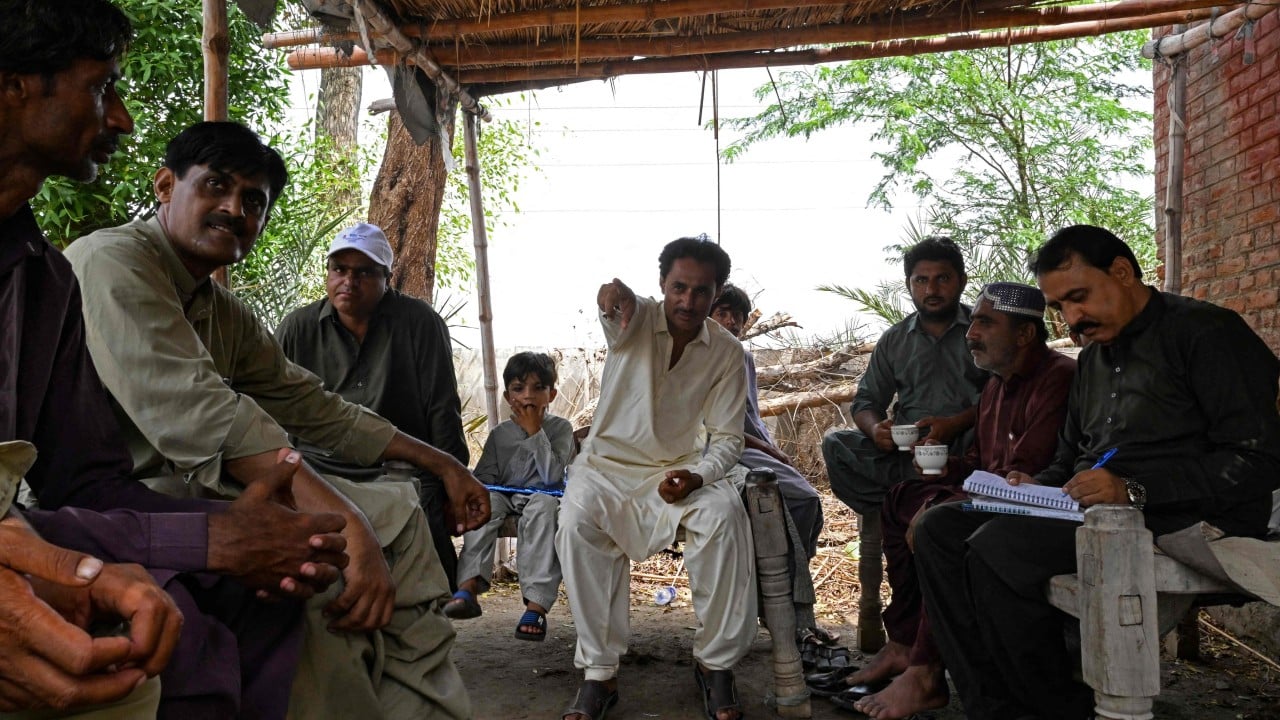
Weather doesn't check passports before it destroys a livelihood. When record-shattering monsoon rains submerged a third of Pakistan in 2022, displacing thirty-three million people, the floodwaters didn't stay local. They carried the heavy fingerprints of global industrial emissions straight into rural villages like Baid Sharif in the Dadu district. Now, a group of smallholder farmers from Sindh province refuses to accept that geography dictates accountability. They’ve done the unthinkable: they filed a landmark lawsuit in a German court against corporate heavyweights RWE and Heidelberg Materials, arguing that carbon emitted thousands of miles away turbocharged the waters that drowned their fields.
This isn’t just a localized legal battle. It’s a direct challenge to how the world handles transnational climate responsibility.
The Core Argument Behind Cross Border Climate Liability
For decades, polluters in the Global North hid behind national boundaries. Industrial activity happened in Europe or North America, while the ecological wreckage accumulated in vulnerable nations like Pakistan, which contributes less than one percent of global greenhouse gas emissions yet bears the brunt of planetary heating.
The legal action filed in the District Court of Heidelberg changes that math. Backed by groups like the European Center for Constitutional and Human Rights (ECCHR) and medico international, thirty-nine Pakistani farmers are demanding over one million dollars in damages. They aren't asking for charity. They are using the civil law principle that polluters must pay for the damage they cause.
Scientific attribution studies proved that the 2022 catastrophe was made up to fifty percent worse by global heating. The plaintiffs argue that major historic emitters like energy giant RWE and cement producer Heidelberg Materials share a direct line of causality with the destruction of their crops, homes, and futures.
Why Local Courts Were Never an Option
If you talk to farmers like Inayatullah Laghari or Abdul Hafeez Khoso, they will tell you why they bypassed domestic courts entirely. Local legal systems in rural Pakistan are sluggish, underfunded, and entirely unequipped to handle multi-billion-dollar multinational emissions footprints. Cases regarding land disputes or local grievances routinely drag on for decades, passed down through generations like unwanted heirlooms.
Suing in Germany is an act of sheer necessity. It flips the script on corporate immunity. For years, massive industrial firms treated carbon emissions as a free externality. By dragging these corporations into their home jurisdictions, front-line communities are forcing boardrooms to confront the human cost of business as usual.
The Global Ripple Effect of Climate Litigation
This case doesn't exist in a vacuum. It sits at the bleeding edge of a brand-new wave of international climate jurisprudence. Across the globe, communities are testing the limits of civil law against major carbon producers. Typhoon survivors in the Philippines have taken legal action against fossil fuel majors, and successful challenges in Europe—such as landmark rulings against corporate and state inaction—prove that courts are increasingly willing to scrutinize emissions.
When corporations emit greenhouse gases without restraint, they alter the hydrological cycle globally. The atmosphere doesn't recognize borders, and soon enough, corporate legal defenses won't either. If courts establish that a European energy company can be held financially liable for a flood in Sindh, it creates an immediate precedent that shakes boardrooms from Tokyo to Toronto.
What Happens Next
The road ahead for these farmers is brutally steep. Legal teams representing the corporations will push back on jurisdictional limits, questioning how a German civil court can tie local weather patterns in South Asia to specific corporate smokestacks thousands of miles away. The litigation will likely take years, draining resources and testing the endurance of plaintiffs who are already struggling to rebuild basic agricultural stability.
Yet, the psychological and political barrier has already been breached. Even if the case faces immense legal hurdles, the mere existence of the lawsuit signals a massive shift. Frontline communities are done waiting for sluggish international climate summits to deliver empty promises. They are taking matters into their own hands, holding corporate polluters directly accountable in the backyards of the companies themselves.
Justice shouldn't depend on where you were born, and these farmers are making sure the courts finally hear that truth.



