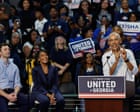
Barack Obama stood before an energetic crowd of nearly 4,000 at the Discovery Center of Clayton County just south of Atlanta, turning what could have been a standard stump speech into a masterclass on political contrast. With less than a week until the 2026 midterm elections, the former president didn't pull punches. He targeted Donald Trump’s administration over absurd policy distractions, ballooning ethical questions, and an obsession with personal grievances.
When Obama joked last week about White House renovations resembling a Cheesecake Factory decorated by Saddam Hussein, few expected the administration to take the bait. Yet, as Obama revealed to laughter and applause in suburban Atlanta, federal officials actually scrambled to counter the jab. The administration reportedly instructed Cabinet officials, including the Treasury Secretary, to defend the building aesthetics instead of focusing on pressing national economic priorities like inflation.
"They mobilized a whole government response to that joke," Obama told the cheering audience. "I am the father of two daughters. Do you think I could have survived their childhood without going to the Cheesecake Factory?"
Beyond the humor lies a strategic dilemma facing voters across the nation this election cycle.
Georgia as the Ground Zero of 2026
Georgia represents the ultimate battleground for control of Congress and the direction of federal oversight. Senator Jon Ossoff holds an eight-to-ten point polling lead over Republican challenger Representative Mike Collins, but down-ballot races remain razor-thin. Former Atlanta Mayor Keisha Lance Bottoms is locked in a statistical tie with billionaire healthcare executive Rick Jackson for the governor’s mansion.
If Bottoms wins, she will break a GOP trifecta that has held the governor's office and state legislature since 2004.
The political math in Georgia illustrates a broader national trend. While high-profile Senate candidates like Ossoff have built comfortable buffers through relentless grassroots fundraising and digital outreach, state-level executive races require voters to turn out in unprecedented numbers.
Georgia Political Dynamics (2026 Midterms)
-----------------------------------------------------------
Race                  Democratic Candidate     GOP Opponent     Margin Trend
-----------------------------------------------------------
US Senate             Jon Ossoff               Mike Collins     Ossoff +8 to +10
Governor              Keisha Lance Bottoms     Rick Jackson     Statistical Tie
Key Theme             Ethics & Oversight       Corporate Wealth Democratic Shift
-----------------------------------------------------------
Democratic leaders understand that winning the Senate isn't enough without state-level momentum. Senator Raphael Warnock emphasized the moral dimensions of the election during his speech, highlighting proposed cuts to safety-net programs.
"This is about the character of the country," Warnock said. "There is brokenness, because only a broken nation could manage to elect Donald Trump twice."
The Impeachment Platform and Voter Fatigue
Ossoff used his time on stage to lay out what Democrats intend to do if they secure control of Capitol Hill next year. He explicitly called out the administration's questionable ethics, referencing the construction of a massive ballroom on the site of the former East Wing and broader concerns about official favors.
"Each day, Donald Trump digs the moral pit deeper," Ossoff told the crowd, explicitly raising the prospect of congressional investigations and potential impeachment proceedings. The audience responded with chants that have echoed across campaign stops nationwide: "Lock him up!"
This messaging highlights a core calculation for midterm voters.
- Oversight vs. Governance: Will congressional investigations hold the executive branch accountable, or will they paralyze legislative progress on economic issues?
- Economic Priorities: Voters consistently rank inflation, housing costs, and healthcare access above political sparring.
- Turnout Dynamics: Base voters demand aggressive accountability, while moderate independents in suburban counties like Clayton, Cobb, and Gwinnett often favor stability and pragmatic policy.
Obama zeroed in on this exact friction. He argued that the current administration's focus on personal wealth accumulation and political retaliation directly hinders its ability to address kitchen-table economic problems.
"We have never seen a president so intent on selling favors," Obama noted, pointing out that public office should never serve as a vehicle for personal profit.
How to Evaluate Political Claims Before Voting
With campaign ad spending breaking records and contrasting narratives flooding social media, voters need a clear framework to cut through the noise before casting their ballots.
Verify Economic Metrics Directly
Don't rely on campaign speeches for economic data. Check official releases from the Bureau of Labor Statistics and Federal Reserve for accurate inflation, wage growth, and employment figures.Examine Congressional Voting Records
Look at real legislative votes rather than rally promises. Resources like ProPublica's Represent tool track how senators and representatives vote on key bills regarding healthcare, infrastructure, and federal spending.Track Campaign Finance Reports
Follow the money using the Federal Election Commission (FEC) database to see who funds candidate campaigns, from small-dollar donors to corporate political action committees.Review Local Impact
Assess how federal decisions affect state resources directly, particularly regarding federal highway funding, healthcare subsidies, and regional infrastructure projects.👉 See also: this post
The 2026 midterms aren't just about political rhetoric or viral rally jokes. They represent a fundamental choice about government priorities, ethical standards, and the balance of power in Washington.
Check your voter registration status immediately through your state's Secretary of State portal, locate your polling place, and review your sample ballot before election day.



