Let's be honest about football management. Loyalty is a nice marketing word, but ambition and timing dictate everything. When Manchester United comes calling with a blank check, a trigger-happy buyout clause, and a desperate need for an adult in the room, you don't say no. Even if you signed a contract extension with the United States men's national team just months prior.
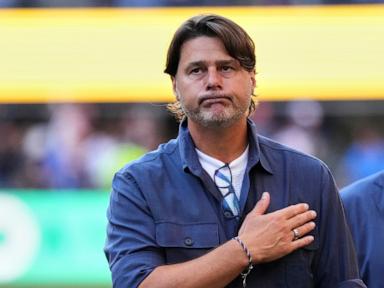
Mauricio Pochettino is officially heading to Old Trafford. He leaves behind a USMNT program he guided through the 2026 World Cup to take on arguably the most toxic, high-pressure managerial seat in world club football. Michael Carrick's brief, disastrous stint left the Red Devils languishing in the Premier League relegation zone, a shocking reality for a club that hasn't touched a league title since Sir Alex Ferguson retired in 2013.
If you're wondering why a manager would walk away from an international project with a 2030 horizon, the answer is simple. Opportunities like Manchester United rarely knock twice.
The Real Reason the USMNT Job Couldn't Compete
When Pochettino took over the U.S. national team, it felt like a coup. Fans dreamed of a tactical revolution leading into a home-soil World Cup cycle. But international management has an inherent limitation for an elite, active coach like Pochettino. You spend months waiting around, scouting matches from a laptop, and dealing with players for only a few weeks a year. Additional details regarding the matter are detailed by Yahoo Sports.
Club football is daily chaos. It's high stakes. It's the Premier League meat grinder.
Pochettino didn't hide his emotions when addressing the U.S. media. Tearful and visibly conflicted, he admitted it was one of the toughest choices of his career. Yet, his logic was bulletproof. You don't turn down the chance to fix a sleeping giant unless you've lost your competitive edge. U.S. Soccer will feel shortchanged—especially after securing his extension through 2030—but nobody turns down Old Trafford for an MLS-adjacent international schedule.
What Pochettino Inherits at Old Trafford
United isn't just struggling; they're broken from top to bottom. A dismal start to the campaign cost Carrick his job, leaving the squad sitting in 18th place. The dressing room has chewed up and spat out serial winners, tactical innovators, and club legends alike over the past decade.
Why should Pochettino succeed where Erik ten Hag, Ralf Rangnick, and Jose Mourinho stumbled?
First, his tactical blueprint relies on high-intensity physical output and structured pressing. If he can whip this disjointed roster into shape, the talent profile matches what he likes to work with. Second, his history of developing young talent—seen during his peaks at Tottenham and Southampton—fits a club trying to balance expensive past mistakes with a leaner future.
However, his stint at Chelsea showed that he struggles when ownership and sporting directors step on his toes. At United, INEOS is calling the shots, and patience wears thin by October. He has roughly two and a half years to prove he can handle the pressure cooker.
The Immediate Fixture Nightmare
Pochettino isn't easing into this. Before packing his bags for England, he has to wrap up his final two matches with the USMNT in the Concacaf Nations League quarterfinals against Haiti. Then, he steps straight off the international flight into a domestic baptism of fire.
His first match in charge of Manchester United? A brutal clash against Liverpool on November 22.
There is no honeymoon phase. He has days to implement a defensive structure, convince a fragile group of millionaires that they can actually win football matches, and climb out of the relegation dogfight.
This is a massive gamble for Pochettino. If he fails at United, his stock takes a permanent hit. But if he manages to revive the club and restore some semblance of pride to Old Trafford, he will cement his legacy as one of the defining managers of his generation.
The U.S. chapter is closed. The real test begins now.