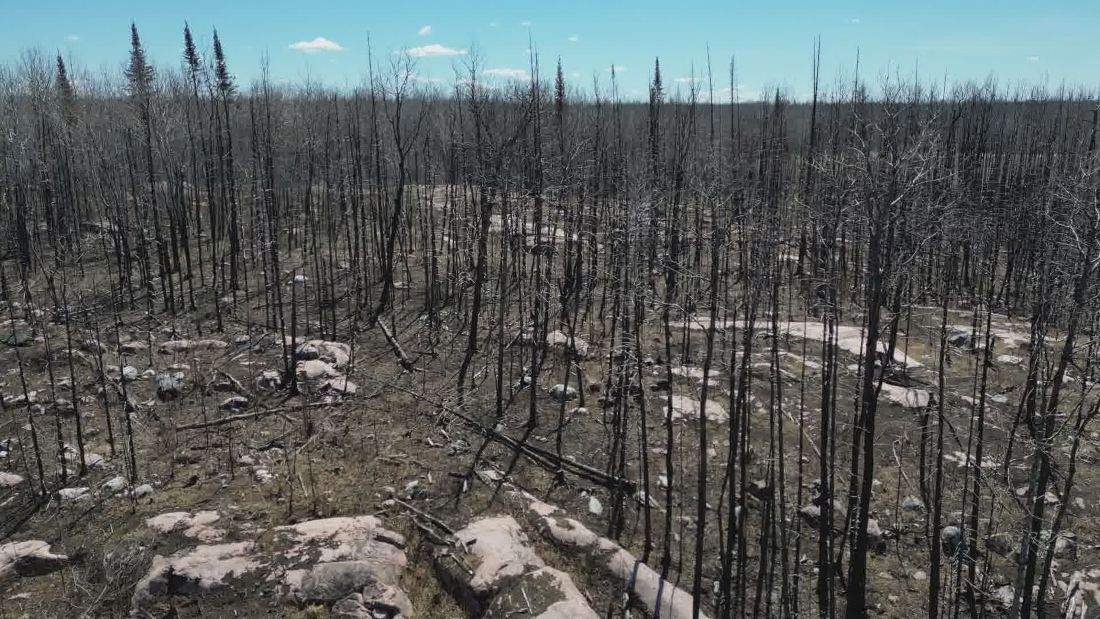
Two people died in Lac du Bonnet, nearly 33,000 people were forced out of 59 communities, and 2.2 million hectares burned across Manitoba in 2025. That wasn't just a bad summer. It was the most devastating wildfire season in Manitoba's history, and the province's response got stretched past its breaking point.
Now that the 97-page 2025 Wildfire After Action Report is public, the real question isn't whether the province wrote a thorough post-mortem. It's whether Manitoba will follow through on all 22 recommendations before the next dry spell hits.
Prepared by Brandon University alongside the Alberta Emergency Management Agency and the Manitoba Emergency Management Organization, the review lays bare what happens when heatwaves collide with thin staffing and strained systems. Reading through the findings and the reactions from municipal leaders, Indigenous chiefs, union representatives, and residents, one truth stands out right away. Reports don't put out fires. Funding, local authority, and sustained follow-through do.
What Actually Broke Down During the 2025 Season
Between May and October 2025, 445 wildfires scorched roughly 22,000 square kilometres—about four per cent of Manitoba's landmass—and displaced more than 12,600 households after a state of emergency was declared on May 28. When a mid-May heatwave hit already dry conditions, the pressure built fast.
According to the Manitoba government release on the 2025 Wildfire After Action Report, the season tested nearly every part of the emergency system at once. In practice, that meant a few clear bottlenecks slowed people down on the ground:
- Equipment and staffing gaps: Local crews didn't have enough personnel or gear to tackle every fire on their own, forcing heavy reliance on mutual aid and more than 1,500 out-of-province responders, incident managers, and support staff.
- Exhaustion and volunteer strain: Experienced workers faced long shifts and thin relief coverage, while untrained volunteers stepped up without enough psychological support.
- Evacuee tracking and care: Coordinating accommodations, health services, and accurate tracking for tens of thousands of displaced residents proved difficult at scale.
- Patchy public updates: Residents and community leaders had to make urgent decisions while information moved unevenly.
Here's what people who don't work emergency management often miss. Even when crews show up brave and determined, a stretched logistics chain turns small friction points into major headaches. Tracking thousands of evacuees across different sites while fighting active fires isn't a minor clerical task—it's life-safety infrastructure.
Why Manitoba Wildfire Response Needs Local Power, Not Just Top-Down Plans
One of the sharpest takeaways from the review is how The Emergency Measures Act handles authority during major crises. The report points out that special emergency powers need updating so local governments have consistent decision-making room when fast-moving emergencies hit.
Loren Schinkel, reeve of the Rural Municipality of Lac du Bonnet, knows firsthand how much local coordination matters. While he praised the provincial support his community received and credited local firefighters, mutual aid, and international crews for helping save communities, he also underscored that municipalities are the first responders when smoke and flames arrive. Grieving two lost residents makes abstract policy talk feel pretty hollow unless local leaders actually have the tools and clarity to act quickly.
That point is even sharper in northern and First Nations communities, where evacuations hit hardest. Most of the nearly 33,000 people displaced in 2025 came from First Nations in northern Manitoba, according to coverage of the review.
"First Nations must have the authority and resources to lead emergency planning and response efforts in our communities, supported by meaningful collaboration with the Manitoba government." — Grand Chief Jerry Daniels, Southern Chiefs' Organization
Grand Chief Garrison Settee of Manitoba Keewatinowi Okimakanak echoed that urgency, noting that First Nations bear disproportionate impacts and need a real voice from the start rather than after decisions are already set. Honestly, you can't write a playbook in Winnipeg for a remote northern community and expect it to fit every local road, airstrip, or family network. Local knowledge isn't a nice-to-have in wildfire response. It's the backbone.
The Human Toll on Firefighters, Workers, and Evacuees
Numbers like 2.2 million hectares sound huge on paper, yet they barely capture what evacuation and prolonged fire duty feel like in real life. For families packed into temporary lodging with uncertain return dates, waiting for clear information is exhausting.
Ken Pickering, past president of the Whiteshell Cottagers Association, spoke to how disorienting that uncertainty can be during an eastern Manitoba evacuation. Information doesn't always move fast when conditions shift minute by minute, yet even a rough play-by-play of what's coming next helps people plan and breathe a little easier.
Inside the workforce, the strain showed up just as plainly. Kyle Ross, president of the Manitoba Government and General Employees' Union, pointed out that workers who spent an entire summer battling relentless fires were hard to reach afterward because they needed a hard break—and plenty weren't sure they wanted to come back after a season like that.
That's a huge risk for any province. Wildfire expertise isn't something you can switch on overnight in May. When seasoned staff burn out and walk away, institutional memory walks out the door with them.
What the Province Has Started—and What Still Feels Debatable
Credit where it's due: the province didn't wait until the report came out to start moving on a few fronts. Transportation and Infrastructure Minister Lisa Naylor announced steps already underway, including:
- Setting up a new wildfire attack base in Thompson.
- Hiring 19 additional firefighters and 15 new emergency management staff.
- Putting $1.2 million toward emergency communications and wildfire response capacity.
- Expanding planning, training, and coordination with local authorities and Indigenous partners.
Ross welcomed those moves as a real step toward getting ready earlier, while adding that there's always more work ahead and union members want a seat at the table as changes roll out.
Still, reasonable people can look at those numbers and ask fair questions. Adding 19 firefighters and 15 emergency management positions helps, sure—especially alongside $1.2 million in communications and response capacity—yet compared with a season that pulled in over 1,500 outside personnel and burned 22,000 square kilometres, those additions look more like an initial patch than a finished fix.
There's also a real tension between central oversight and local autonomy. Updating legislation to give local governments clearer decision-making powers sounds straightforward until you're coordinating across municipalities, First Nations, provincial agencies, and out-of-province crews under tight smoke and wind shifts. Getting that balance right takes ongoing negotiation, not a one-time announcement.
Practical Next Steps for Communities, Leaders, and Residents
Whether you run a municipal office, help coordinate community readiness, or own property near forested areas, waiting until May to think about wildfire is way too late. A few practical steps make a real difference right now:
- Push for clear local playbooks: Municipal and First Nations leaders can use the 22 recommendations to map out evacuation roles, communication channels, and recovery steps with provincial partners before fire season starts.
- Lock in early-season staffing and mental health support: Agencies and unions should pair recruitment with realistic shift-relief plans and psychological support for both trained staff and community volunteers.
- Build a household "rough play-by-play" early: Residents in cottaging, rural, and northern areas should keep grab-and-go bags ready, verify official local alert channels, and plan alternative lodging options ahead of time rather than scrambling mid-evacuation.
A report gives Manitoba a map of where the cracks opened in 2025. Keeping the work going—year after year, budget after budget—is the only way to keep those same cracks from widening next time.