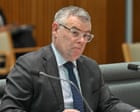
Political parties love a scapegoat, but watching the federal government tear itself apart over economic pressure is something else entirely. When Environment Minister Murray Watt stepped up to publicly tell his Labor colleagues to stop undermining Treasurer Jim Chalmers, it wasn't just a routine warning shot. It was an admission that cabinet unity is fraying right when households are feeling the absolute worst of cost-of-living pain.
Behind closed doors and through anonymous leaks, frustration has been boiling over. Chalmers has found himself taking heavy fire not just from the usual suspects across the aisle, but from within his own camp. When interest rate hikes squeeze mortgage holders and economic growth slows down, somebody has to wear the blame. Right now, Chalmers is standing directly in the crosshairs.
The Pressure Cooker Inside Cabinet
Governing during an economic downturn turns every budget meeting into a knife fight. Households are angry, inflation refuses to behave, and politicians are panicking about their seats. Watt’s public intervention came straight after a high-stakes meeting focused on budget savings. It is pretty obvious that when the public starts punishing the government at the polls, the finger-pointing begins.
Ministers don't normally air these internal disputes unless things are completely out of hand. Leaks suggesting friction between the Treasurer and Prime Minister Anthony Albanese have leaked into the media cycle for weeks. Watt tried to shut that down by declaring Chalmers is doing an excellent job under brutal circumstances. But telling disgruntled MPs to fall in line rarely stops them from worrying about their own political survival.
Why the Economic Narrative Is Slipping
The core issue isn't just personality clashes. It's control. Labor staked its reputation on managing the economy responsibly while protecting cost-of-living support. Instead, repeated rate hikes and stubborn inflation metrics have left voters looking for someone to blame.
When global shocks and domestic spending collide, the Treasurer has to say no to his own colleagues. Every time Chalmers blocks a pet project or trims department funding to find savings, he makes another internal enemy. Meanwhile, the Coalition sits back, pointing out blocked savings bills in Parliament and hammering the administration over electric vehicle subsidies and rising energy costs.
The Cost of Friendly Fire
Internal division is a luxury a government can't afford when public trust is this fragile. Voters smell desperation instantly. When ministers spend more time managing internal factional tension than selling policy, policy execution suffers.
Chalmers is tasked with a nearly impossible balancing act. He has to project fiscal discipline without crashing the broader economy or crushing household spirits completely. If his own colleagues keep undermining him to protect their individual profiles, the entire administration pays the price.
Unity under pressure is the only thing that keeps a government upright. Right now, Labor is finding out just how hard it is to stay united when the numbers stop adding up.



