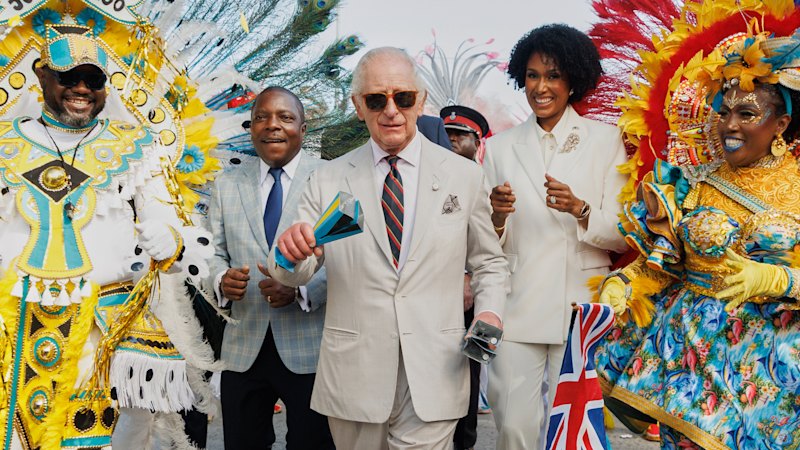
You can wear sunglasses, grab a pair of bright festival cowbells, and lead a traditional Junkanoo street party in Nassau, but you still won't outdance centuries of colonial history. That's the messy reality facing the British monarchy right now.
King Charles touched down in the Caribbean on a diplomatic tour meant to showcase modern partnerships. Instead, his trip collided head-on with an escalating global reckoning over historical atrocities. While cameras flashed pictures of the monarch smiling and moving to the rhythm in the Bahamian heat, protesters just blocks away chanted clear, unfiltered demands for financial accountability and systemic justice.
People want answers. They don't want photo ops.
The Optics of Royal Celebration Versus Historical Debt
Let's look at what's actually happening on the ground. The juxtaposition is jarring. On one side, you have Buckingham Palace orchestrating upbeat public appearances—laying wreaths, visiting boxing academies, and shaking traditional instruments at the front of a colorful parade. On the other side, local activists, Rastafarian groups, and regional political bodies are organizing rallies with a very specific message: pay what you owe.
From the fifteenth to the nineteenth century, European traders abducted at least 12.5 million Africans and forced them into chattel slavery. Britain played a massive part in this machinery, transporting an estimated 3.2 million human beings across the Atlantic. Those numbers aren't abstract historical trivia. They represent generational trauma, stolen wealth, and institutions built on the backs of enslaved people.
When modern royals visit former colonies, the old playbook of handshakes and cultural displays simply doesn't work anymore. Citizens aren't impressed by a wave and a smile. They see a stark mismatch between joyful pageantry and unaddressed historical debt.
Why the Reparations Movement is Reaching a Boiling Point
This tension isn't happening in a vacuum. Momentum has been building across the Caribbean for years, coordinated largely through CARICOM, the regional integration bloc. Caribbean leaders have made it clear that justice requires concrete action, not vague acknowledgments of past suffering.
When Charles spoke in the Bahamian capital, he admitted that some of the brightest parts of Caribbean culture were born out of darkness, calling it "only right" to acknowledge past injustices. But an acknowledgment is a far cry from an apology or financial compensation. And that's where the wall gets built.
The British government maintains a strict stance. Officials refuse to offer a formal apology or entertain financial reparations, leaving the Crown caught in the middle of a shifting geopolitical landscape. Jamaica has already taken formal steps regarding its own claims against the British crown, pushing the issue all the way to high-level appellate scrutiny. With the Commonwealth Heads of Government Meeting approaching in Antigua and Barbuda, regional leaders are queuing up to force the topic onto the official agenda whether London wants it there or not.
What Happens When Tradition Collides With Accountability
You can't tour the Caribbean in 2026 without confronting the legacy of empire. Protesters in downtown Nassau weren't whispering their frustrations. They stood face-to-face with the reality of modern royal diplomacy and called it out directly.
The strategy from the palace has always relied on soft power—using charm, culture, and shared history to keep realms aligned. But soft power loses its grip when the underlying economic and social grievances remain entirely unaddressed. People are asking hard questions about where historical wealth went and who should pay to fix the enduring disparities left in empire's wake.
Dancing in the street makes for great television. It provides a neat distraction for evening news broadcasts. But the noise of the crowd outside the barricades is louder than any cowbell.
The royal family can keep trying to dance through the Caribbean. The demands for accountability aren't missing a beat.



