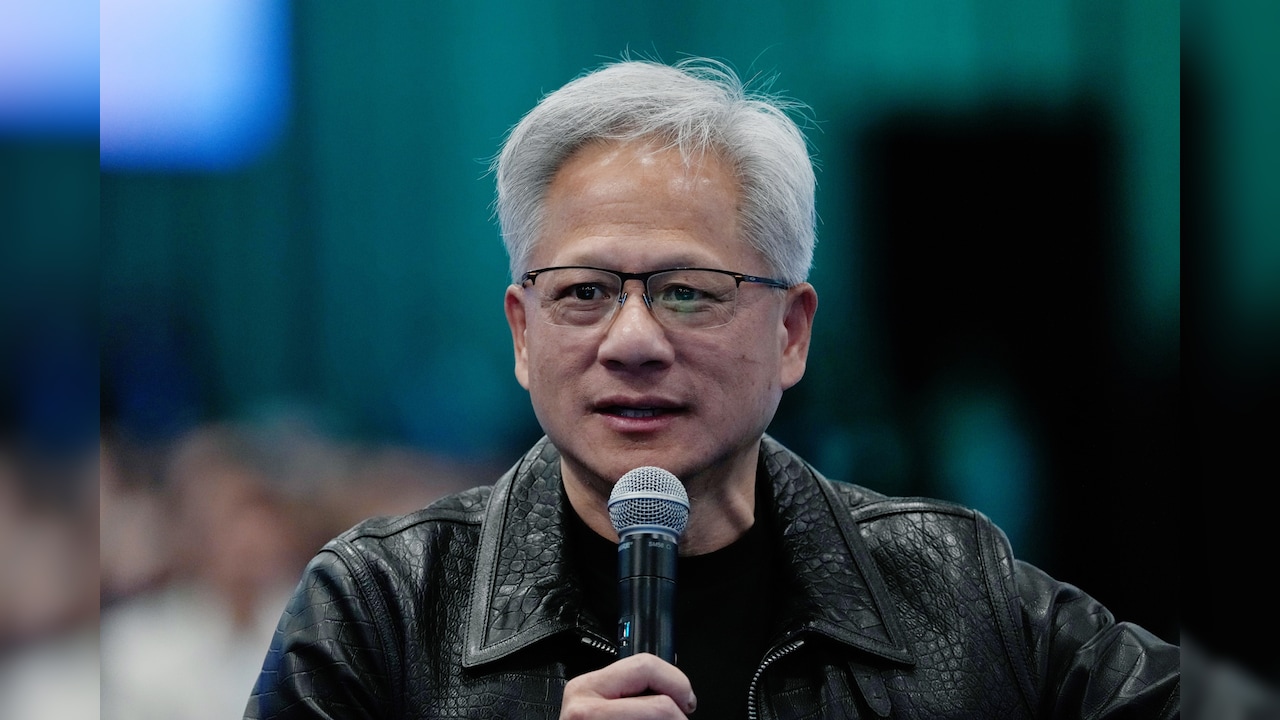
Geopolitical tensions rarely stay locked inside government briefing rooms. When massive commercial interests collide with national security boundaries, the fallout hits public markets hard. Past media appearances by tech leaders resurface with entirely new meaning once the ground shifts beneath them. That exact dynamic is playing out right now around Nvidia and its outspoken chief executive.
Old interview footage and previous statements from Jensen Huang regarding Beijing have bounced back into the headlines. Critics and analysts are pouring over every word he uttered about trade policy, export controls, and market access. Why? Because a corporate strategy built on deep commercial integration with China now looks very different under the microscope of intense regulatory and intelligence scrutiny.
The Reality of Balancing Two Superpowers
Tech executives often try to walk a fine line between Washington and Beijing. For years, Huang argued that turning China into an economic enemy was counterproductive. From a purely commercial standpoint, the argument made sense on paper. China represents a massive chunk of global compute demand. Cutting off that customer base entirely meant handing the territory straight to domestic competitors.
Yet, the geopolitical reality changed faster than corporate roadmaps could adapt. Washington tightened export restrictions on advanced processors like the H100 and H200 systems, aiming to starve foreign rivals of cutting-end artificial intelligence capabilities. When a company sits at the absolute center of the global hardware supply chain, local sales targets collide directly with national security directives.
What looked like pragmatic business diplomacy a year ago now fuels intense debate among lawmakers. Critics point out that prioritizing market share in a hostile geopolitical climate creates unavoidable vulnerabilities.
When Personal Conduct Meets Corporate Governance
The scrutiny over China strategy intensified exponentially following explosive revelations regarding Huang's personal life and subsequent board investigations. Media reports and regulatory inquiries brought hidden corporate dynamics out into the open.
When corporate leaders face questions regarding foreign intelligence targeting or undisclosed relationships tied to international partners, market confidence takes an immediate hit. Investors hate uncertainty above all else. Even when independent board reviews find no direct compromise of proprietary secrets or national security
Why Jensen Huang Was Right About China All Along
technology
business
Geopolitics and semiconductor supply chains always collide in messy ways. When old interview footage of Nvidia chief Jensen Huang resurfacing recently caught everyone's attention following major shifts in corporate positioning, it became obvious how short-sighted modern tech policy can be. Huang argued years ago that turning China into an enemy isn't the best answer. Looking at the global market dynamics today, his warning reads like a prophecy.
Most analysts miss the structural realities of hardware manufacturing. They treat chip production like software development. You can't just rewrite code overnight to run on a completely different infrastructure. Nvidia built its empire on an ecosystem that spans continents, relying heavily on Asian manufacturing hubs and massive overseas consumer bases. Pushing a wedge between the West and Beijing doesn't protect national security as cleanly as politicians claim. It mostly creates supply chain chaos and hands market share to domestic Asian alternatives.
The High Cost of Tech Decoupling
People love simple narratives. They want clean splits between nations. Reality refuses to cooperate. When Washington started slapping aggressive export controls on high-end artificial intelligence accelerators, the assumption was simple. American companies would stop selling advanced silicon, and Chinese tech giants would stall out.
That is not what happened.
Instead, hardware restriction accelerated domestic innovation inside the Chinese market. Competitors began pouring billions into homegrown alternatives. Companies that used to rely entirely on Nvidia chips had to build workarounds. They optimized software for inferior local hardware. They engineered workarounds that surprised Western engineers. When you lock a massive, wealthy market out of your store, you don't starve them. You force them to build their own store.
Jensen Huang understood this dynamic early. He pointed out that American semiconductor firms need revenue from the world's largest chip-buying market to fund the next generation of research and development. Cutting off that revenue stream means less money for R&D in Silicon Valley. Less R&D means slower innovation cycles. It is a self-inflicted wound disguised as tough foreign policy.
Navigating the Tightrope
Running a trillion-dollar technology giant right now means walking a razor-thin line. You have to answer to Western regulators who view every advanced processor as a potential military asset. At the same time, you have to answer to shareholders who expect continuous growth in Asian markets.
Huang never sugarcoated the difficulty. He talked openly about compliance burdens and strategic adjustments. Nvidia had to design watered-down versions of its flagship processors specifically to clear regulatory hurdles in Washington. These chips complied with export rules, but they left customers frustrated and opened the door for local rivals like Huawei to step in with competitive silicon.
It is a lose-lose scenario driven by political posturing rather than engineering sense.
Think about how hardware ecosystems operate. Developers spend years writing CUDA code optimized for Nvidia architectures. That software lock-in is powerful. But politics can break loyalty faster than superior software can. Once engineers are forced to adapt their stacks to run on non-Western hardware because of supply interruptions, they rarely return. The moat starts to drain.
What Silicon Valley Needs to Do Next
Tech executives can no longer pretend geopolitics is someone else's problem. If you build physical products, you live at the mercy of physical borders.
First, stop treating foreign markets as temporary battlegrounds. If you abandon a massive customer base due to political panic, local competitors will permanently fill the vacuum. Second, invest aggressively in diversifying manufacturing foundations without burning bridges. Resilience comes from redundancy, not isolationism.
The resurrection of Huang's past interviews matters because the tech industry is repeating past mistakes. Policymakers keep pushing for harder lines, ignoring the economic feedback loops that fund modern artificial intelligence research. If the goal is long-term technological leadership, hostility wrapped in protectionism is a losing strategy. Real strength comes from building better products, not building higher walls.