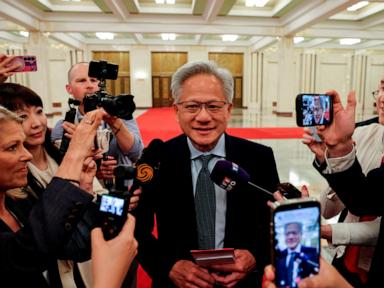
Hero worship has an expiration date, and Taiwan is learning that lesson the hard way. For years, Nvidia CEO Jensen Huang was treated like a sacred national treasure across the island. Born in Tainan before moving to the United States as a child, Huang could do no wrong in the eyes of local tech circles and everyday citizens
Why Jensen Huang is Suddenly Losing His Golden Boy Status in Taiwan
business
technology
Hero worship has an expiration date. Few people in the global tech ecosystem understand this better right now than Nvidia CEO Jensen Huang. For years, his visits to Taiwan resembled state visits by a beloved monarch. Night markets erupted in cheers. Tech executives cleared their schedules just to catch a glimpse of him in his signature leather jacket. Street vendors named dishes after him. Yet the mood across the island is shifting. The unconditional adoration that once defined the public response to Jensen Huang is fraying under the weight of recent controversies, shifting geopolitical anxieties, and local economic frustrations.
If you look past the Silicon Valley press releases, a more complicated reality emerges. Taiwan's relationship with its most famous son isn't breaking overnight, but it is certainly cracking. People are asking harder questions about loyalty, supply chain dependencies, and the true cost of the artificial intelligence boom on local soil.
The Myth of the Untouchable Hometown Hero
Jensen Huang was born in Tainan before moving abroad at a young age, a biographical detail that Taiwan’s media and public embraced with fierce pride. When Nvidia's chips became the literal engine driving the generative artificial intelligence revolution, Taiwan saw itself in that success. After all, Taiwan Semiconductor Manufacturing Company manufactures almost all of those high-end chips. It felt like a shared victory.
When Huang walked through Taipei's Raohe Night Market last year, the scene went viral globally. Thousands swarmed him for selfies. He signed menus, chatted with stall owners, and played the part of the humble billionaire who never forgot his roots. But public sentiment in Taipei and Hsinchu has a short memory when external pressures mount.
The turning point isn't about a single catastrophic event. Rather, it is an accumulation of friction points. Local critics and industry observers are starting to voice fatigue over the sheer dominance of foreign tech giants dictating terms to Taiwanese manufacturers while pocketing the lion's share of the margin. When a supply chain bottleneck drives up domestic costs or puts local smaller firms at a disadvantage, the goodwill starts to erode.
Geopolitical Anxiety and the Cost of Success
Taiwanese citizens live under constant geopolitical pressure. Every statement made by global tech leaders carries immense weight. When a figure as influential as Huang makes comments regarding cross-strait relations or global supply chain redundancy, local ears listen with extreme scrutiny.
There is a growing uneasiness about how much of Taiwan's technological crown jewels are being pulled outward. The push by major chipmakers to diversify manufacturing hubs away from the island—often encouraged by Western governments—creates deep domestic anxiety. People worry that once the physical infrastructure and talent pools are replicated elsewhere, Taiwan loses its ultimate security blanket, often referred to as the silicon shield.
Huang has repeatedly praised Taiwan's engineering talent, calling it the bedrock of Nvidia's success. Yet, local engineers and labor advocates are increasingly vocal about working conditions, brain drain, and the intense pressure cooker environment created by the insatiable global demand for hardware. The narrative that Nvidia's rise is an unmitigated blessing for everyday workers in Taiwan is facing serious pushback.
What the Global Media Misses
Western news coverage tends to treat Taiwan as a monolith of cheering tech enthusiasts or a static geopolitical chess piece. That perspective misses the nuance on the ground.
Local business circles are frustrated by the asymmetry of the partnership. While Nvidia enjoys staggering market valuations and record-breaking profit margins, the Taiwanese fabrication and packaging partners shoulder massive capital expenditures, environmental burdens, and operational risks. When scandals or supply discrepancies hit the headlines, the local media scrutinizes whether international corporations are treating Taiwan as a transactional resource rather than a true equal partner.
Furthermore, the idolization of billionaire tech founders has worn thin culturally. Younger generations in Taiwan are growing skeptical of hero narratives that mask corporate monopolies or environmental costs. The sheer amount of electricity and water required to power the AI boom places a heavy physical toll on local resources, sparking quiet resentment that rarely makes it into international financial reports.
Navigating the Road Ahead
Jensen Huang isn't a pariah in Taiwan. The economic ties are far too deep, and the mutual respect for technological excellence runs too strong for a complete rupture. Nvidia's advanced packaging facilities and ongoing engineering partnerships across the island remain critical to global progress.
However, the era of unquestioned, pop-star-style adulation is over. Huang will have to navigate a more mature, skeptical, and demanding public landscape in the place of his birth. The days of effortless night market adoration have given way to hard-nosed realism about what it means to be intertwined with the most powerful technology company on earth.
To maintain genuine support, tech leaders cannot rely on nostalgia and charm alone. They must demonstrate a tangible commitment to the local ecosystem's long-term stability and security. Respect is a two-way street, and in modern Taiwan, the traffic is starting to move in both directions.